Recurrent and Multidrug-Resistant UTI Treatments in Kidney Transplant Patients: A Retrospective Study from Saudi Arabia
Khalid A. Alzahrani, Redwan Y. Mirdad, Anas T. Khogeer, Buthainah B. Alammash, Abdulfattah Y. Alhazmi, Nouf E. Alotaibi, Abdullah S. Alshammari, Abdulmalik S. Alotaibi, Mohammed A. Alnuhait

TL;DR
This study examines the causes and treatments of recurring UTIs in kidney transplant patients in Saudi Arabia, emphasizing the role of drug-resistant bacteria and risk factors like age and stents.
Contribution
The study provides insights into the prevalence and management of multidrug-resistant UTIs in Saudi kidney transplant recipients.
Findings
Klebsiella pneumoniae was the most common pathogen in recurrent UTIs.
Multidrug-resistant organisms and ureteric stents were significant risk factors for UTI recurrence.
Recurrent UTIs were associated with increased serum creatinine levels and healthcare costs.
Abstract
Background: Urinary tract infections (UTIs) are the most common infections among kidney transplant recipients, with prevalence rates ranging from 12% to 75% in studies from North America and Australia and from 4.5% to 85% in the Middle East. These infections can significantly impact graft survival and patient quality of life, increasing the risk of hospitalization, morbidity, and mortality. Escherichia coli is the leading cause of UTIs in transplant patients, but multidrug-resistant (MDR) pathogens are a growing concern, especially in Saudi Arabia. Several factors, including advanced age, female gender, and use of urinary catheters, contribute to post-transplant UTIs. This study focuses on the Saudi population, aiming to assess the prevalence, risk factors, and treatment strategies for recurrent and multidrug-resistant UTIs in kidney transplant recipients. Methods: This retrospective…
Genes, proteins, chemicals, diseases, species, mutations and cell lines named across the full text — each resolved to its canonical identifier and authoritative record.
Click any figure to enlarge with its caption.
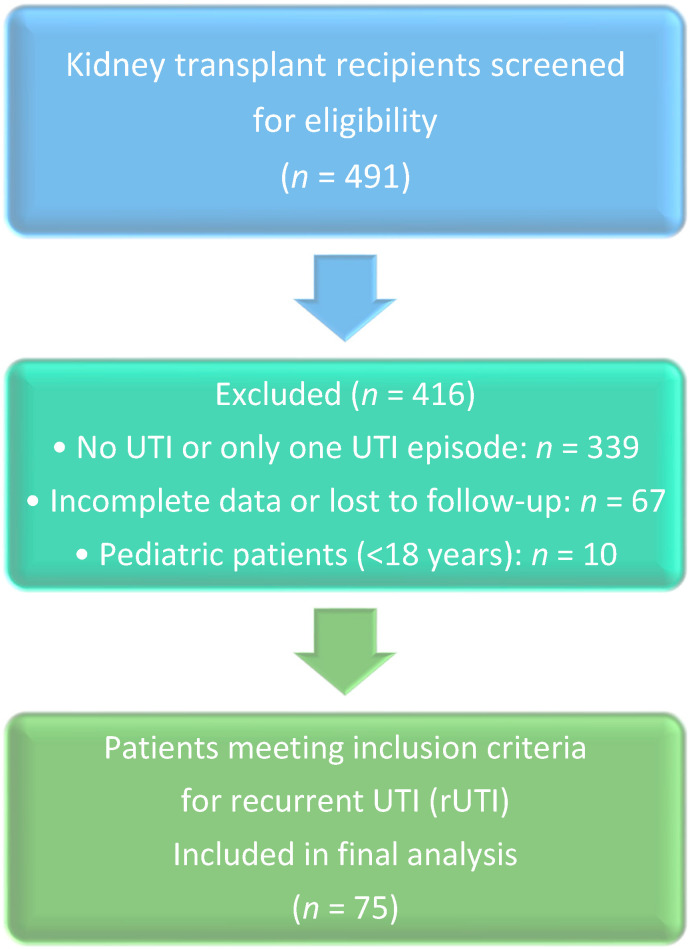 Figure 1
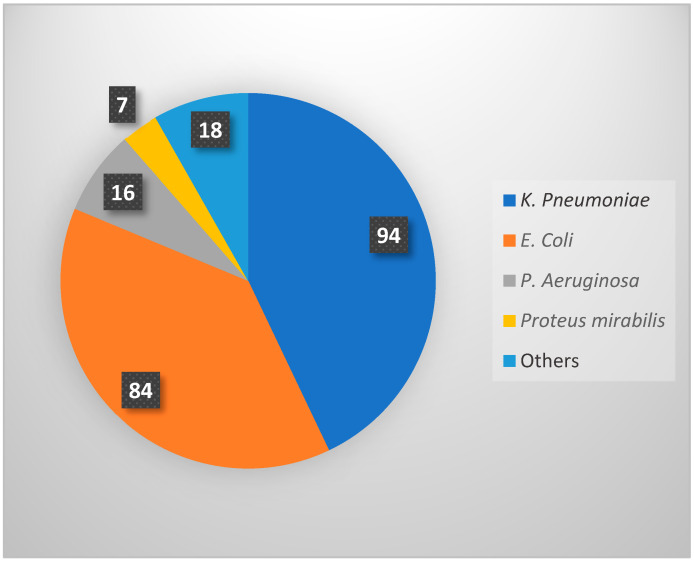 Figure 2
Peer Reviews
No public reviews on file for this paper yet. If you reviewed it on a platform where reviews are public (OpenReview, ICLR, NeurIPS, ICML), you can paste yours below so the community can read it here.
Videos
No videos yet. Explain this paper in a talk, walkthrough, or lecture? Add one.
Taxonomy
TopicsCytomegalovirus and herpesvirus research · Urinary Tract Infections Management · Cancer Research and Treatment