Comparative Study on Growth Performance and Meat Production Traits of Reciprocal Crosses Between Guizhou Recessive White Chickens and Qiandongnan Xiaoxiang Chickens
Yingping Tian, Xiaoya Wang, Yong Yue, Muhammad Arif, Yaozhou Jiang, Qinsong Liu, Yun Du, Xudong Zhao, Fuping Zhang

TL;DR
This study finds that crossbreeding local Chinese chickens with a fast-growing breed improves growth and meat production, offering a profitable strategy for farmers.
Contribution
The study demonstrates that using Guizhou recessive white chickens as sires in crossbreeding significantly enhances productivity in local chicken breeds.
Findings
Crossbred chickens sired by Guizhou recessive white chickens showed faster growth and higher meat yield compared to those sired by local Qiandongnan chickens.
The Von Bertalanffy model best described growth curves for most groups, except QW roosters, where the Gompertz model was more accurate.
Hybrid progeny (WQ and QW) outperformed purebreds in slaughter traits, with WQ showing the highest heterosis rates.
Abstract
This research investigated whether crossing a local breed from Qiandongnan, China, with a larger fast-growing breed from Guizhou could produce chickens with faster growth rates and higher meat production, thus being more profitable for farmers. We bred different groups of purebred and crossbred chickens and measured their growth, body size, carcass yield and meat quality. The results show that the choice of sire plays a crucial role. Offspring sired by the Guizhou breed grew faster and larger, yielding more meat compared with those sired by the local breed. These crossbred chickens showed a strong heterosis (hybrid vigor), outperforming both parent breeds. Although the pure local chickens had more tender meat, the crossbred chickens from the Guizhou sire offered the best overall combination of growth and meat production. This study provides farmers with a practical and effective…
Genes, proteins, chemicals, diseases, species, mutations and cell lines named across the full text — each resolved to its canonical identifier and authoritative record.
Click any figure to enlarge with its caption.
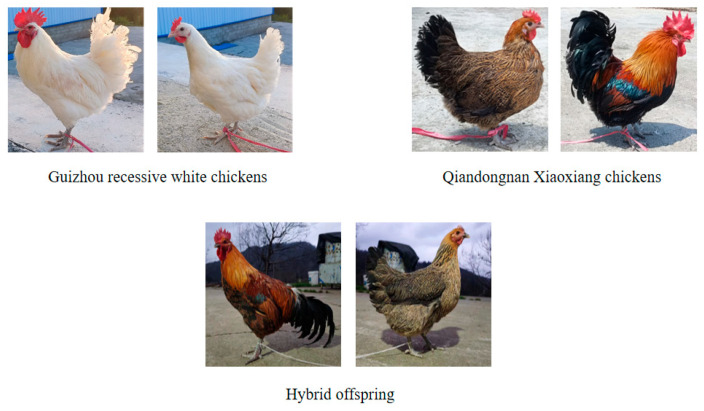 Figure 1
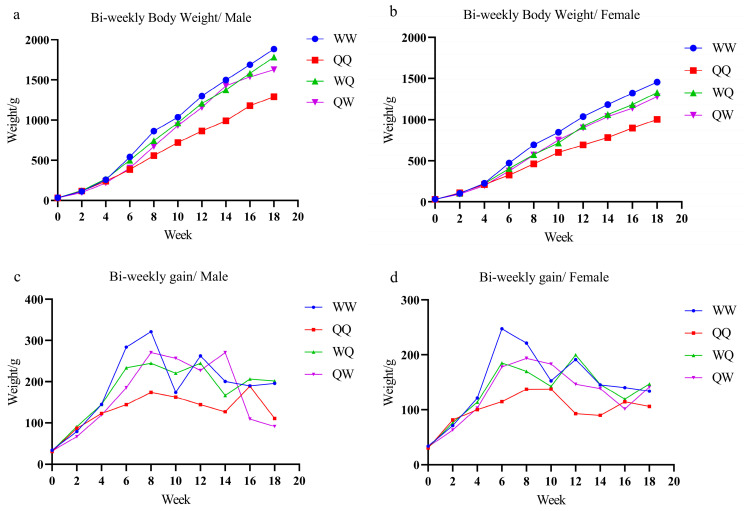 Figure 2
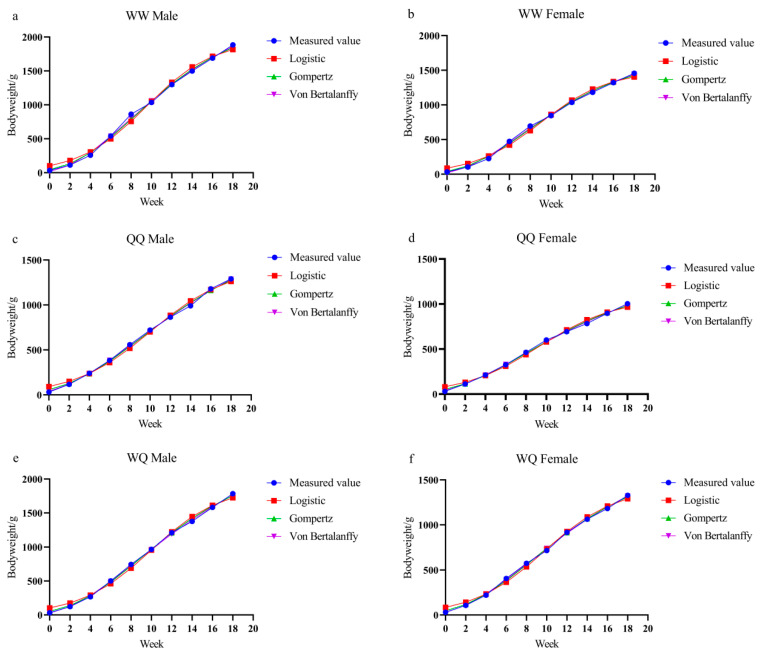 Figure 3
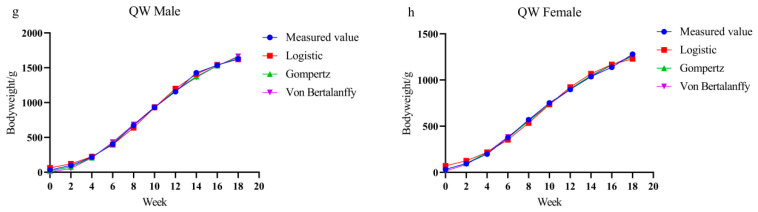 Figure 4
Peer Reviews
No public reviews on file for this paper yet. If you reviewed it on a platform where reviews are public (OpenReview, ICLR, NeurIPS, ICML), you can paste yours below so the community can read it here.
Videos
No videos yet. Explain this paper in a talk, walkthrough, or lecture? Add one.
Taxonomy
TopicsLivestock and Poultry Management · Animal Nutrition and Physiology · Genetic and phenotypic traits in livestock