Brine Shrimp Feeding Contributes to Fast Growth and Enhanced Immune Capacity of Reattached Polyps of Scleractinian Coral Pocillopora damicornis
Haifeng Huang, Yi Wang, Zhaoqun Liu

TL;DR
Feeding brine shrimp to reattached coral polyps boosts their growth and immunity, aiding reef restoration efforts.
Contribution
This study reveals how brine shrimp feeding enhances coral polyp growth and immunity through physiological and transcriptomic changes.
Findings
Brine shrimp feeding increases polyp diameter, new polyp numbers, and calcified skeleton weight.
Transcriptomic analysis shows activation of energy metabolism and biomineralization pathways.
Feeding reduces caspase-3 activation and boosts antioxidant capacity, improving immunity.
Abstract
The present study investigates how brine shrimp feeding contributes to the growth of newly reattached polyps of scleractinian coral Poccillopora damicornis. It was illustrated that polyp diameter, number of new polyps, weight of the calcified skeleton, symbiont density, chlorophyll a + c2 content and Ea values increased significantly after 60 days of brine shrimp feeding, and the immune capacity of the reattached polyps were also obviously elevated. These findings illuminate the molecular mechanisms mediating fast growth of coral polyps upon brine shrimp feeding, and shed light on the potential application of such methods in the cultivation of transplantation donors for reef restoration. Reef restoration is the major way to compensate the loss of scleractinian corals, which requires huge amounts of transplantation donors. Previous study revealed that some species of corals can conduct…
Genes, proteins, chemicals, diseases, species, mutations and cell lines named across the full text — each resolved to its canonical identifier and authoritative record.
Click any figure to enlarge with its caption.
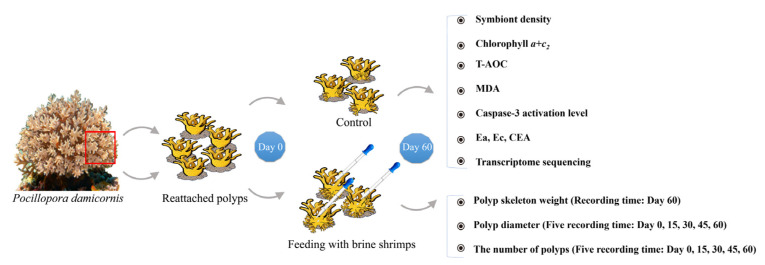 Figure 1
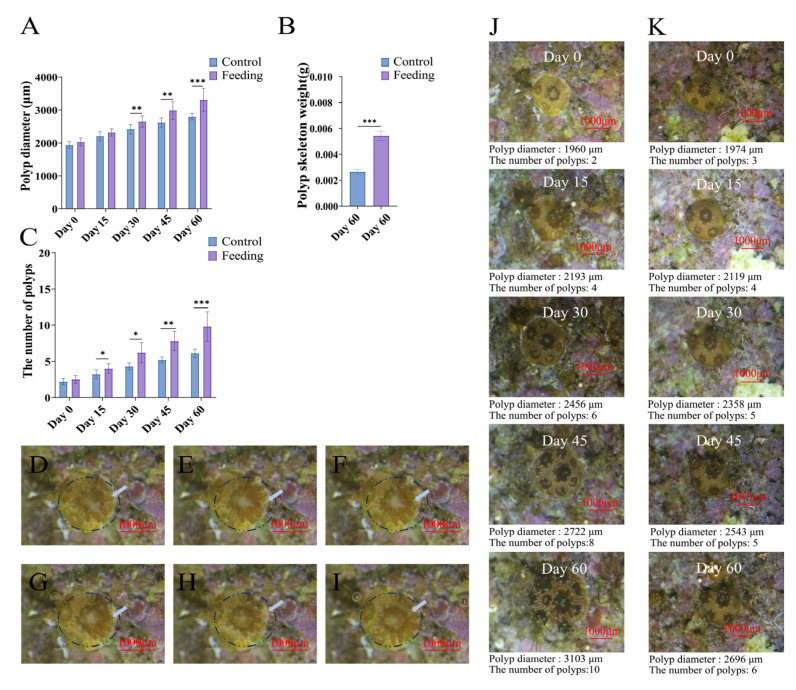 Figure 2
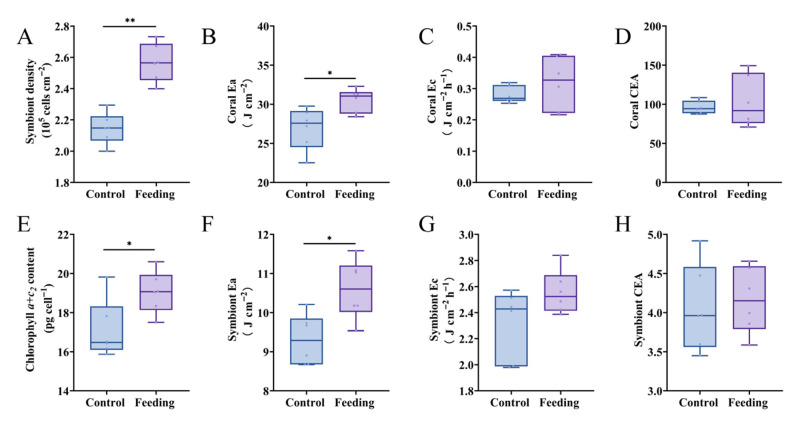 Figure 3
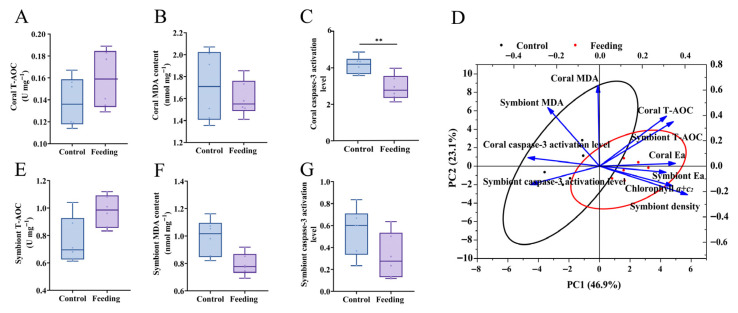 Figure 4
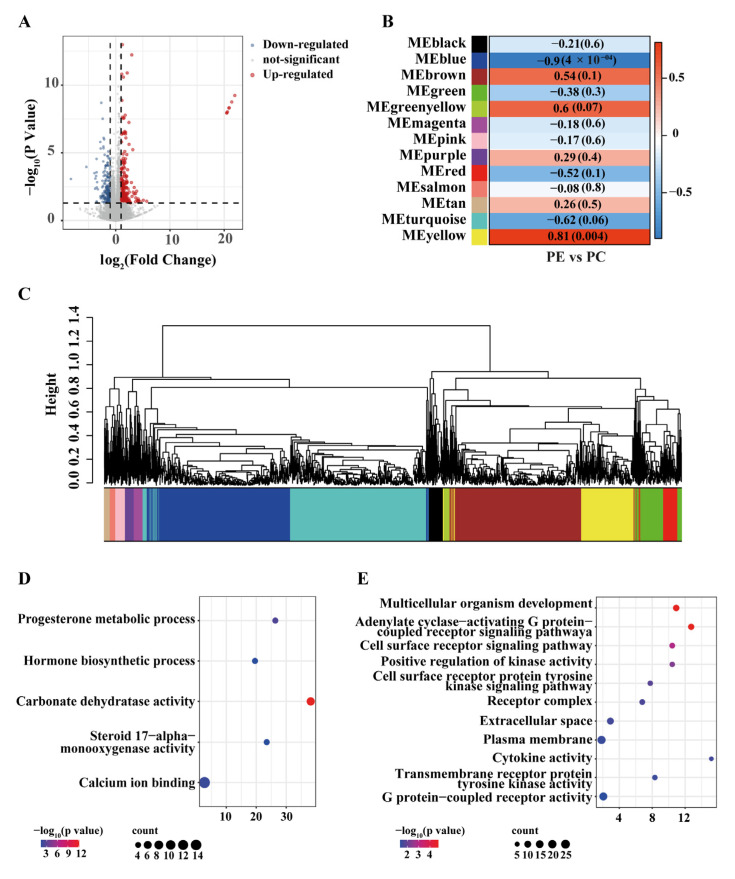 Figure 5
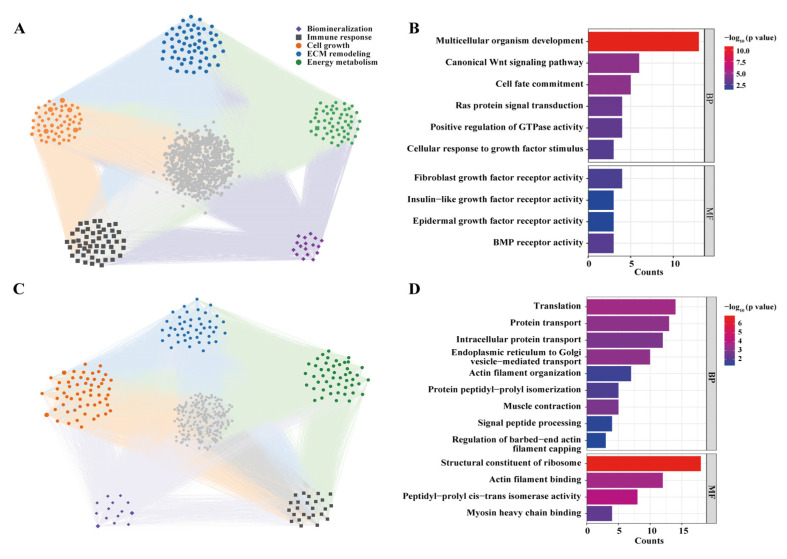 Figure 6
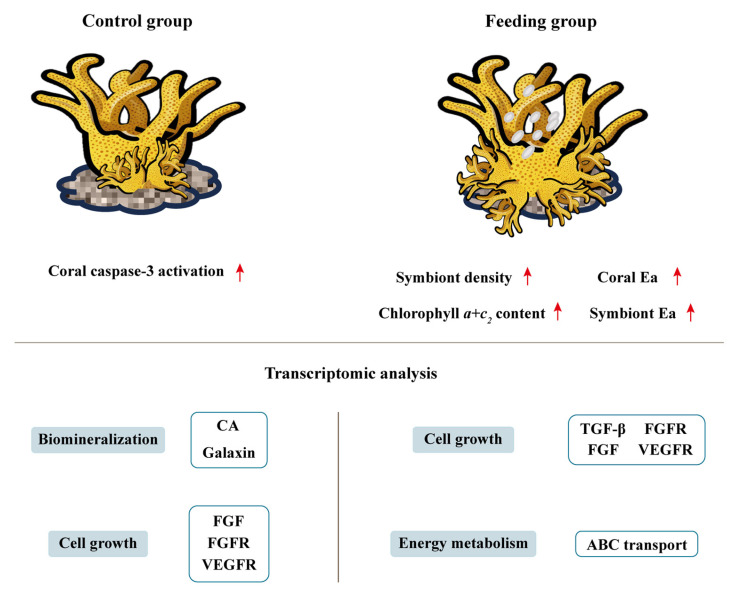 Figure 7
Peer Reviews
No public reviews on file for this paper yet. If you reviewed it on a platform where reviews are public (OpenReview, ICLR, NeurIPS, ICML), you can paste yours below so the community can read it here.
Videos
No videos yet. Explain this paper in a talk, walkthrough, or lecture? Add one.
Taxonomy
TopicsCoral and Marine Ecosystems Studies · Marine Sponges and Natural Products · Echinoderm biology and ecology