Warmth Centrality in Social Cognitive Networks of Fairness Reputation Across Players in the Ultimatum and Dictator Games
Yi Zhao, Yangfan Liu, Ting Xu, Baoming Li, Zhong Yang

TL;DR
This study explores how fairness reputation affects how people perceive others in social games, showing that warmth is a central trait in these perceptions.
Contribution
The study introduces a novel analysis of fairness reputation by comparing social cognitions across roles in the ultimatum and dictator games.
Findings
Proposers and dictators with fairness reputations are perceived more positively, especially by individualists.
Responders with fairness reputations are seen as fair and competent but less warm and altruistic.
Warmth cognition is central in the social cognitive network for all three roles, supporting the warmth–competence model.
Abstract
Fairness reputation refers to the perception of others’ adherence to fair norms based on their behaviors. However, previous studies often rely on simple correlation and regression analyses without comparing cognition across roles in the ultimatum game (UG) and the dictator game (DG). Our study measured the categorical and two-dimensional cognitions (warmth-competence) of participants with different social value orientations toward proposers, responders, and dictators with varying fairness reputations. We found that proposers and dictators with fairness reputations were perceived more positively, and individualists could better distinguish between them. Regarding responders with fairness reputations, they were perceived as more fair, trustworthy, and competent, but less altruistic, cooperative, and warm. The social cognitive network of responders differed from those of proposers and…
Genes, proteins, chemicals, diseases, species, mutations and cell lines named across the full text — each resolved to its canonical identifier and authoritative record.
Click any figure to enlarge with its caption.
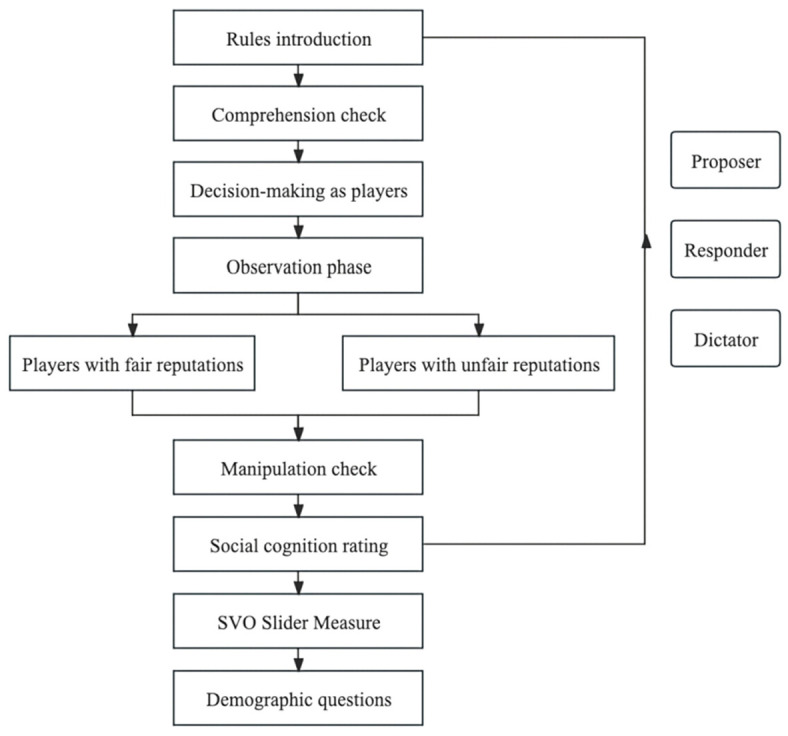 Figure 1
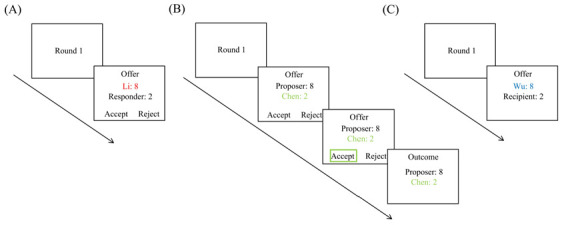 Figure 2
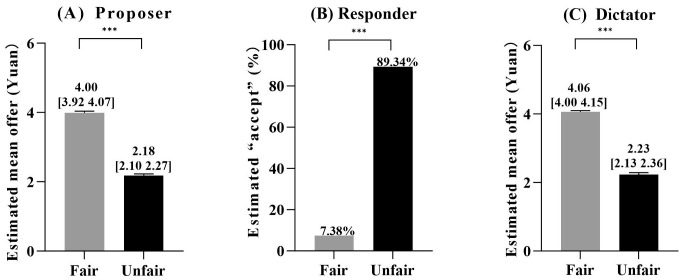 Figure 3
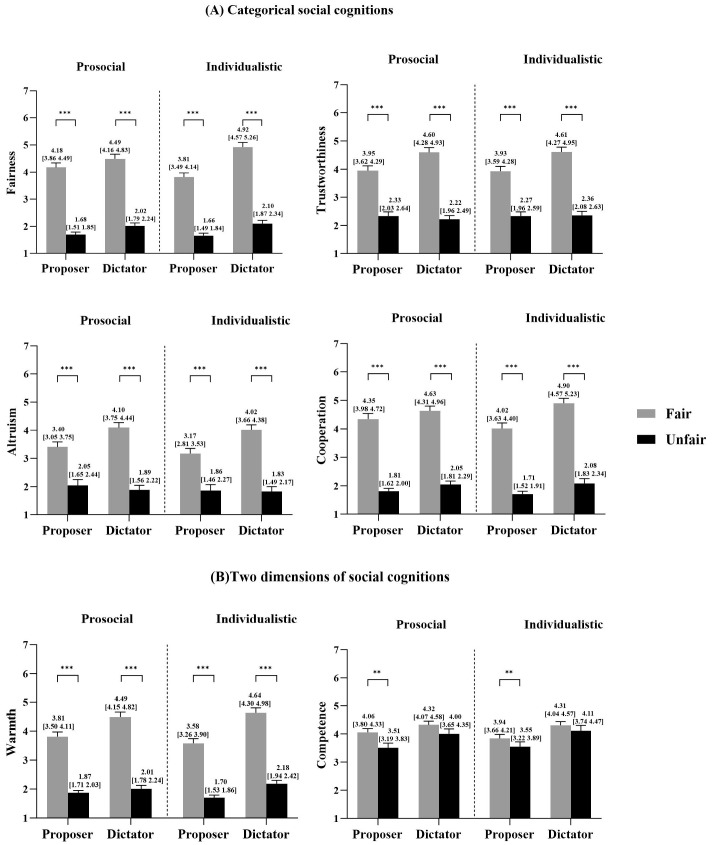 Figure 4
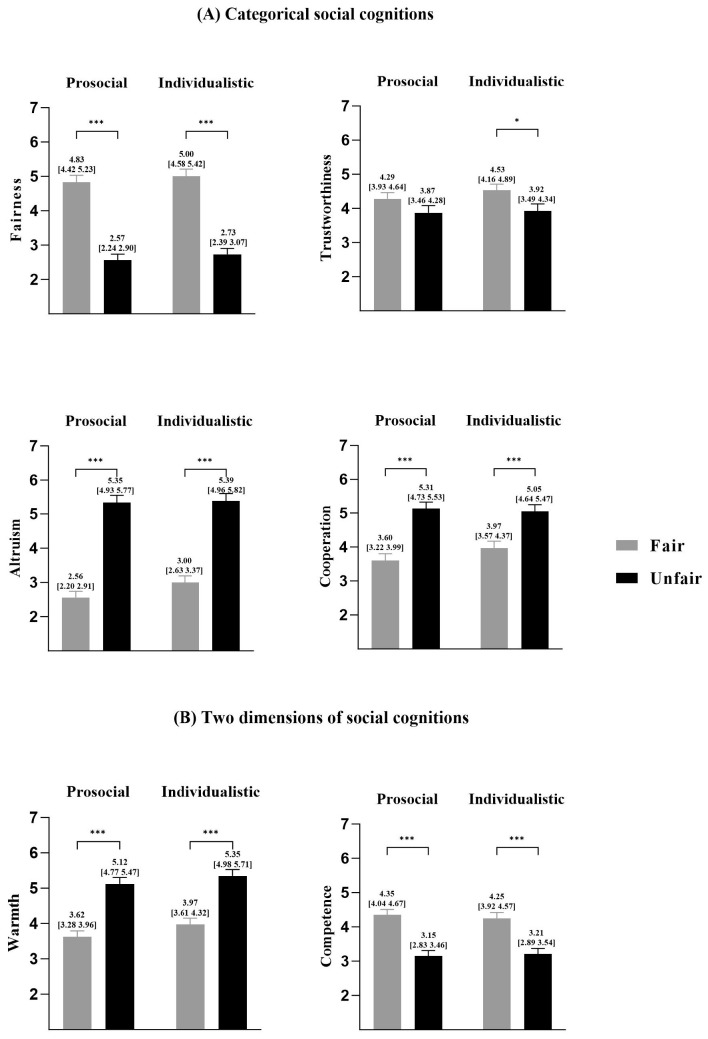 Figure 5
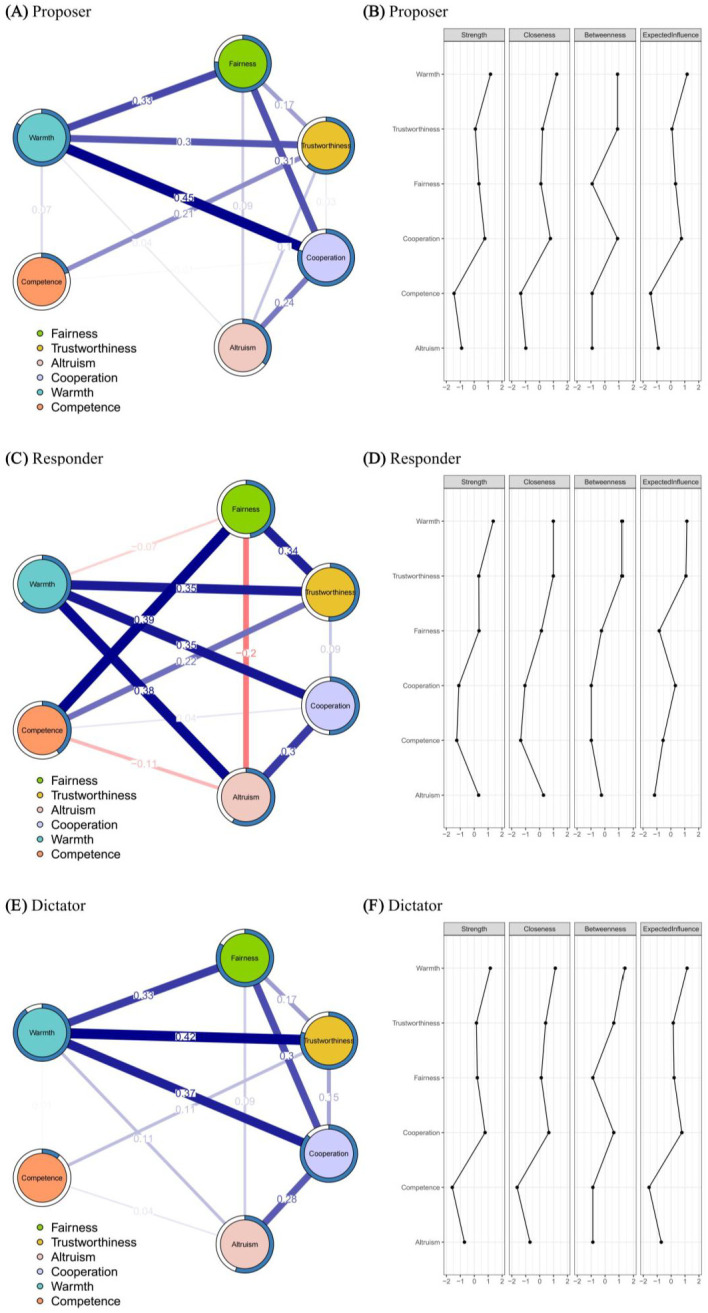 Figure 6
Peer Reviews
No public reviews on file for this paper yet. If you reviewed it on a platform where reviews are public (OpenReview, ICLR, NeurIPS, ICML), you can paste yours below so the community can read it here.
Videos
No videos yet. Explain this paper in a talk, walkthrough, or lecture? Add one.
Taxonomy
TopicsExperimental Behavioral Economics Studies · Evolutionary Game Theory and Cooperation · Social and Intergroup Psychology