Clinical Characteristics and Treatment Strategies in a Cohort of Patients with Tularemia: A Retrospective Multicenter Analysis of 65 Cases in Germany
Benjamin Arnold, Henning Trawinski, Nils Kellner, Hans-Martin Orth, Daniela Tominski, Agata Mikolajewska, Katja Rothfuss, Gesa Grupe, Dominik Ruf, Friedrich Reichert, Daniela Jacob, Klaus Heuner, Kathrin Marx, Christoph Lübbert

TL;DR
This study analyzed 65 tularemia cases in Germany to understand the disease's clinical features and treatment outcomes.
Contribution
The study provides a detailed clinical and therapeutic analysis of tularemia in Germany over a 15-year period.
Findings
Ulceroglandular was the most common clinical manifestation, followed by oropharyngeal and pulmonary forms.
Early diagnosis and appropriate antibiotic treatment significantly reduced recovery time compared to delayed treatment.
Most patients received recommended antibiotics after initial inappropriate beta-lactam therapy.
Abstract
Background: In recent years, there has been a significant increase in cases of tularemia, a rare zoonotic disease caused by Francisella tularensis, in Europe. Methods: To investigate the epidemiological, clinical, and therapeutic characteristics of tularemia patients in Germany, we performed a retrospective evaluation of tularemia cases treated between 2010 and 2025 at selected treatment centers of the Permanent Working Group of Competence and Treatment Centers for High Consequence Infectious Diseases (STAKOB) at the Robert Koch Institute. Results: A total of 65 patients (median age: 48.5 years; 66.2% male) were identified. Most common manifestation was ulceroglandular (70.7%), followed by oropharyngeal (13.8%), pulmonary (10.8%), oculoglandular (7.7%), typhoidal (4.6%), and meningitic (4.6%). Serological confirmation of the diagnosis was achieved in all patients (90.8% ELISA, 46.2%…
Genes, proteins, chemicals, diseases, species, mutations and cell lines named across the full text — each resolved to its canonical identifier and authoritative record.
Click any figure to enlarge with its caption.
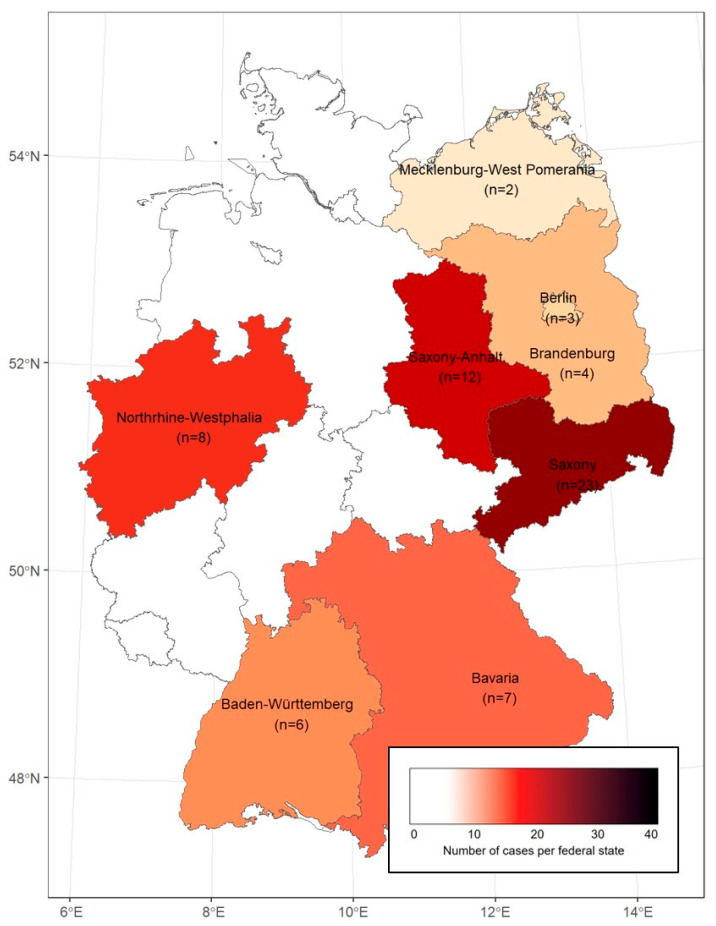 Figure 1
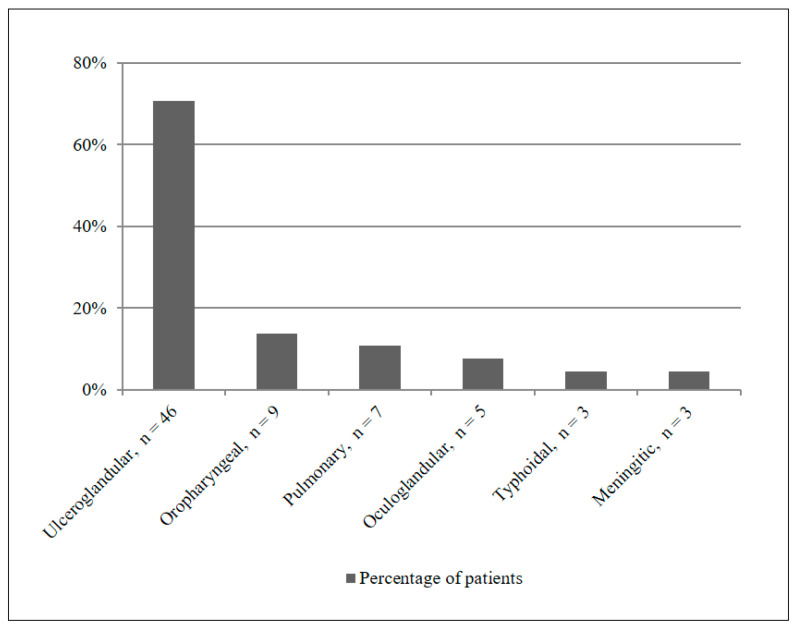 Figure 2
Peer Reviews
No public reviews on file for this paper yet. If you reviewed it on a platform where reviews are public (OpenReview, ICLR, NeurIPS, ICML), you can paste yours below so the community can read it here.
Videos
No videos yet. Explain this paper in a talk, walkthrough, or lecture? Add one.
Taxonomy
TopicsBacillus and Francisella bacterial research · Yersinia bacterium, plague, ectoparasites research · Poxvirus research and outbreaks