Besnoitia besnoiti-Induced Neutrophil Extracellular Traps (NETs): Metabolic Signature, Signaling Pathways, Receptors and Implications on Pathogenesis
Nicolás Turra, Iván Conejeros, Carlos Hermosilla, Rafael Agustín Burgos, Anja Taubert

TL;DR
This paper reviews how the parasite Besnoitia besnoiti triggers neutrophil extracellular traps in cattle, contributing to disease progression and suggesting new treatment approaches.
Contribution
The paper provides a comprehensive review of the metabolic and signaling mechanisms of B. besnoiti-induced NETs and their role in disease pathogenesis.
Findings
B. besnoiti tachyzoites and bradyzoites trigger excessive neutrophil extracellular trap formation in cattle.
NETs contribute to endothelial damage and inflammation, worsening bovine besnoitiosis pathogenesis.
Understanding NETs' metabolic and signaling pathways could lead to novel therapeutic strategies.
Abstract
Bovine besnoitiosis is a neglected debilitating parasitic disease of cattle caused by the apicomplexan parasite Besnoitia besnoiti, resulting in significant economic losses for livestock producers. Due to expansion of the disease into previous non-endemic European countries as well as the lack of effective treatments and control strategies to manage it, there is a need to elucidate early host innate immune reactions during acute- and chronic bovine besnoitiosis. Polymorphonuclear neutrophils (PMN) are the first leukocytes recruited to the site of infection. Consequently, an important defense mechanism displayed by bovine PMN to combat invading pathogens is the extrusion of neutrophil extracellular traps (NETs). However, acute and chronic B. besnoiti parasitic stages (i.e., tachyzoites and bradyzoites) elicit an excessive host innate immune response, leading to possible NET-associated…
Genes, proteins, chemicals, diseases, species, mutations and cell lines named across the full text — each resolved to its canonical identifier and authoritative record.
Click any figure to enlarge with its caption.
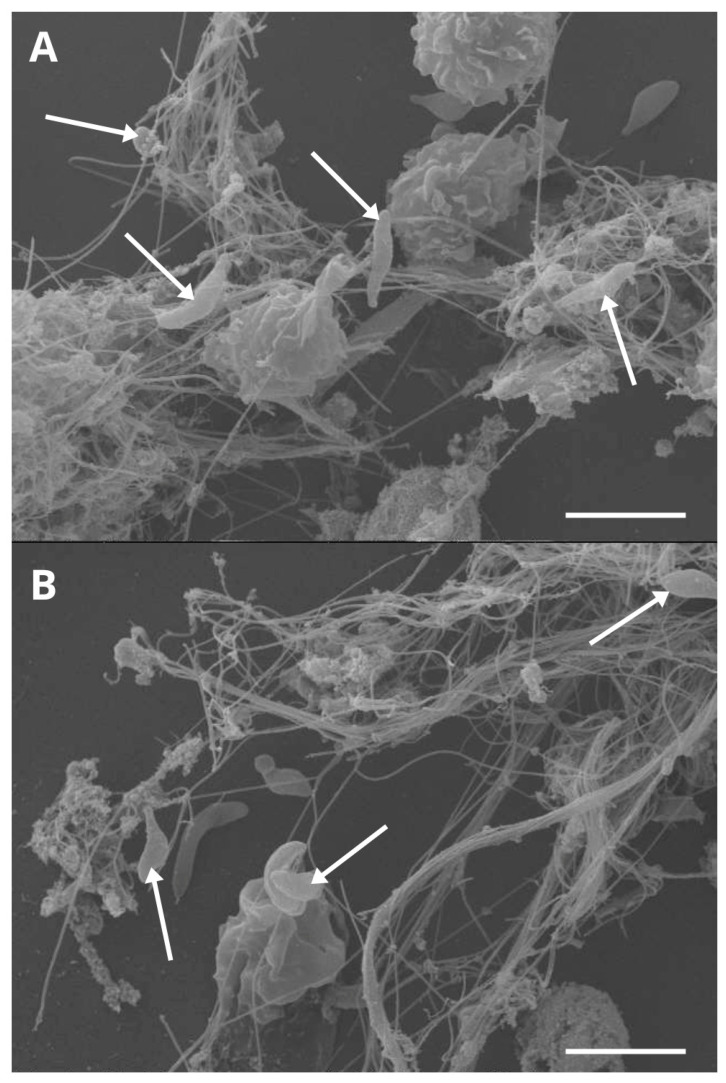 Figure 1
Peer Reviews
No public reviews on file for this paper yet. If you reviewed it on a platform where reviews are public (OpenReview, ICLR, NeurIPS, ICML), you can paste yours below so the community can read it here.
Videos
No videos yet. Explain this paper in a talk, walkthrough, or lecture? Add one.
Taxonomy
TopicsToxoplasma gondii Research Studies · Neutrophil, Myeloperoxidase and Oxidative Mechanisms · Legionella and Acanthamoeba research