5-Hydroxymethylfurfural Alleviates Lipopolysaccharide-Induced Depression-like Behaviors by Suppressing Hypothalamic Oxidative Stress and Regulating Neuroinflammation in Mice
Bailiu Ya, Haiyan Yin, Lili Yuan, Aihong Jing, Yuxuan Li, Fenglian Yan, Hui Zhang, Huabao Xiong, Mingsheng Zhao

TL;DR
5-HMF reduces depression-like behaviors in mice by reducing brain inflammation and oxidative stress, offering potential as a treatment for inflammation-related depression.
Contribution
This study reveals the antidepressant mechanisms of 5-HMF through Nrf2 pathway activation and microglial regulation in an LPS-induced depression model.
Findings
5-HMF alleviated LPS-induced depression-like behaviors and reduced hypothalamic neuronal damage.
It decreased oxidative stress and inhibited microglial M1 polarization, regulated inflammatory cytokines, and activated the Nrf2 pathway.
The effects of 5-HMF were significantly reduced by the Nrf2 inhibitor brusatol, confirming the pathway's role.
Abstract
5-hydroxymethylfurfural (5-HMF) has been shown to exert neuroprotective effects in a global cerebral ischemia mouse model in our previous study, where it demonstrated antioxidant and anti-inflammatory properties. However, studies on its antidepressant mechanisms remain scarce. Since oxidative stress and neuroinflammation are closely associated with depression, this study investigated the antidepressant effects of 5-HMF, focusing on its potential inhibition of oxidative stress via the Nrf2 pathway and its role in microglial M1 polarization-mediated neuroinflammation. An acute depression mouse model induced by intraperitoneal injection of lipopolysaccharide (LPS) was utilized. Mice received 5-HMF (12 mg/kg) or an equal volume of vehicle via intraperitoneal injection 30 min prior to and 5 min after LPS administration. At 24 h post-modeling, behavioral tests (sucrose preference, forced…
Genes, proteins, chemicals, diseases, species, mutations and cell lines named across the full text — each resolved to its canonical identifier and authoritative record.
Click any figure to enlarge with its caption.
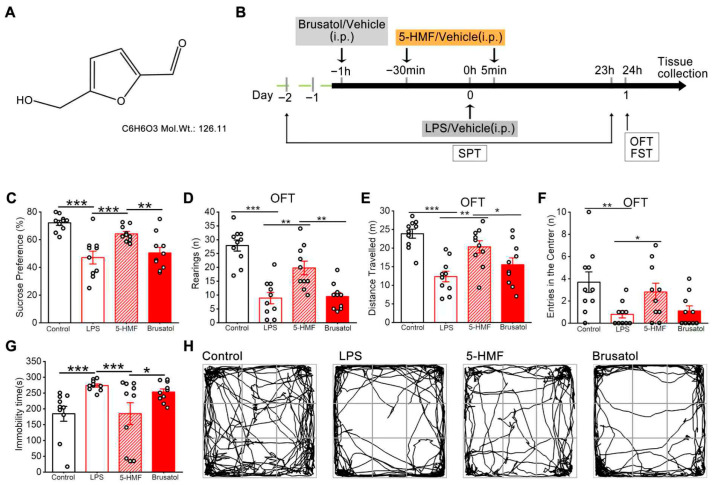 Figure 1
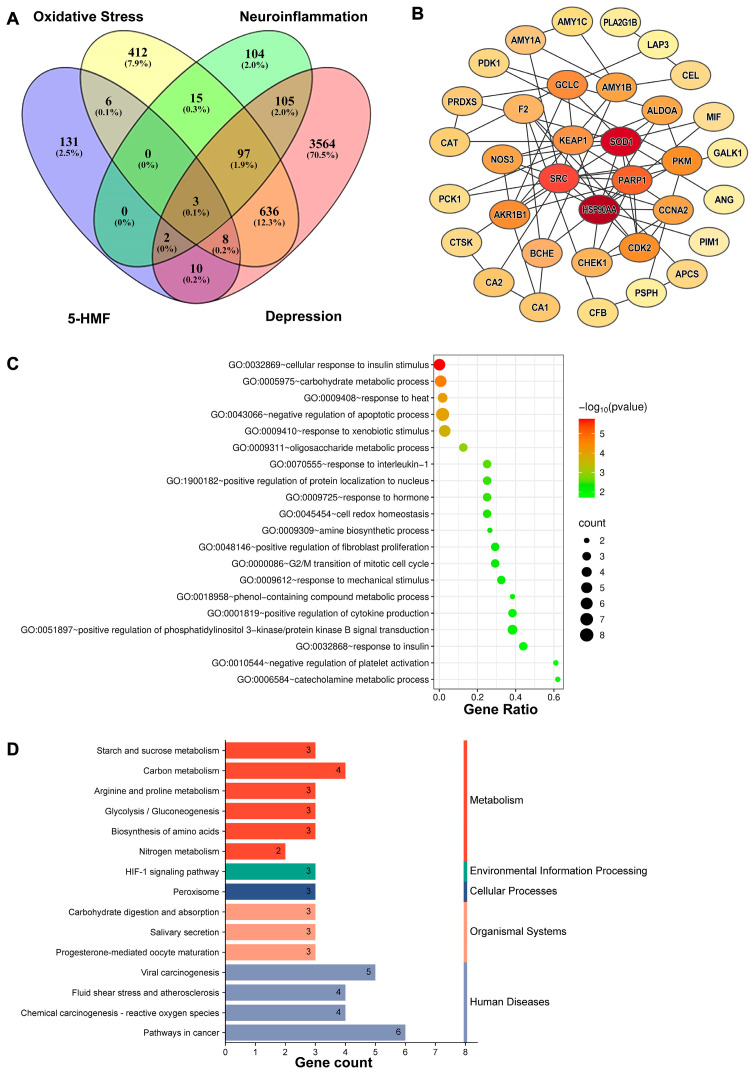 Figure 2
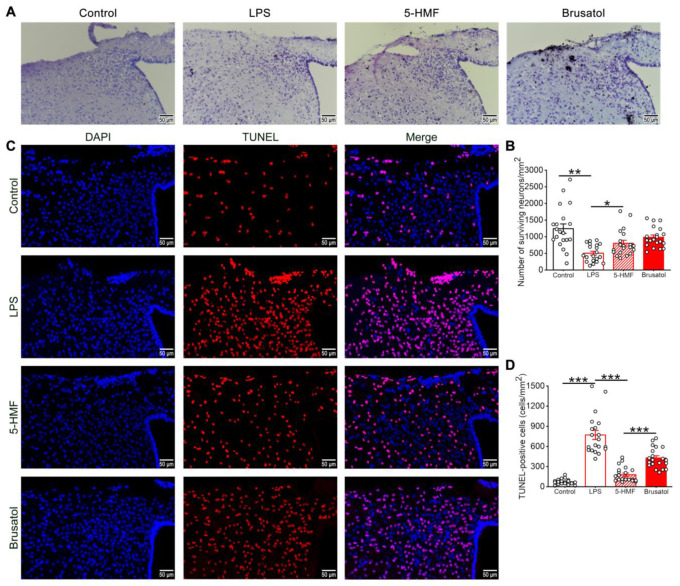 Figure 3
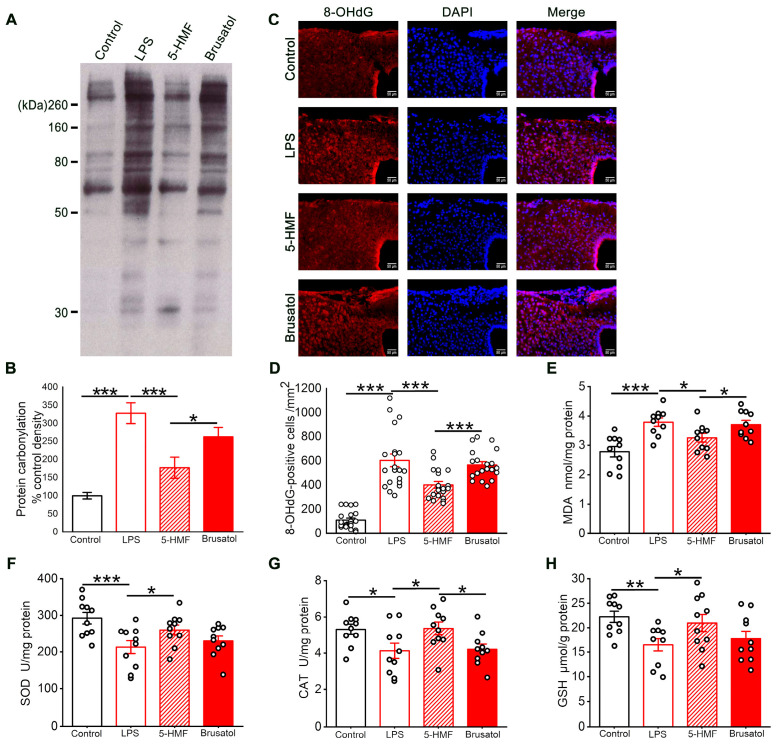 Figure 4
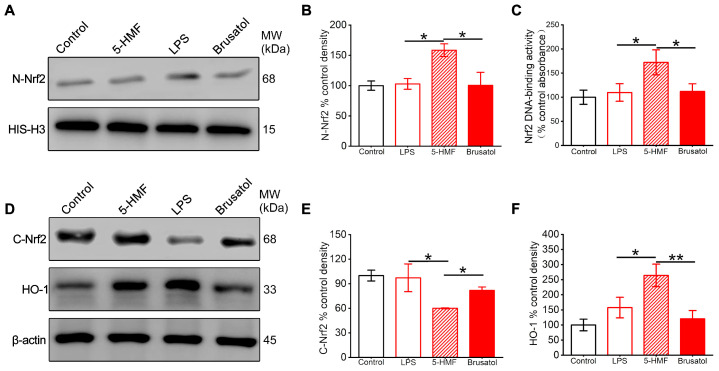 Figure 5
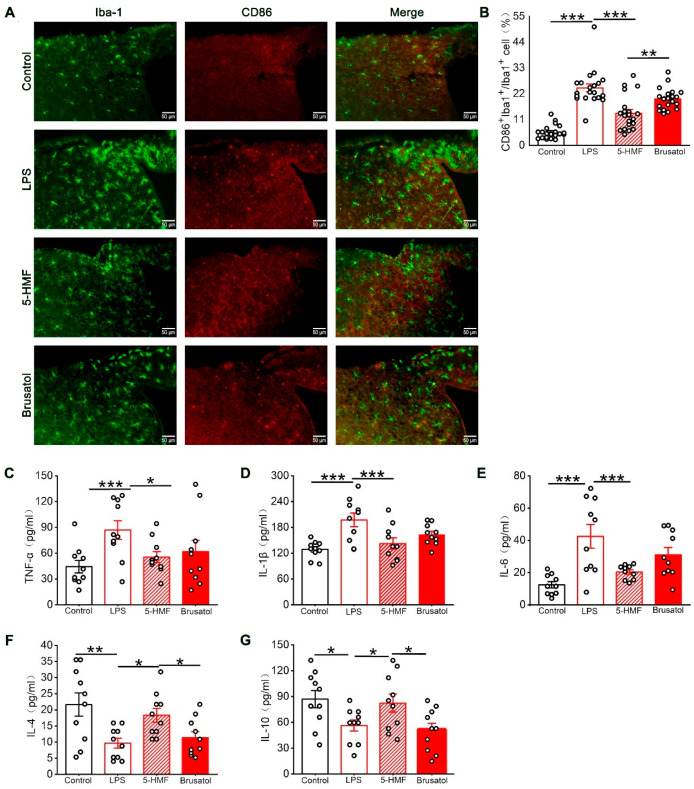 Figure 6
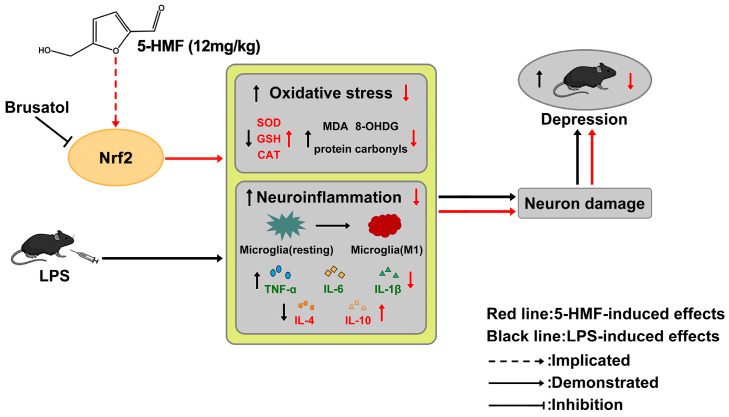 Figure 7
Peer Reviews
No public reviews on file for this paper yet. If you reviewed it on a platform where reviews are public (OpenReview, ICLR, NeurIPS, ICML), you can paste yours below so the community can read it here.
Videos
No videos yet. Explain this paper in a talk, walkthrough, or lecture? Add one.
Taxonomy
TopicsTryptophan and brain disorders · Neuroinflammation and Neurodegeneration Mechanisms · Genomics, phytochemicals, and oxidative stress