Free electron interaction with genistein: positive and negative ion formation
Vy T. T. Nguyen, Jiakuan Chen, Milan Ončák, Stephan Denifl

TL;DR
This study explores how genistein interacts with electrons, forming ions and revealing its molecular stability and reaction pathways.
Contribution
The study identifies specific ion formation mechanisms and stability of genistein under electron impact.
Findings
Intact negatively charged genistein is the most abundant anionic species formed.
Retro-Diels–Alder rearrangement is a major pathway for cation formation.
Quantum calculations support the observed ion appearance energies.
Abstract
Genistein is a member of the group of isoflavones, which are present in edible plants and possess several health supporting properties. In this work we used a crossed beam experiment coupled to mass spectrometry. We investigated the formation of anions and cations from neutral genistein upon the interaction with electrons having kinetic energies from about 0 eV to 70 eV. In the case of negative ion formation, we find the intact negatively charged genistein as the most abundant anionic species. The dehydrogenated parent anion is observed as the only fragment anion formed by dissociative electron attachment to genistein. The parent and dehydrogenated species also represent prominent cations. However, we also observe abundant signals for ions formed upon cleavage of the centred ring via retro-Diels–Alder rearrangement. Quantum chemical calculations on the threshold energies support the…
Genes, proteins, chemicals, diseases, species, mutations and cell lines named across the full text — each resolved to its canonical identifier and authoritative record.
Click any figure to enlarge with its caption.
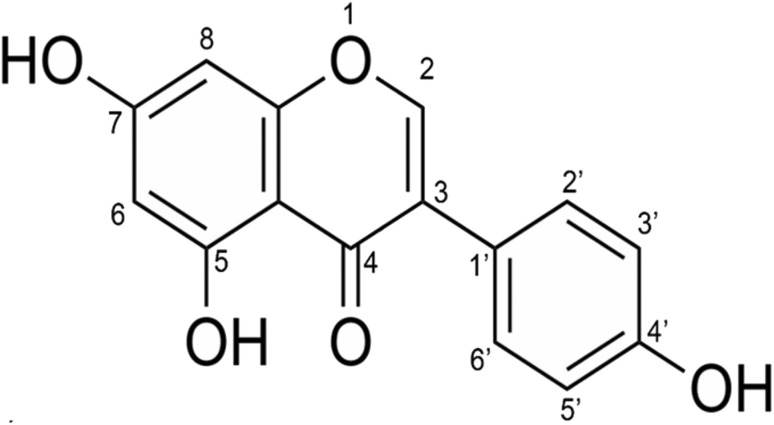 Figure 1
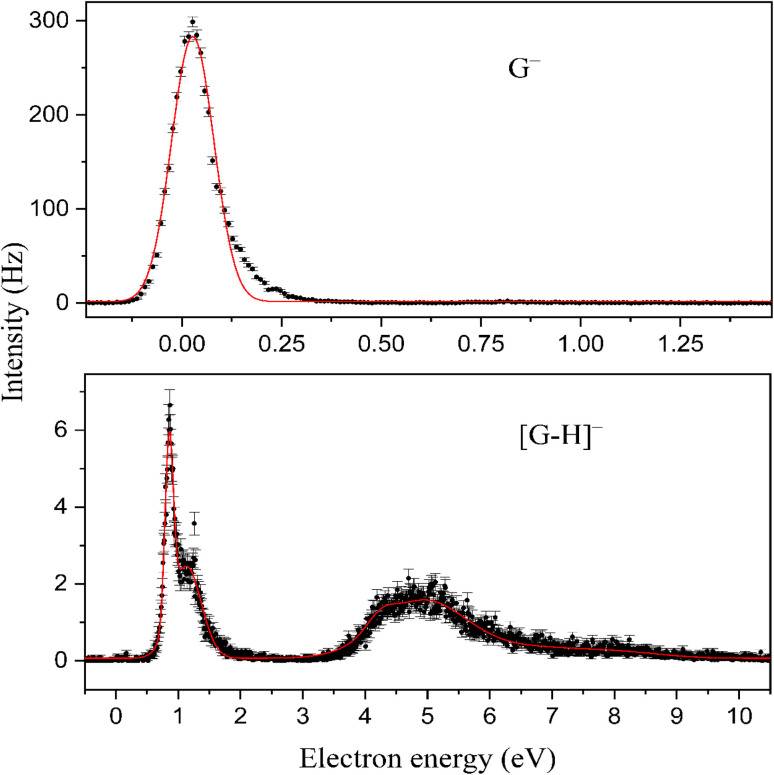 Figure 2
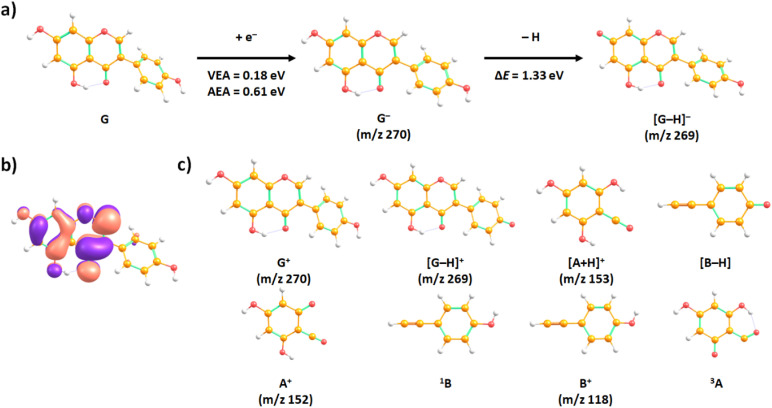 Figure 3
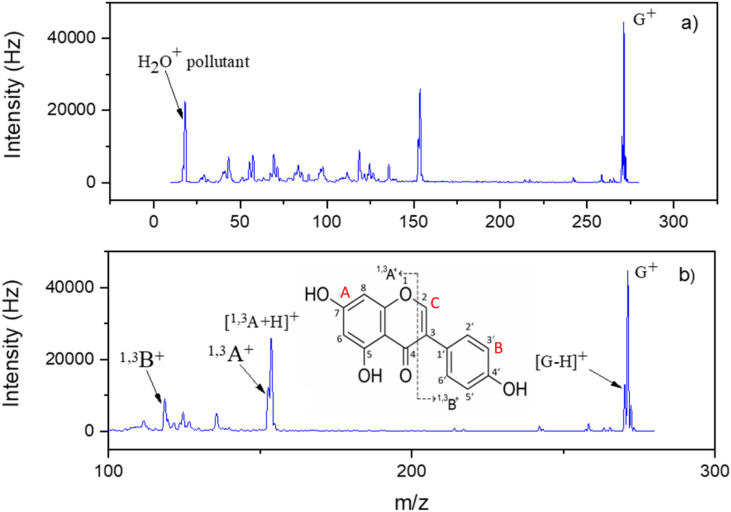 Figure 4
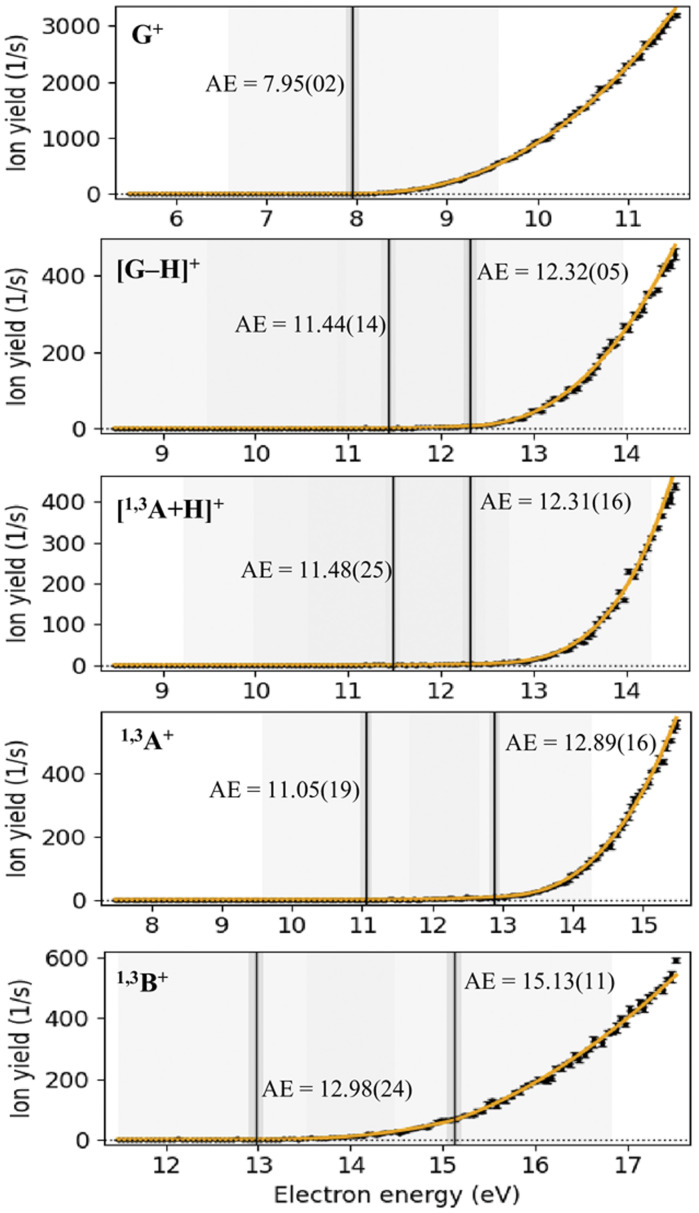 Figure 5
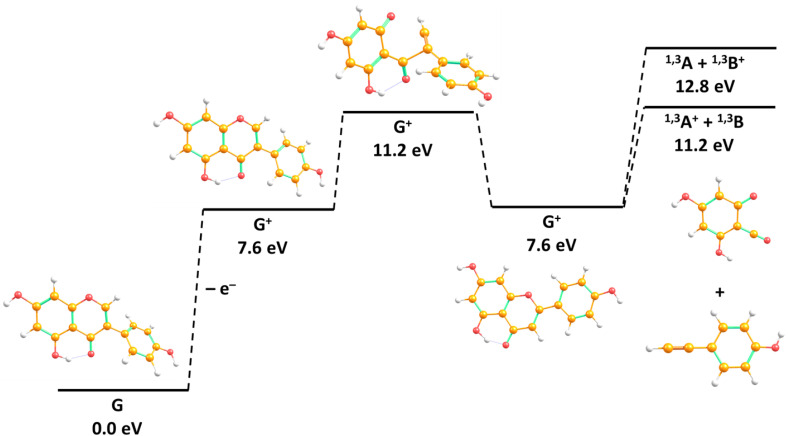 Figure 6
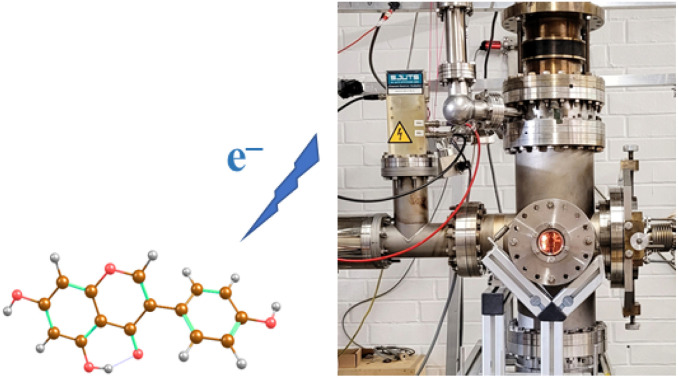 Figure 7
 Figure 8
Peer Reviews
No public reviews on file for this paper yet. If you reviewed it on a platform where reviews are public (OpenReview, ICLR, NeurIPS, ICML), you can paste yours below so the community can read it here.
Videos
No videos yet. Explain this paper in a talk, walkthrough, or lecture? Add one.
Taxonomy
TopicsPlant Genetic and Mutation Studies · Atomic and Molecular Physics · Radiation Effects and Dosimetry