Antimicrobial Activity of Aztreonam-Avibactam and Other β-Lactamase Inhibitor Combinations Tested Against Enterobacterales Isolates from Pediatric Patients from United States Medical Centers (2019–2023)
Helio S. Sader, Marisa L. Winkler, Krisztina M. Papp-Wallace, Rodrigo E. Mendes, Mariana Castanheira

TL;DR
This study found that certain antibiotic combinations are highly effective against bacteria causing infections in children, with lower resistance rates compared to adults.
Contribution
The study provides new insights into the antimicrobial susceptibility of pediatric Enterobacterales isolates and evaluates the effectiveness of β-lactamase inhibitor combinations.
Findings
Aztreonam–avibactam, ceftazidime–avibactam, and meropenem–vaborbactam showed high activity against resistant pediatric isolates.
Carbapenem resistance was significantly lower in pediatric isolates compared to adults.
ESBL-producing bacteria in children were mostly CTX-M +/− OXA-1/30 gene carriers, similar to adults.
Abstract
Objective: To evaluate the antimicrobial susceptibility of Enterobacterales isolated from pediatric patients. Methods: A total of 5723 isolates were consecutively collected (1/patient) from pediatric patients (<18 years old [yo]) from 82 United States medical centers in 2019–2023 and susceptibility-tested by broth microdilution method. Susceptibility was stratified by infection type and patient age: ≤1 yo (n = 2275), 2–5 yo (n = 1130), 6–12 yo (n = 1213), and 13–17 yo (n = 1105) and compared to adults (18–64 yo; n = 17,712). Results: Pediatric isolates were mainly from pneumonia (21.8%), bloodstream (BSI; 15.3%), and urinary tract infection (UTI; 51.8%). Aztreonam–avibactam, ceftazidime–avibactam, and meropenem–vaborbactam were active against ≥99.4% of ceftriaxone-nonsusceptible (99.4–100.0% susceptible), multidrug-resistant (MDR; 99.7–100.0% susceptible), and ESBL producer (99.7–100.0%…
Genes, proteins, chemicals, diseases, species, mutations and cell lines named across the full text — each resolved to its canonical identifier and authoritative record.
Click any figure to enlarge with its caption.
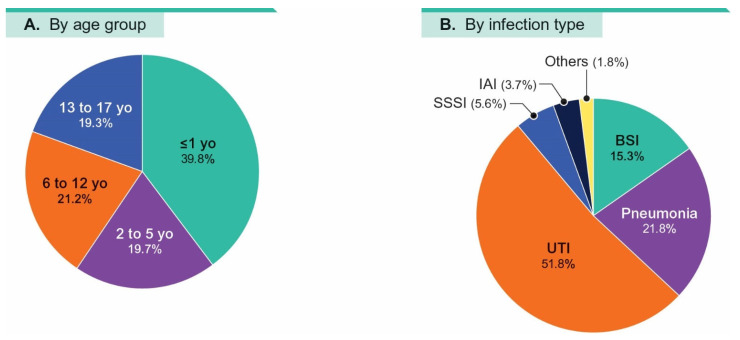 Figure 1
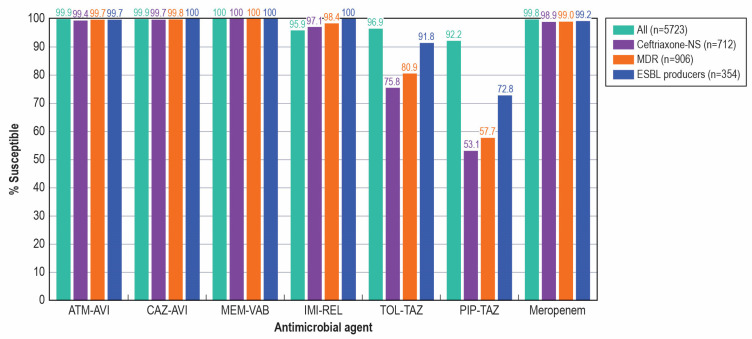 Figure 2
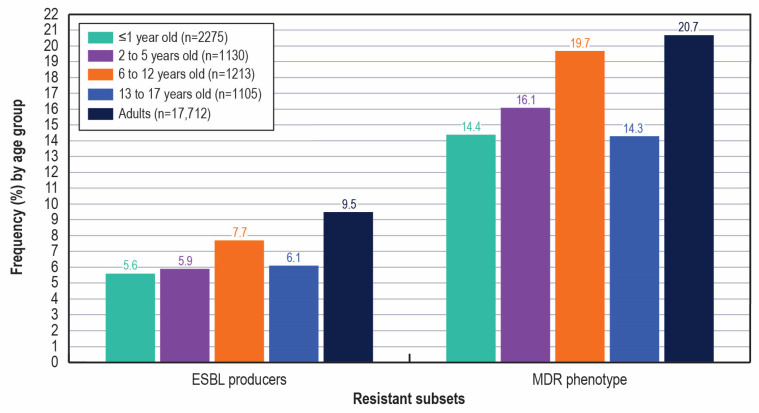 Figure 3
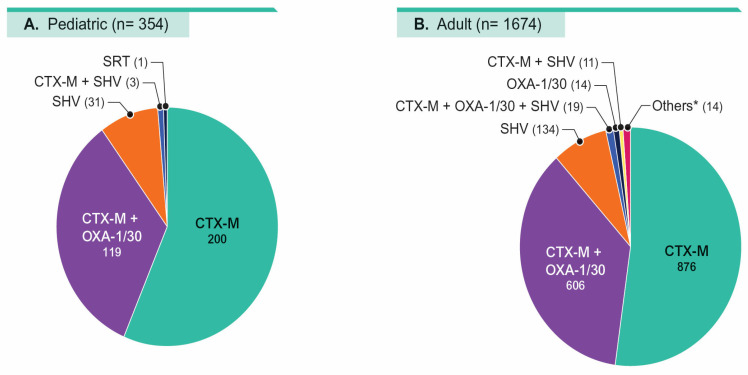 Figure 4
Peer Reviews
No public reviews on file for this paper yet. If you reviewed it on a platform where reviews are public (OpenReview, ICLR, NeurIPS, ICML), you can paste yours below so the community can read it here.
Videos
No videos yet. Explain this paper in a talk, walkthrough, or lecture? Add one.
Taxonomy
TopicsAntibiotic Resistance in Bacteria · Antibiotics Pharmacokinetics and Efficacy · Antibiotic Use and Resistance