Antioxidants Trolox and Methazolamide Protect Microvascular Endothelial Cells from Oxidative Damage Induced by Sporadic and Familial Forms of Oligomeric Amyloid-β
Maria Luisa Valle, Bitseat Getaneh, Christopher William, Jorge Ghiso, Agueda Rostagno

TL;DR
This study shows that antioxidants Trolox and methazolamide can protect brain endothelial cells from oxidative damage caused by amyloid-beta oligomers linked to Alzheimer's disease.
Contribution
The study identifies specific antioxidants that reduce oxidative stress caused by both sporadic and familial forms of amyloid-beta oligomers in microvascular endothelial cells.
Findings
Amyloid-beta oligomers induce oxidative stress markers like lipid peroxidation and protein carbonylation in endothelial cells.
Antioxidants Trolox and methazolamide significantly reduce ROS production and oxidative stress caused by amyloid-beta.
Oligomeric amyloid-beta forms are heterogeneous and trigger distinct conformational antibody responses.
Abstract
Cerebral amyloid angiopathy (CAA), present in more than 90% of Alzheimer’s disease (AD) cases, associates with focal ischemia and neurovascular dysfunction. Genetic variants at positions 21–23 of amyloid beta (Aβ), among them the Dutch mutation (AβE22Q), are primarily linked to CAA and the development of cerebral hemorrhages. An important contributor to CAA pathogenesis is the dysregulation of mitochondria-mediated pathways with concomitant induction of oxidative stress. Using biochemical assays and immunofluorescence microscopy, this work demonstrates the exacerbated formation of reactive oxygen species (ROS) in human brain microvascular endothelial cells after short exposure to soluble oligomers of synthetic homologues of Aβ1-42 and the Dutch variant, inducing lipid peroxidation and protein carbonylation, both markers of oxidative stress. The heterogeneity of the soluble oligomeric…
Genes, proteins, chemicals, diseases, species, mutations and cell lines named across the full text — each resolved to its canonical identifier and authoritative record.
Click any figure to enlarge with its caption.
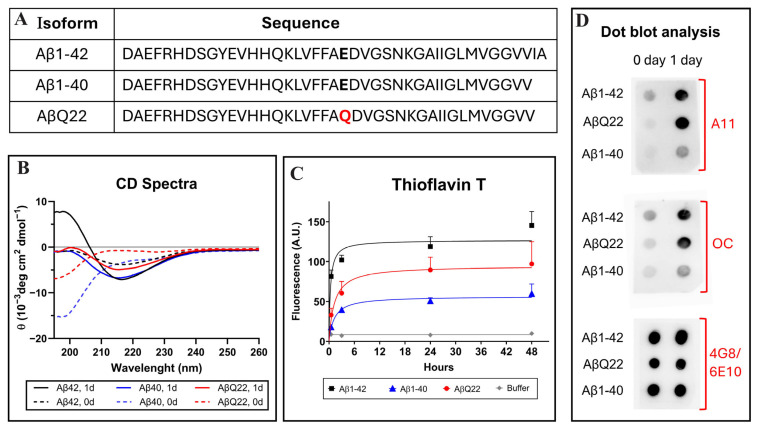 Figure 1
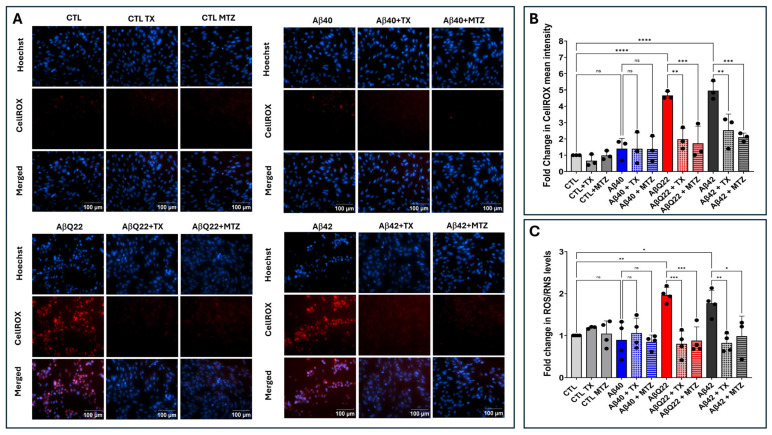 Figure 2
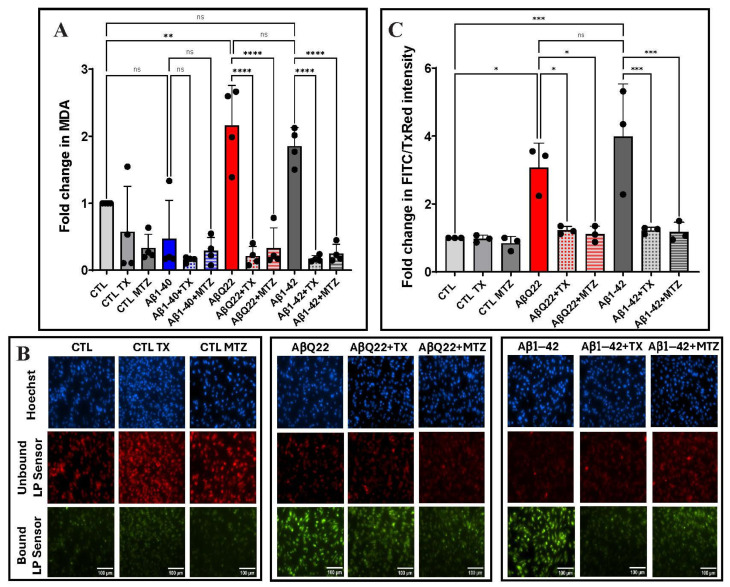 Figure 3
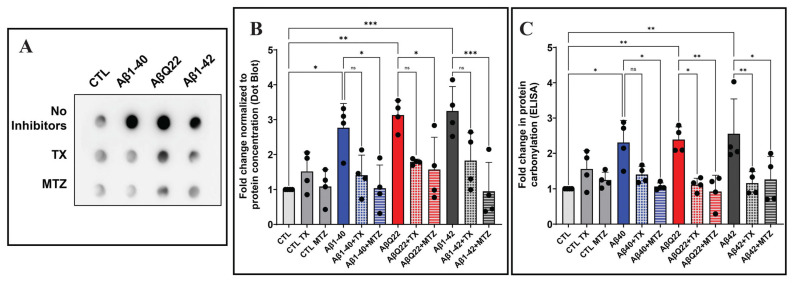 Figure 4
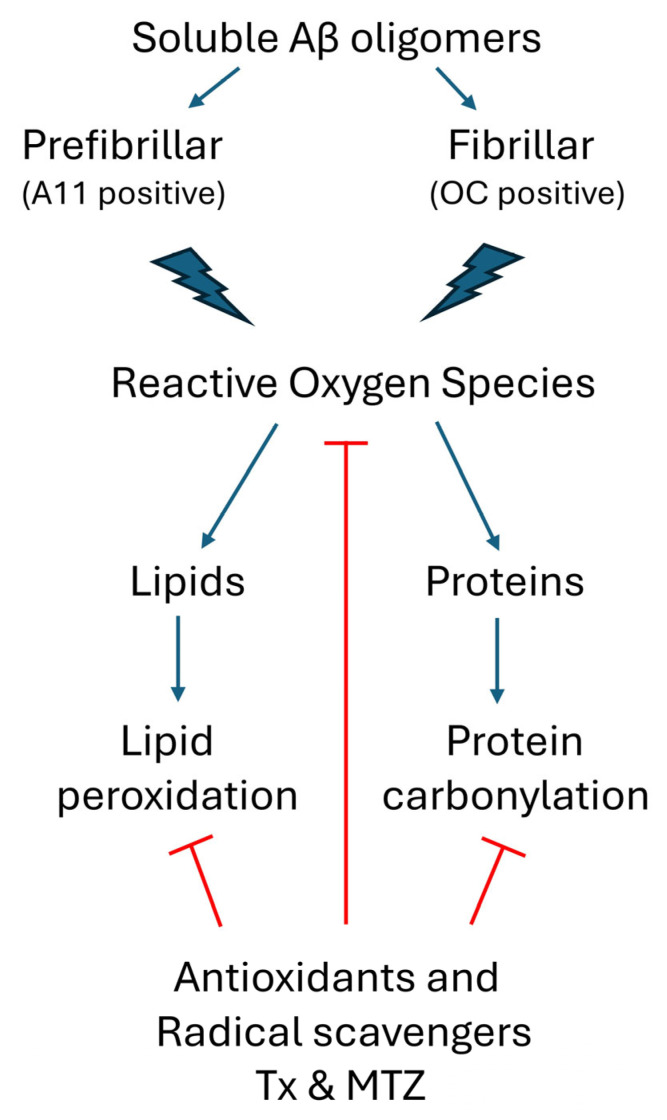 Figure 5
Peer Reviews
No public reviews on file for this paper yet. If you reviewed it on a platform where reviews are public (OpenReview, ICLR, NeurIPS, ICML), you can paste yours below so the community can read it here.
Videos
No videos yet. Explain this paper in a talk, walkthrough, or lecture? Add one.
Taxonomy
TopicsAlzheimer's disease research and treatments · Intracerebral and Subarachnoid Hemorrhage Research · Barrier Structure and Function Studies