Effect of Copper-Catalyzed Oxidation on the Aggregation of the Islet Amyloid Polypeptide
Océane Amilca, Phuong Trang Nguyen, Lucie Perquis, Fabrice Collin, Steve Bourgault

TL;DR
This study explores how copper-induced oxidation affects the aggregation of a peptide linked to type 2 diabetes, revealing that oxidation changes the type of aggregates formed.
Contribution
The study reveals how copper-mediated oxidation alters IAPP aggregation pathways through residue-specific modifications.
Findings
Oxidation targets residues 20–29 of IAPP, reducing amyloid fibril formation and promoting amorphous aggregates.
The H18A IAPP variant shows broader oxidation site distribution and altered fibril formation due to lack of histidine.
Copper-induced oxidation provides mechanistic insights into IAPP aggregation in type 2 diabetes.
Abstract
The islet amyloid polypeptide (IAPP) is a 37-residue peptide hormone secreted by pancreatic β-cells that is known to aggregate into amyloid fibrils. These fibrils accumulate in the pancreatic islets of individuals afflicted with type 2 diabetes and are implicated in β-cell dysfunction. Metal ions such as copper and zinc are known to modulate IAPP fibrillization, yet the role of metal-induced oxidative modifications in this process remains largely unexplored. This study examines the non-enzymatic post-translational oxidation of IAPP and its effects on aggregation using the biologically relevant Cu/O2/ascorbate system. Mass spectrometry identified residues within the amyloidogenic region (residues 20–29) as the primary targets of oxidation. These oxidative modifications impaired the formation of cross-β-sheet amyloid fibrils and promoted the accumulation of amorphous aggregates. The H18A…
Genes, proteins, chemicals, diseases, species, mutations and cell lines named across the full text — each resolved to its canonical identifier and authoritative record.
Click any figure to enlarge with its caption.
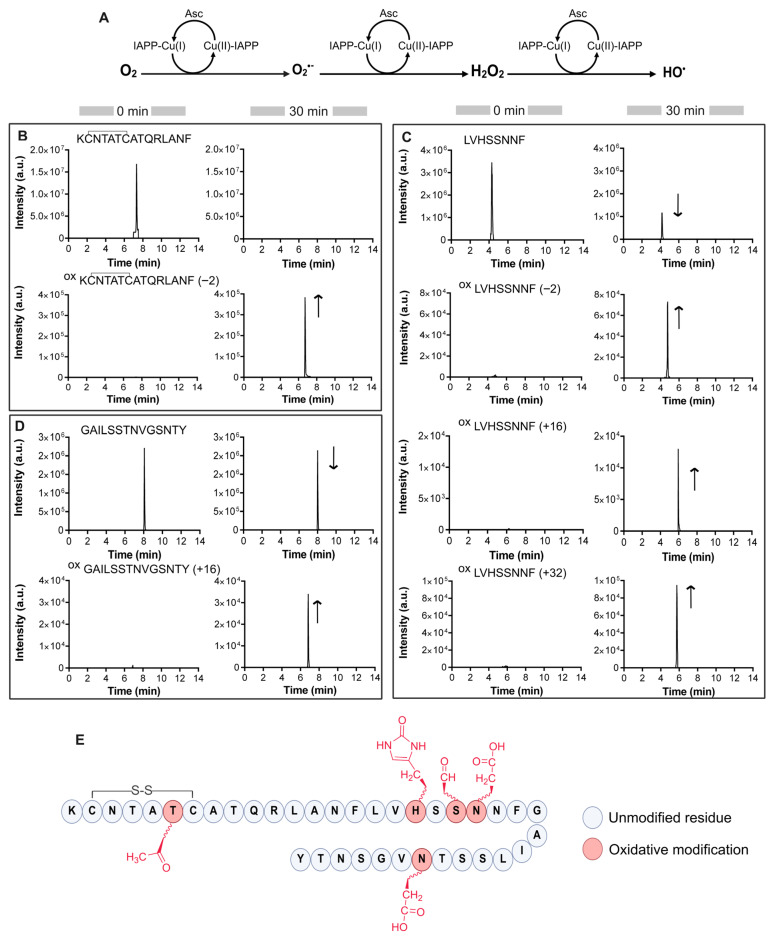 Figure 1
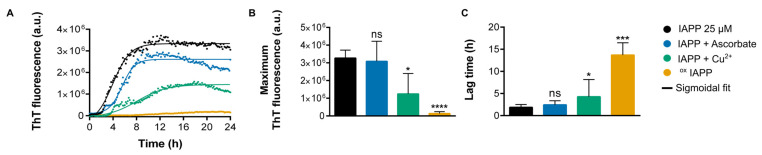 Figure 2
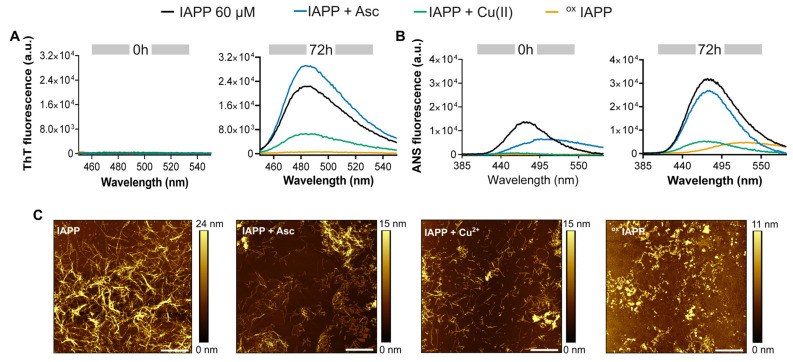 Figure 3
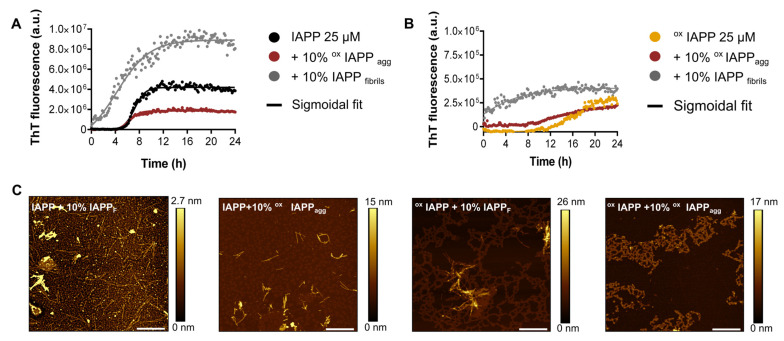 Figure 4
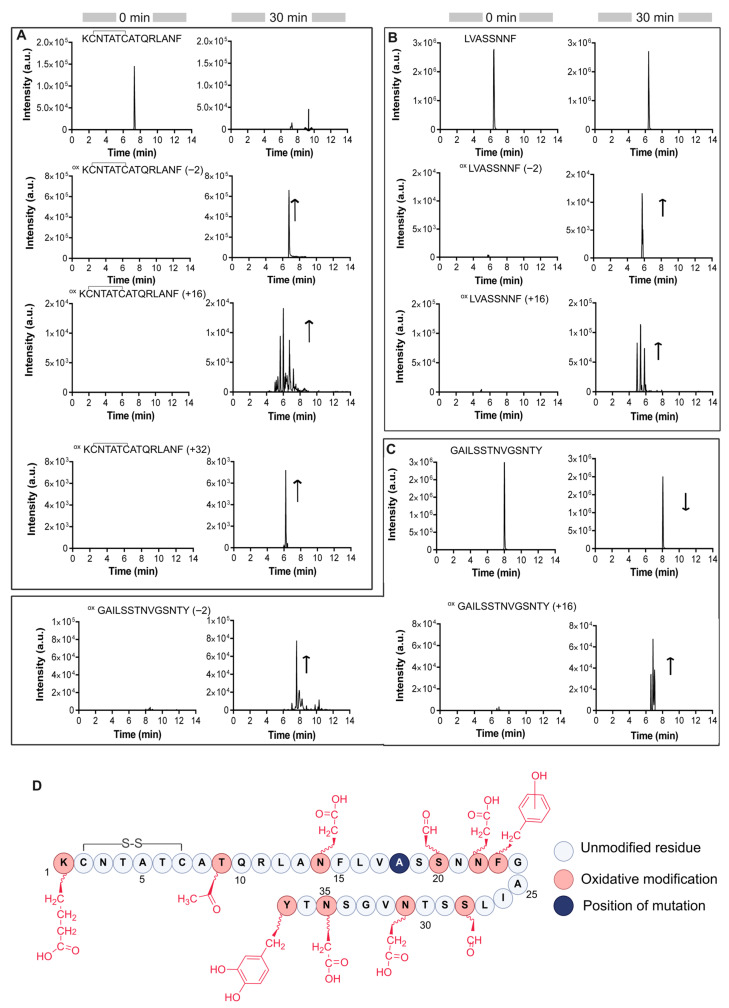 Figure 5
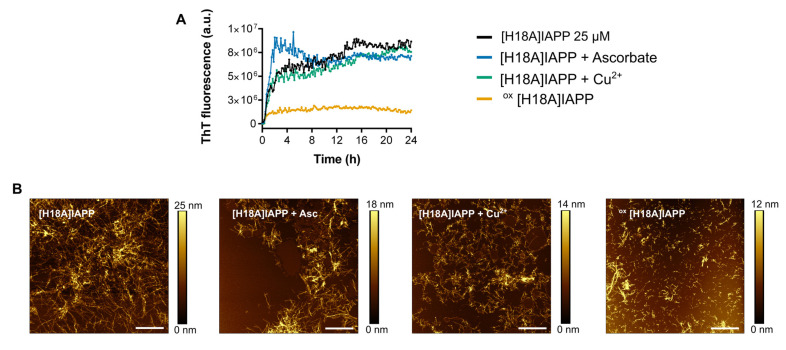 Figure 6
 Figure 7
 Figure 8
Peer Reviews
No public reviews on file for this paper yet. If you reviewed it on a platform where reviews are public (OpenReview, ICLR, NeurIPS, ICML), you can paste yours below so the community can read it here.
Videos
No videos yet. Explain this paper in a talk, walkthrough, or lecture? Add one.
Taxonomy
TopicsAlzheimer's disease research and treatments · Protein Structure and Dynamics · Biochemical effects in animals