Predicting Factors of Cognitive Flexibility in Chinese–English Bilinguals: Insights from Mouse Tracking Task Switching
Wenting Ye, Mengyan Zhu, Ting Li, Jiang Qiu

TL;DR
This study explores how bilingual experience and language use patterns affect cognitive flexibility in Chinese–English speakers using mouse-tracking data.
Contribution
The study introduces a multi-dimensional approach to understanding bilingual cognitive flexibility through task-switching metrics and contextual language use.
Findings
Bilingual experience significantly influences mix costs more than switch costs in cognitive flexibility.
Balanced language use across life stages and contexts predicts lower mix and switch costs.
Home environment bilingual experiences correlate with enhanced cognitive flexibility.
Abstract
This study investigated factors predicting cognitive flexibility in Chinese–English bilinguals, with a comprehensive focus on demographic and language-related variables. Cognitive flexibility was assessed using reaction times (RTs) and maximum absolute deviation (MAD) in a mouse-tracking nonverbal task-switching paradigm, capturing both mix and switch costs. Regression analyses revealed that bilingual experience explained a larger proportion of variance in mix costs than in switch costs, with stronger effects for MAD than RTs. Higher composite factor scores (CFS) were positively associated with mix costs, whereas balanced language use across life stages, activities, and interlocutors predicted smaller mix costs, suggesting a move to multi-dimensional, experience-based approaches. In contrast, switch costs were largely unrelated to CFS, but balanced language use across situational…
Genes, proteins, chemicals, diseases, species, mutations and cell lines named across the full text — each resolved to its canonical identifier and authoritative record.
Click any figure to enlarge with its caption.
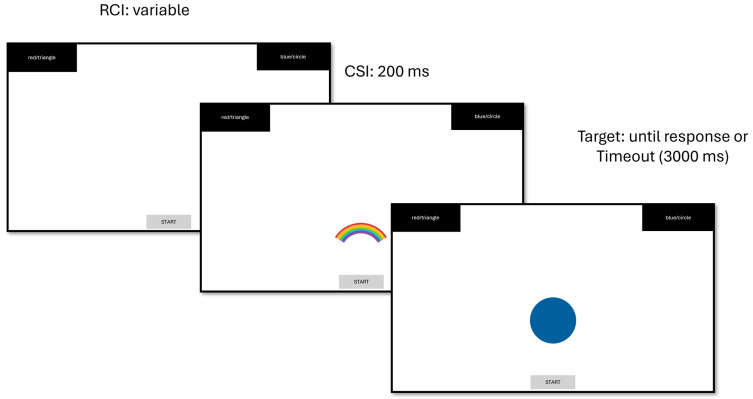 Figure 1
Peer Reviews
No public reviews on file for this paper yet. If you reviewed it on a platform where reviews are public (OpenReview, ICLR, NeurIPS, ICML), you can paste yours below so the community can read it here.
Videos
No videos yet. Explain this paper in a talk, walkthrough, or lecture? Add one.
Taxonomy
TopicsNeurobiology of Language and Bilingualism · Action Observation and Synchronization · EFL/ESL Teaching and Learning