Development of a Machine Learning Model for Predicting Treatment-Related Amenorrhea in Young Women with Breast Cancer
Long Song, Zobaida Edib, Uwe Aickelin, Hadi Akbarzadeh Khorshidi, Anne-Sophie Hamy, Yasmin Jayasinghe, Martha Hickey, Richard A. Anderson, Matteo Lambertini, Margherita Condorelli, Isabelle Demeestere, Michail Ignatiadis, Barbara Pistilli, H. Irene Su, Shanton Chang

TL;DR
A machine learning model was developed to predict amenorrhea risk in young breast cancer patients, improving fertility counseling and decision-making.
Contribution
The study introduces a novel machine learning model with enhanced accuracy and a robust framework for integrating diverse datasets.
Findings
The model achieved an internal validation AUC of 0.820 and external validation AUC of 0.743.
Twenty variables were identified as significant predictors of amenorrhea risk.
The model demonstrated high sensitivity (91.3% internally, 92.9% externally) at a cutoff of 0.20.
Abstract
Treatment-induced ovarian function loss is a significant concern for many young patients with breast cancer. Accurately predicting this risk is crucial for counselling young patients and informing their fertility-related decision-making. However, current risk prediction models for treatment-related ovarian function loss have limitations. To provide a broader representation of patient cohorts and improve feature selection, we combined retrospective data from six datasets within the FoRECAsT (Infertility after Cancer Predictor) databank, including 2679 pre-menopausal women diagnosed with breast cancer. This combined dataset presented notable missingness, prompting us to employ cross imputation using the k-nearest neighbours (KNN) machine learning (ML) algorithm. Employing Lasso regression, we developed an ML model to forecast the risk of treatment-related amenorrhea as a surrogate marker…
Genes, proteins, chemicals, diseases, species, mutations and cell lines named across the full text — each resolved to its canonical identifier and authoritative record.
Click any figure to enlarge with its caption.
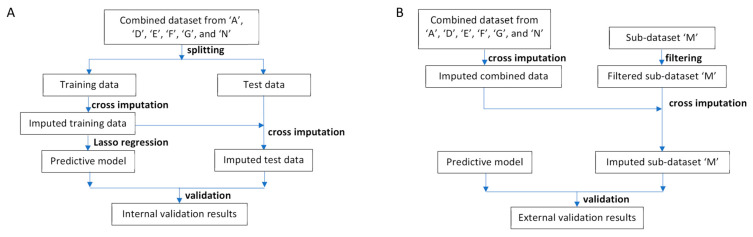 Figure 1
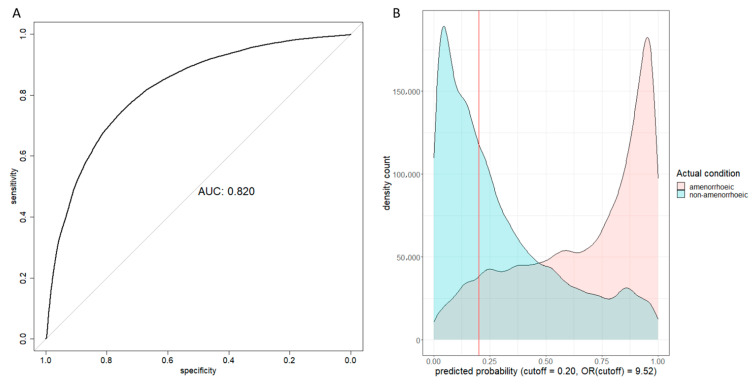 Figure 2
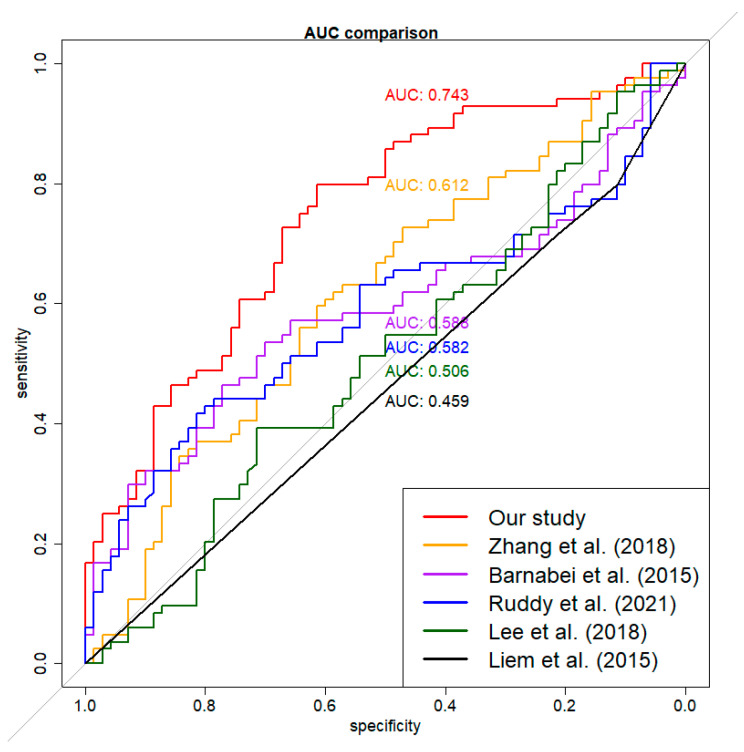 Figure 3
Peer Reviews
No public reviews on file for this paper yet. If you reviewed it on a platform where reviews are public (OpenReview, ICLR, NeurIPS, ICML), you can paste yours below so the community can read it here.
Videos
No videos yet. Explain this paper in a talk, walkthrough, or lecture? Add one.
Taxonomy
TopicsReproductive Biology and Fertility · Cancer Risks and Factors · Ovarian cancer diagnosis and treatment