Context Matters: How Decontextualization Influences Public Perception and Conservation Attitudes Toward Barbary Macaques in Algeria
Imane Razkallah, Sadek Atoussi, Thais Queiroz Morcatty, Rabah Zebsa, Cédric Sueur, Anne-Isola Nekaris

TL;DR
This study shows how social media portrayals of Barbary macaques in entertainment settings can reduce public concern for their conservation compared to videos showing them in natural habitats.
Contribution
This is the first study to examine how social media context influences public perception of Barbary macaque conservation through analysis of viral videos.
Findings
Videos of macaques in natural habitats prompted more conservation concern than entertainment contexts.
Entertainment videos led to amusement rather than concern for species protection.
Anthropomorphized portrayals may obscure threats and normalize harmful human-wildlife interactions.
Abstract
Wild animals are often shown on social media in ways that do not reflect their real lives, which can change how people think about them and even harm conservation. In this study, we looked at how people reacted to Barbary macaques, a threatened primate species, in two Facebook videos that each received over 500,000 views. We examined both written comments (720 in total) and emoji reactions (over 23,000) to videos showing macaques either in entertainment settings or in their natural habitat. We found that when macaques were shown in entertainment contexts, people were less likely to express concern for their conservation. However, when they were shown in the wild, especially when being fed by people, viewers were more critical and showed more negative reactions. These findings suggest that when animals are presented in human-like or playful ways, their real struggles and threats may be…
Genes, proteins, chemicals, diseases, species, mutations and cell lines named across the full text — each resolved to its canonical identifier and authoritative record.
Click any figure to enlarge with its caption.
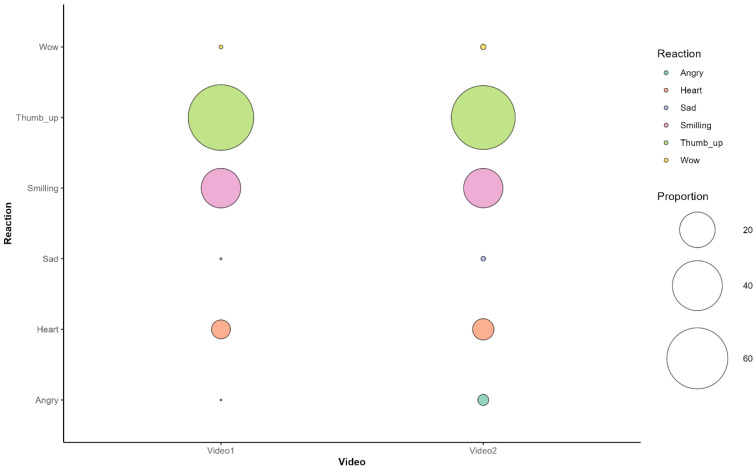 Figure 1
 Figure 2
 Figure 3
 Figure 4
 Figure 5
 Figure 6
 Figure 7
Peer Reviews
No public reviews on file for this paper yet. If you reviewed it on a platform where reviews are public (OpenReview, ICLR, NeurIPS, ICML), you can paste yours below so the community can read it here.
Videos
No videos yet. Explain this paper in a talk, walkthrough, or lecture? Add one.
Taxonomy
TopicsAnimal and Plant Science Education · Primate Behavior and Ecology · Environmental Education and Sustainability