Oxidative Stress and NLRP3 Inflammasome as Markers of Cardiac Injury Following Cardiopulmonary Bypass: Potential Implications for Patients with Preoperative Heart Failure with Reduced Ejection Fraction
Rodrigo L. Castillo, Rodrigo A. Carrasco, Alejandro Gonzaléz-Candia, Esteban G. Figueroa, Adolfo A. Paz, Alejandro A. Candia, Sawa Kostin, Nikolaos Pagonas, Pamela V. Arias, Emilio A. Herrera, Robert A. Pérez, Sebastián Iturra

TL;DR
This study explores how heart failure with reduced ejection fraction worsens cardiac injury during heart surgery involving cardiopulmonary bypass, through oxidative stress and inflammation markers.
Contribution
The study identifies elevated oxidative stress and NLRP3 inflammasome activity in HFrEF patients undergoing CPB, linking them to postoperative atrial fibrillation.
Findings
HFrEF patients had higher oxidative stress markers in plasma and atrial tissue compared to HFpEF patients.
Lipid peroxidation products were elevated in patients who developed postoperative atrial fibrillation.
NLRP3, IL-1β, and IL-18 expression was increased in HFrEF patients during cardiopulmonary bypass.
Abstract
Cardiopulmonary bypass (CPB) can lead to cardiac damage due to oxidative stress (OS) and inflammation in heart failure (HF). We tested the hypothesis that preoperative HF patients with reduced ejection fraction (HFrEF) subjected to CBP have higher levels of OS and NLRP3 (NOD-, LRR- and pyrin domain-containing protein 3) in heart and plasma and in those that develop postoperative AF (pAF) as a clinical outcome. HF was categorized for preoperative left ventricular EF: preserved (HFpEF > 50%, n = 27) and reduced EF (HFrEF ≤ 40%, n = 25). Samples of atrial tissue, pericardial fluid, and plasma were collected at surgery to assess NLRP3 expression; 3-nitrotyrosine (3-NT), thiobarbituric acid reaction (TBARS), and nuclear factor erythroid 2-related factor 2 (Nrf2) in atrial tissue; NLRP3, IL-1β, and IL-18 expression in pericardial fluid; and antioxidant capacity, 8-isoprostanes, and…
Genes, proteins, chemicals, diseases, species, mutations and cell lines named across the full text — each resolved to its canonical identifier and authoritative record.
Click any figure to enlarge with its caption.
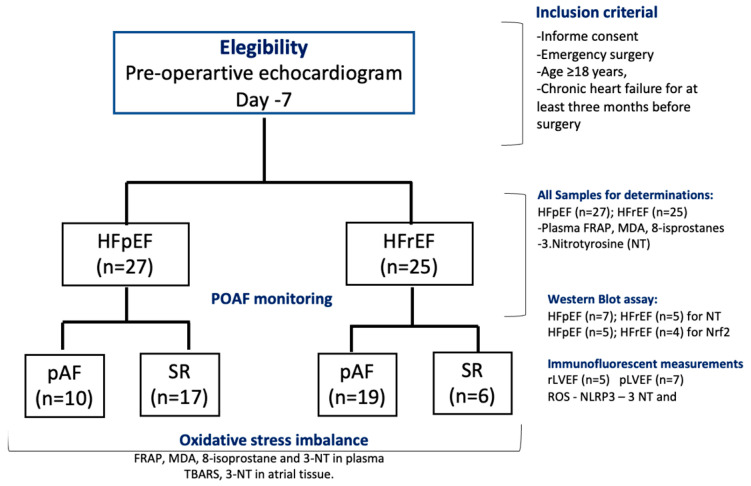 Figure 1
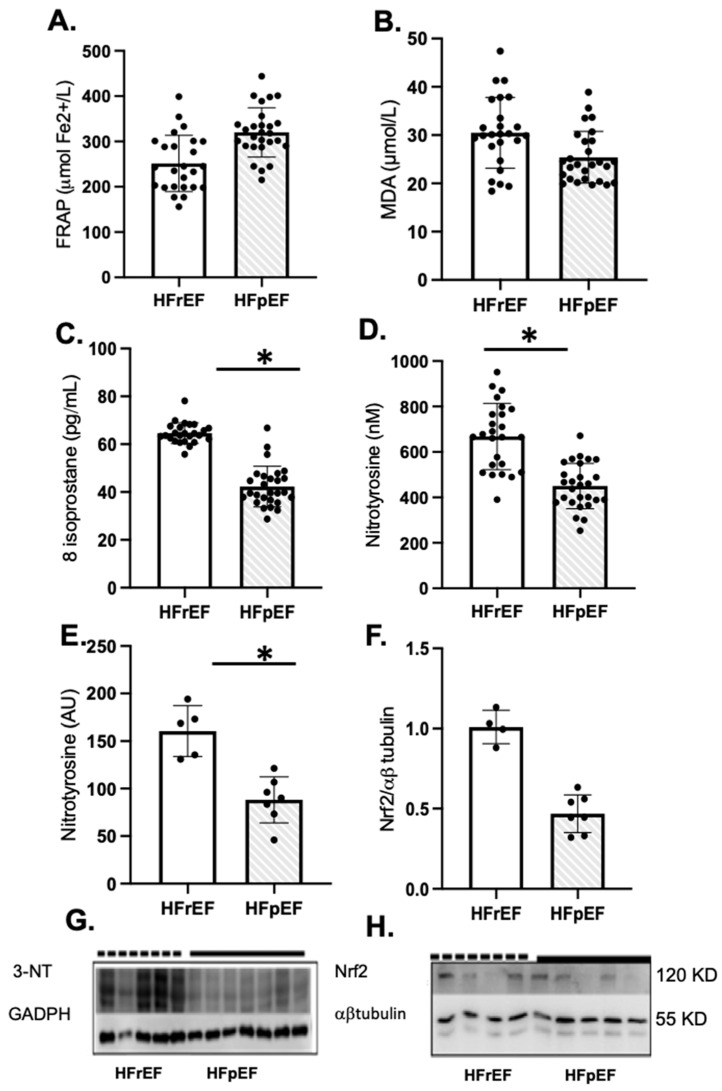 Figure 2
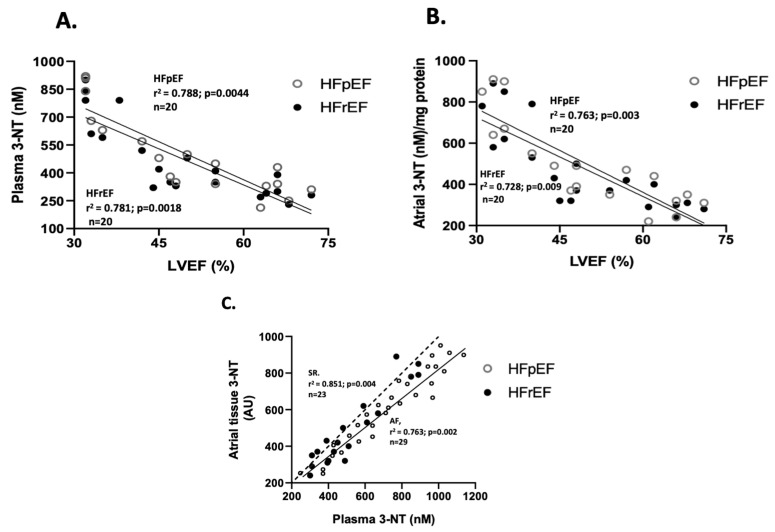 Figure 3
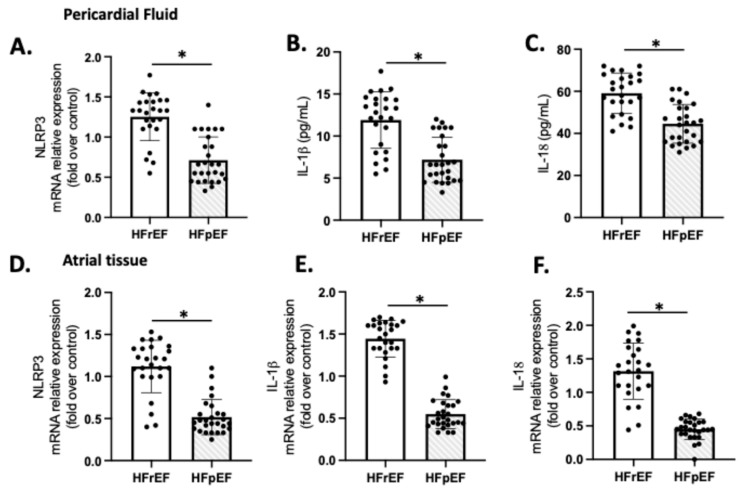 Figure 4
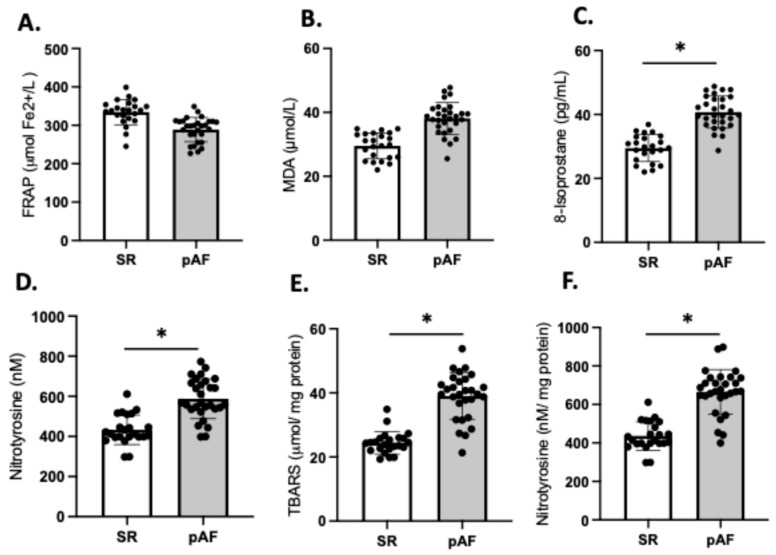 Figure 5
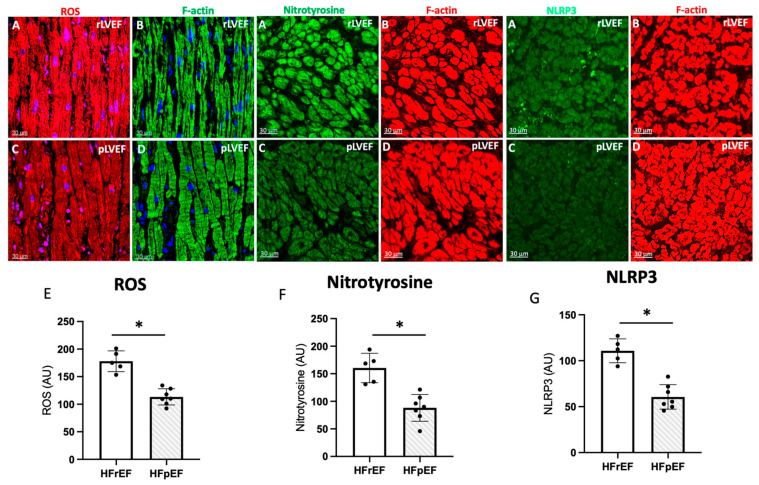 Figure 6
Peer Reviews
No public reviews on file for this paper yet. If you reviewed it on a platform where reviews are public (OpenReview, ICLR, NeurIPS, ICML), you can paste yours below so the community can read it here.
Videos
No videos yet. Explain this paper in a talk, walkthrough, or lecture? Add one.
Taxonomy
TopicsCardiac and Coronary Surgery Techniques · Cardiac Fibrosis and Remodeling · Cardiac Ischemia and Reperfusion