Elevation of urinary alpha-1-antitrypsin and transferrin excretion in children of patients with nephrolithiasis
Supawadee Mingmongkol, Nuttiya Kalpongnukul, Poorichaya Somparn, Trairak Pisitkun, Wattanachai Ungjaroenwathana, Piyaratana Tosukhowong, Thasinas Dissayabutra

TL;DR
Children of people with kidney stones have higher levels of certain proteins in their urine, which may increase their risk of developing stones.
Contribution
The study identifies elevated urinary excretion of alpha-1-antitrypsin and transferrin in children of nephrolithiasis patients as potential indicators of stone risk.
Findings
Urinary excretion of alpha-1-antitrypsin (AAT) and transferrin (TF) was elevated in children of patients with nephrolithiasis.
Increased excretion of these proteins was linked to urinary supersaturation and may influence stone formation.
Proteomic analysis revealed 26 proteins with increased and 2 with decreased excretion in high-risk children.
Abstract
Children of patients with nephrolithiasis (NL) are highly susceptible to stone development. Abnormal urinary mineral excretion and elevated protein/albumin excretion rates have been reported in disease-free children of patients with NL. Increased protein excretion in these children could be associated with the risk of stone formation. Explore the urinary proteomic profiles in children with NL who are highly susceptible to stone development. The suspected urinary proteins were further validated in the urine of children with and without a family history of stone formation. Twenty-eight patients with NL (N), 40 volunteers (V), 46 children of patients with NL (NC) and 33 children of volunteer subjects (VC) were enrolled. The 24-hour urine of the participants was collected. Thirty urine samples were randomly selected from each children’s group (NC and VC) to investigate proteins with…
Genes, proteins, chemicals, diseases, species, mutations and cell lines named across the full text — each resolved to its canonical identifier and authoritative record.
Click any figure to enlarge with its caption.
 Figure 1
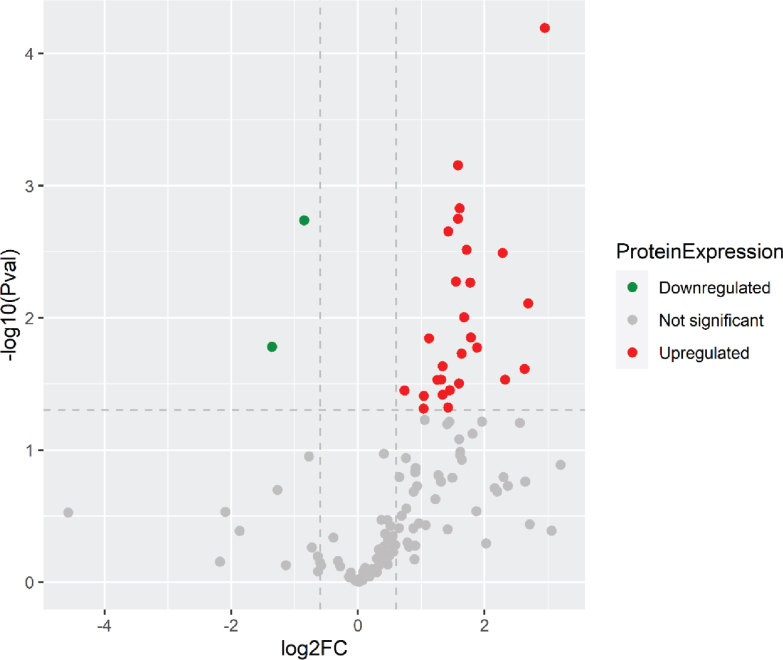 Figure 1
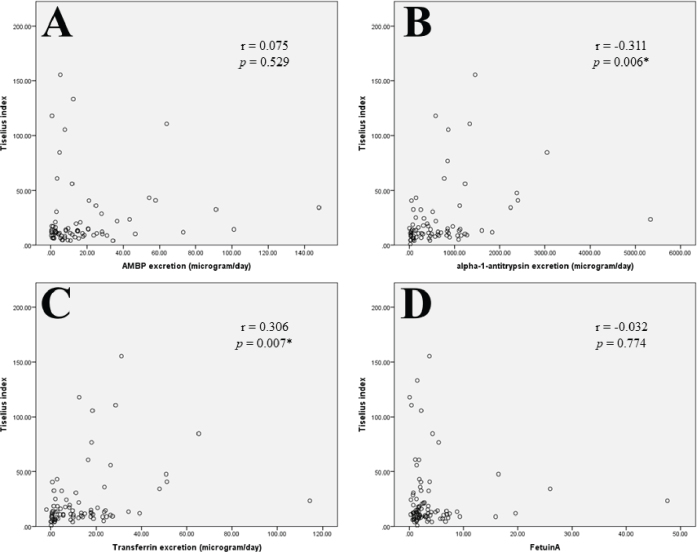 Figure 2
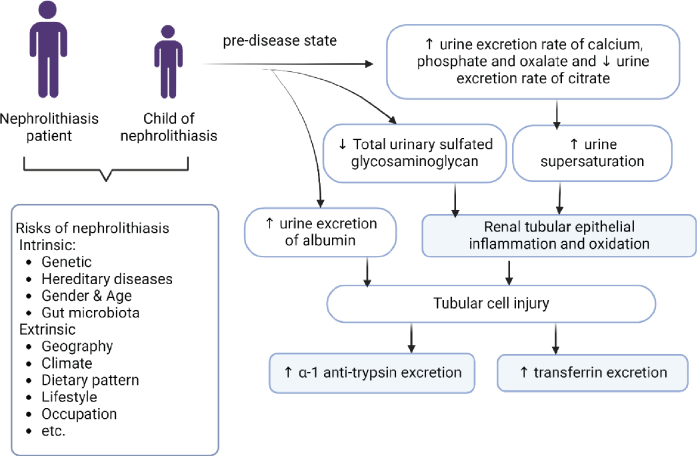 Figure 3
Peer Reviews
No public reviews on file for this paper yet. If you reviewed it on a platform where reviews are public (OpenReview, ICLR, NeurIPS, ICML), you can paste yours below so the community can read it here.
Videos
No videos yet. Explain this paper in a talk, walkthrough, or lecture? Add one.
Taxonomy
TopicsKidney Stones and Urolithiasis Treatments · Pediatric Urology and Nephrology Studies · Chronic Kidney Disease and Diabetes