The Effects of Cold Tolerance on the Distribution of Two Extreme Altitude Lizard Species in the Qinghai–Tibetan Plateau
Xiaqiu Tao, Yiyi Li, Jiasheng Li

TL;DR
This study improves predictions of lizard habitats on the Qinghai–Tibetan Plateau by incorporating cold tolerance into models, leading to more accurate and smaller suitable area estimates.
Contribution
The study introduces cold tolerance data into species distribution models for two high-altitude lizard species, improving prediction accuracy.
Findings
Incorporating cold tolerance data reduced predicted suitable areas by 37.13% compared to traditional models.
The difference between models was concentrated at the edges of high suitability areas.
Cold tolerance data improved model accuracy by reflecting physiological limits of survival.
Abstract
Predicting where species occur is crucial for their research, but traditional models often overestimate suitable areas because they rely only on general climate. This is especially problematic for animals in extreme environments like the Qinghai–Tibetan Plateau, where surviving the harsh winter is critical. Our study aimed to improve distribution maps for two extreme altitude lizard species by adding a key piece of physiological information: their ability to withstand cold stress during winter hibernation. We compared maps based on just climate data with new maps that also incorporated this cold-tolerance trait. Our results showed that the new, physiology-informed models were smaller and more accurate, removing areas where winters are too severe for the lizards to survive. This proves that including an animal’s physiological limits in models is essential for realistic predictions.…
Genes, proteins, chemicals, diseases, species, mutations and cell lines named across the full text — each resolved to its canonical identifier and authoritative record.
Click any figure to enlarge with its caption.
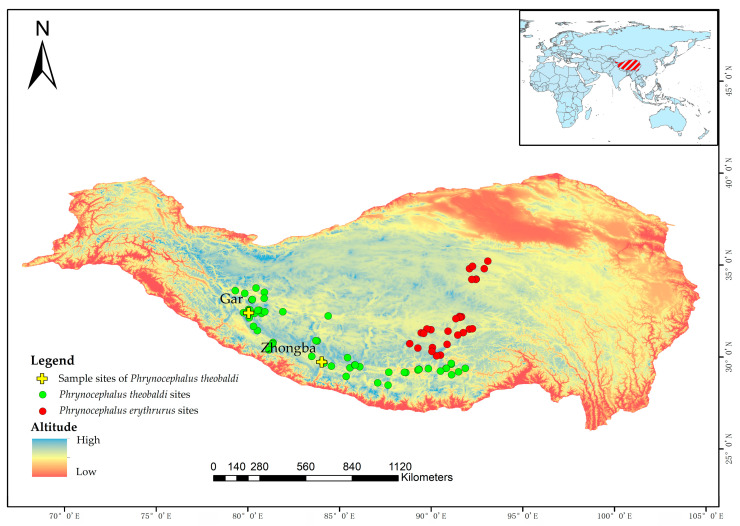 Figure 1
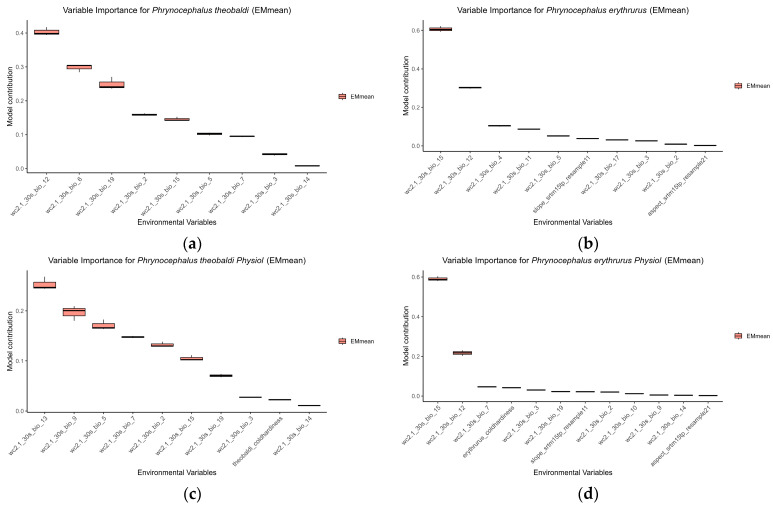 Figure 2
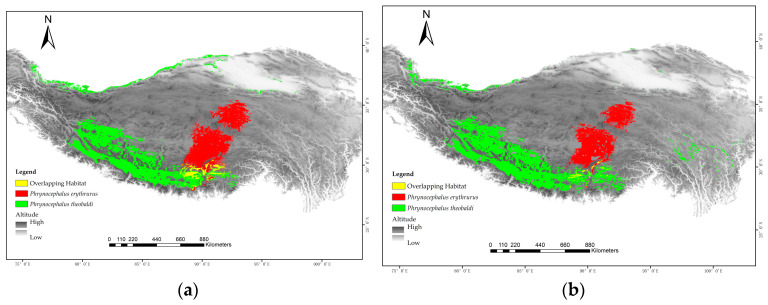 Figure 3
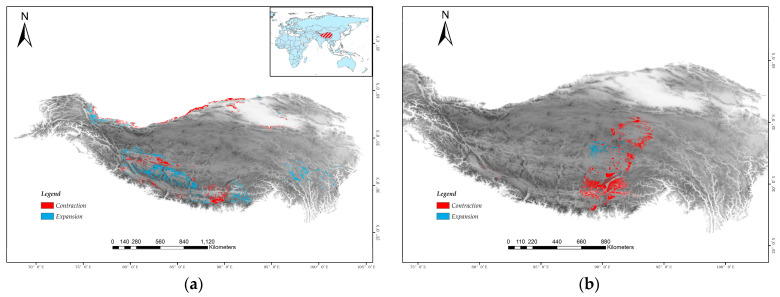 Figure 4
Peer Reviews
No public reviews on file for this paper yet. If you reviewed it on a platform where reviews are public (OpenReview, ICLR, NeurIPS, ICML), you can paste yours below so the community can read it here.
Videos
No videos yet. Explain this paper in a talk, walkthrough, or lecture? Add one.
Taxonomy
TopicsSpecies Distribution and Climate Change · Amphibian and Reptile Biology · Physiological and biochemical adaptations