Repurposing MK-8245 as a Quorum Sensing Inhibitor to Suppress Virulence and Potentiate Antibiotic Activity in Pseudomonas aeruginosa
Giulia Bernabè, Giovanni Marzaro, Mahmoud Elsayed Mosaad Shalata, Daniela Iosob, Valentina Inglima, Massimo Bellato, Ignazio Castagliuolo, Paola Brun

TL;DR
This study repurposes the drug MK-8245 to inhibit quorum sensing in Pseudomonas aeruginosa, reducing its virulence and improving antibiotic effectiveness.
Contribution
MK-8245 is identified as a novel quorum sensing inhibitor that suppresses virulence and synergizes with antibiotics in Pseudomonas aeruginosa.
Findings
MK-8245 reduced QS-regulated gene expression by ~60% without affecting bacterial viability.
It inhibited multiple virulence factors like rhamnolipids, pyocyanin, and biofilm formation in both lab and clinical isolates.
MK-8245 enhanced the efficacy of imipenem against Pseudomonas aeruginosa biofilms.
Abstract
Background/Objectives: The rise in multidrug-resistant pathogens such as Pseudomonas aeruginosa (PA), coupled with declining antibiotic development, underscores the need for innovative therapeutic strategies. Repurposing approved drugs provides advantages of safety and rapid development. Since quorum sensing (QS) controls key virulence traits in PA, targeting this pathway represents a promising antivirulence approach. This study aimed to identify and repurpose existing drugs as QS inhibitors. Methods: An in silico docking screen of 3000 FDA-approved or clinically tested compounds was performed against the C4-HSL receptor RhlR. Seventeen candidates were tested in the laboratory strain PAO1 for lactone-dependent signaling inhibition. The most active compound, MK-8245, was further evaluated for effects on growth, cytotoxicity, lactone release, biofilm formation, pyocyanin, elastase,…
Genes, proteins, chemicals, diseases, species, mutations and cell lines named across the full text — each resolved to its canonical identifier and authoritative record.
Click any figure to enlarge with its caption.
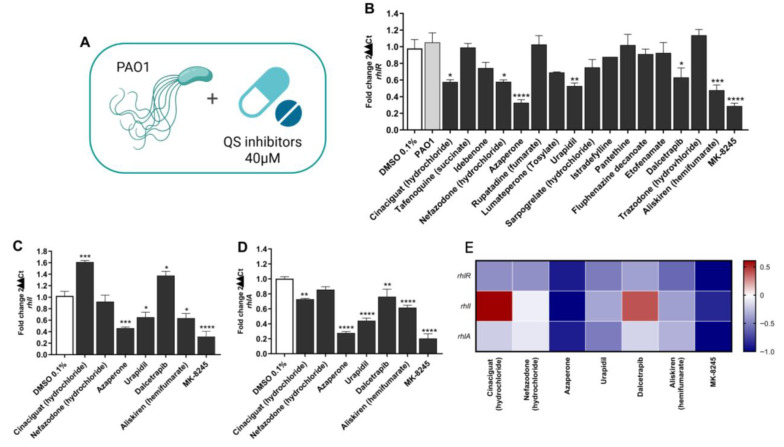 Figure 1
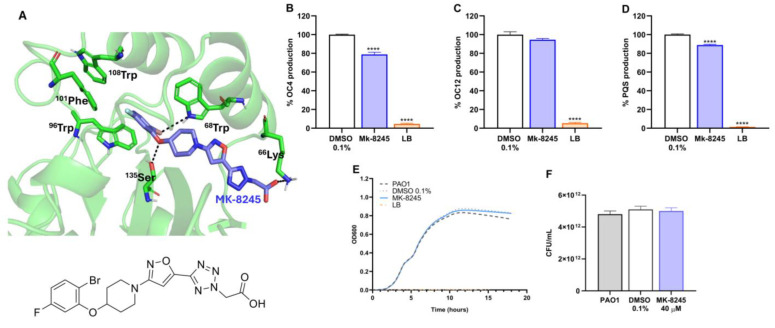 Figure 2
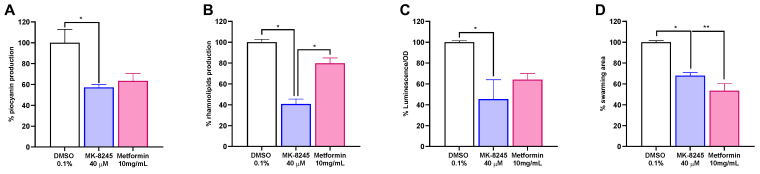 Figure 3
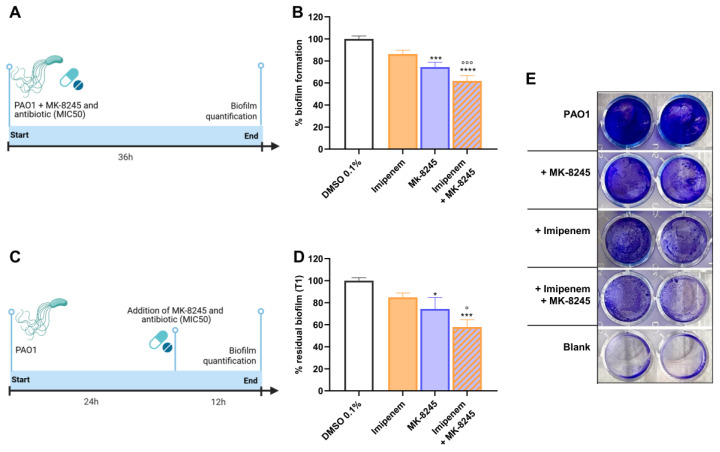 Figure 4
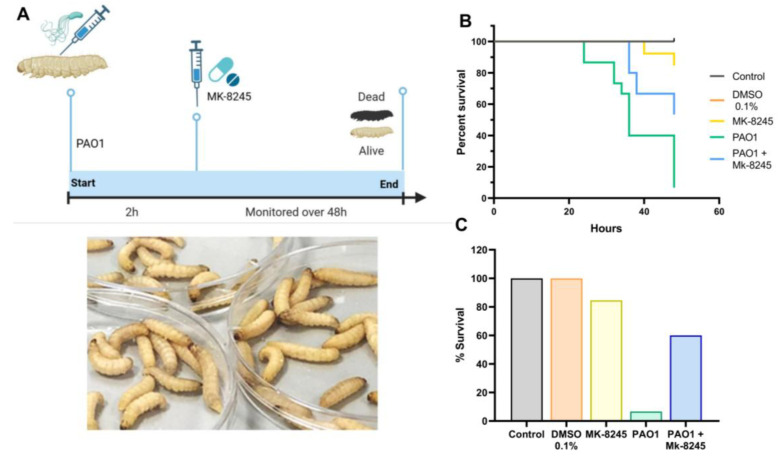 Figure 5
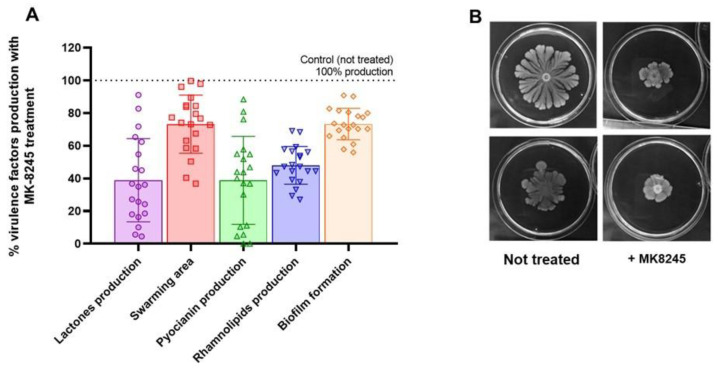 Figure 6
Peer Reviews
No public reviews on file for this paper yet. If you reviewed it on a platform where reviews are public (OpenReview, ICLR, NeurIPS, ICML), you can paste yours below so the community can read it here.
Videos
No videos yet. Explain this paper in a talk, walkthrough, or lecture? Add one.
Taxonomy
TopicsBacterial biofilms and quorum sensing · Infections and bacterial resistance · Biochemical and Structural Characterization