The Digital Centaur as a Type of Technologically Augmented Human in the AI Era: Personal and Digital Predictors
Galina U. Soldatova, Svetlana V. Chigarkova, Svetlana N. Ilyukhina

TL;DR
This study explores factors influencing young people's preference for collaborating with AI to enhance their abilities, identifying personal and digital predictors of this 'digital centaur' mindset.
Contribution
The paper introduces the concept of the 'digital centaur' and identifies specific personal and digital predictors of its adoption among adolescents and young adults.
Findings
27.3% of respondents currently identify as digital centaurs, with 41.3% aspiring to adopt this identity within the next decade.
Interpersonal and intrapersonal emotional intelligence and mindfulness are personal predictors of digital centaur preference.
Digital competence, technophilia, and daily internet use are significant digital predictors of digital centaur preference.
Abstract
Industry 4.0 is steadily advancing a reality of deepening integration between humans and technology, a phenomenon aptly described by the metaphor of the “technologically augmented human”. This study identifies the digital and personal factors that predict a preference for the “digital centaur” strategy among adolescents and young adults. This strategy is defined as a model of human–AI collaboration designed to enhance personal capabilities. A sample of 1841 participants aged 14–39 completed measures assessing digital centaur preference and identification, emotional intelligence (EI), mindfulness, digital competence, technology attitudes, and AI usage, as well as AI-induced emotions and fears. The results indicate that 27.3% of respondents currently identify as digital centaurs, with an additional 41.3% aspiring to adopt this identity within the next decade. This aspiration was most…
Genes, proteins, chemicals, diseases, species, mutations and cell lines named across the full text — each resolved to its canonical identifier and authoritative record.
Click any figure to enlarge with its caption.
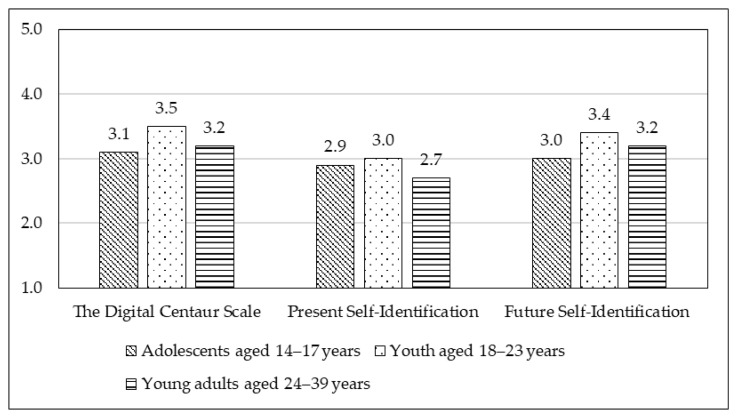 Figure 1
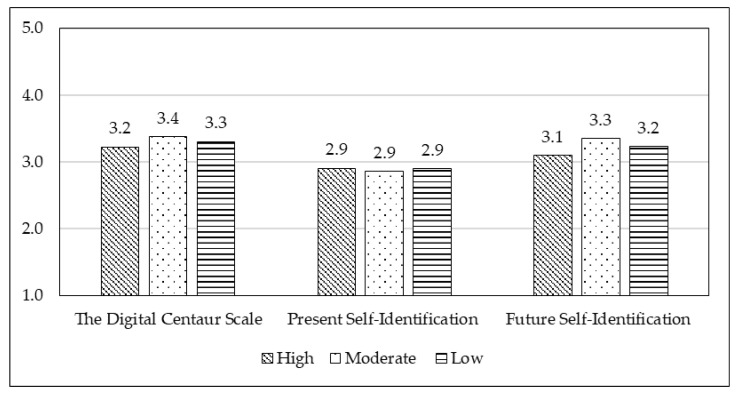 Figure 2
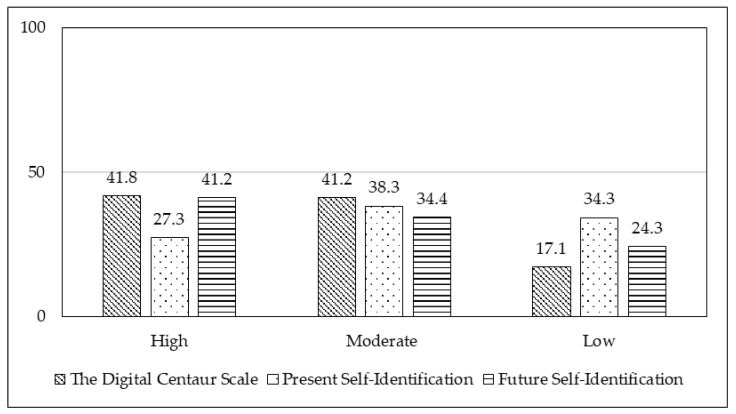 Figure 3
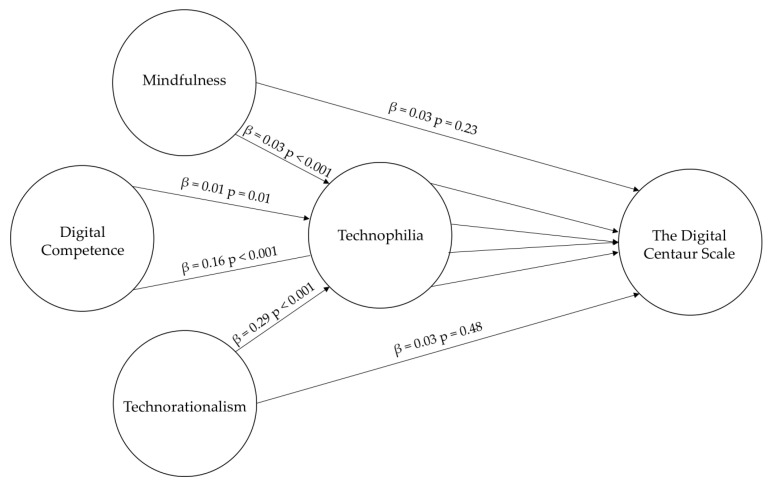 Figure 4
Peer Reviews
No public reviews on file for this paper yet. If you reviewed it on a platform where reviews are public (OpenReview, ICLR, NeurIPS, ICML), you can paste yours below so the community can read it here.
Videos
No videos yet. Explain this paper in a talk, walkthrough, or lecture? Add one.
Taxonomy
TopicsImpact of Technology on Adolescents · Technostress in Professional Settings · Psychological and Educational Research Studies