Assessing the Economic and Environmental Viability of Undaria pinnatifida Sporophylls as Sustainable Cattle Feed in South Korea
Hyeseong Kim, Pilgyu Jung, Yonghyun Do, Jungjun Park, Sam-Churl Kim, Bong-Tae Kim

TL;DR
This study explores using Undaria pinnatifida sporophylls, a seaweed by-product, as cattle feed in South Korea to reduce waste and improve feed security, finding it can be economically viable with strong carbon pricing.
Contribution
The study introduces a partial equilibrium framework to assess the economic and environmental viability of recycling seaweed by-products into Hanwoo cattle feed under Korea’s carbon pricing system.
Findings
Without environmental benefits, processing costs of Undaria pinnatifida sporophylls outweigh savings.
Methane abatement benefits under Korea’s carbon trading system generate net economic benefits at higher carbon prices.
Effective carbon pricing and subsidies are essential for long-term viability of seaweed by-product recycling.
Abstract
Seaweed aquaculture generates substantial amounts of by-products that are often discarded, creating both waste and environmental challenges. In Korea, the sporophylls of sea mustard (Undaria pinnatifida) represent a major by-product of seaweed aquaculture. Rather than being treated as waste, these by-products can be recycled as feed for Hanwoo cattle (Bos taurus coreanae), thereby promoting circular resource use and strengthening feed security. This study evaluated the economic and environmental effects of such recycling by considering processing costs, savings from avoided disposal and reduced grain imports, and the benefits of methane abatement. The analysis showed that, without accounting for environmental benefits, costs exceeded savings. However, when methane abatement was valued according to Korea’s carbon trading system, net benefits emerged, particularly at higher inclusion…
Genes, proteins, chemicals, diseases, species, mutations and cell lines named across the full text — each resolved to its canonical identifier and authoritative record.
Click any figure to enlarge with its caption.
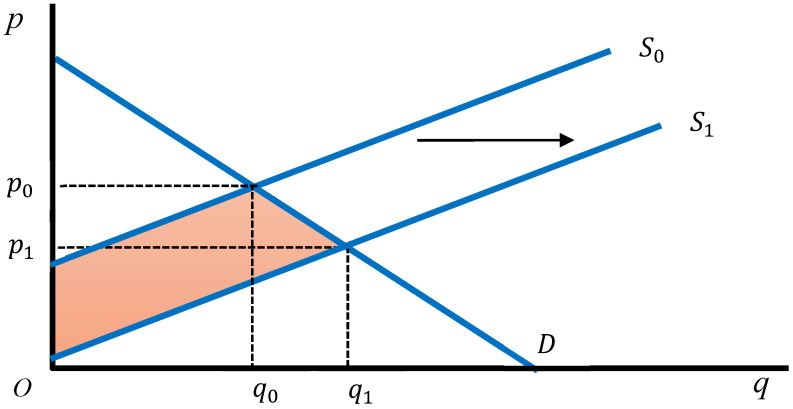 Figure 1
Peer Reviews
No public reviews on file for this paper yet. If you reviewed it on a platform where reviews are public (OpenReview, ICLR, NeurIPS, ICML), you can paste yours below so the community can read it here.
Videos
No videos yet. Explain this paper in a talk, walkthrough, or lecture? Add one.
Taxonomy
TopicsMarine and coastal plant biology · Seaweed-derived Bioactive Compounds · Marine Bivalve and Aquaculture Studies