Human-Centred Perspectives on Artificial Intelligence in the Care of Older Adults: A Q Methodology Study of Caregivers’ Perceptions
Seo Jung Shin, Kyoung Yeon Moon, Ji Yeong Kim, Youn-Gil Jeong, Song Yi Lee

TL;DR
This study explores how caregivers perceive AI-powered devices in elder care, revealing three distinct viewpoints based on practical use, improvement needs, and emotional support.
Contribution
The study introduces a novel integration of multiple theoretical frameworks to analyze caregivers' subjective perceptions of AI in elder care.
Findings
Three distinct caregiver perception types were identified: Active Acceptors, Improvement Seekers, and Emotional Support Seekers.
Caregivers' acceptance of AI involves factors beyond functionality, including trust and emotional interaction.
The study combines TAM, UTAUT, STS, and HMC theories to provide a comprehensive understanding of AI acceptance in caregiving.
Abstract
This study used Q methodology to explore and categorise caregivers’ subjective perceptions of artificial intelligence (AI)-powered ‘virtual human’ (AVH) devices in caring for older adults. We derived 123 initial statements from literature and focus groups and narrowed them to 34 statements as the final Q sample. Seventeen caregivers, nurses, and social workers completed the Q-sorting procedure. Using principal component analysis and Varimax rotation in Ken-Q, we identified three perception types: Active Acceptors, who emphasise the devices’ practical utility in patient communication; Improvement Seekers, who conditionally accept the technology while seeking greater accuracy and effectiveness; and Emotional Support Seekers, who view the device as a tool for emotional relief and psychological support. These findings suggest that technology acceptance in caregiving extends beyond…
Genes, proteins, chemicals, diseases, species, mutations and cell lines named across the full text — each resolved to its canonical identifier and authoritative record.
Click any figure to enlarge with its caption.
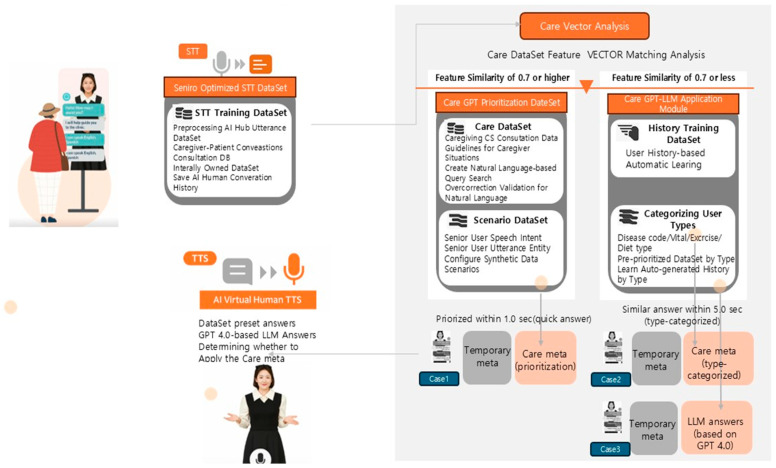 Figure 1
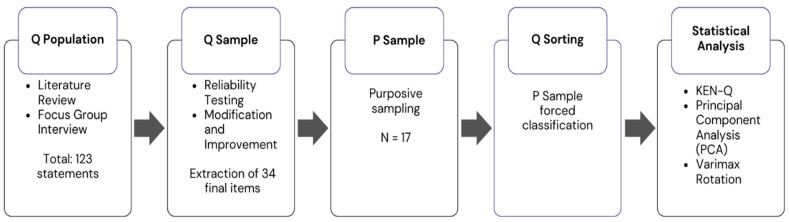 Figure 2
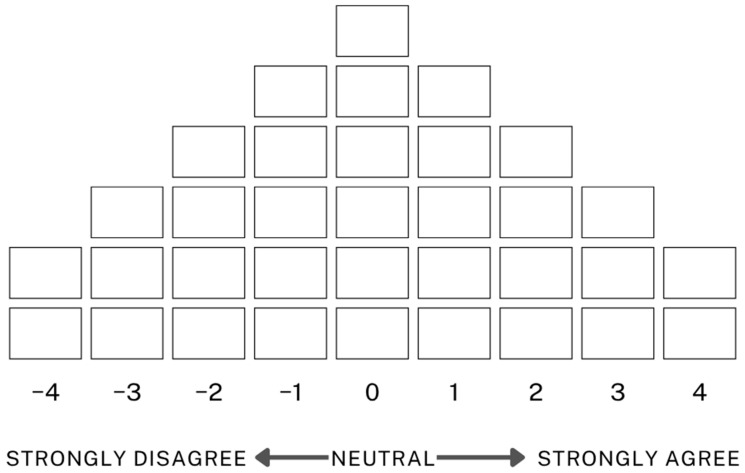 Figure 3
Peer Reviews
No public reviews on file for this paper yet. If you reviewed it on a platform where reviews are public (OpenReview, ICLR, NeurIPS, ICML), you can paste yours below so the community can read it here.
Videos
No videos yet. Explain this paper in a talk, walkthrough, or lecture? Add one.
Taxonomy
TopicsTechnology Use by Older Adults · AI in Service Interactions · Social Robot Interaction and HRI