Disproportionate Cybersexual Victimization of Women from Adolescence into Midlife in Spain: Implications for Targeted Protection and Prevention
Carlos J. Mármol, Aurelio Luna, Isabel Legaz

TL;DR
Cybersexual victimization disproportionately affects women in Spain from adolescence into midlife, with significant regional and age-based disparities.
Contribution
This study provides sex- and age-specific trends and projections of cybersexual victimization in Spain, highlighting persistent gender disparities and regional inequalities.
Findings
Women consistently had higher victimization rates than men across most cybersexual offenses and age groups.
Grooming, child sexual abuse images, and contact offenses showed the steepest upward trends from 2011 to 2022.
Projections indicate that sex gaps in victimization will persist or widen, particularly among females under 18 and in the 26–40 age group.
Abstract
Cybersexual victimization is a growing public health concern with severe psychosocial consequences, particularly for younger populations. Despite growing awareness of its prevalence, understanding how cybersexual victimization evolves across different demographic and regional contexts remains limited. The aim was to analyze sex- and age-specific temporal trends and projections of cybersexual victimization in Spain (2011–2022), disaggregated by sex, age group, autonomous community, and offense type, to identify where disparities emerge and persist (particularly from adolescence (<18) into midlife) while also examining gender and regional inequalities to provide evidence for prevention strategies that are both gender-sensitive and tailored to different developmental stages and territorial contexts. Spanish national police-reported data on seven cybersexual offenses (sexual abuse, sexual…
Genes, proteins, chemicals, diseases, species, mutations and cell lines named across the full text — each resolved to its canonical identifier and authoritative record.
Click any figure to enlarge with its caption.
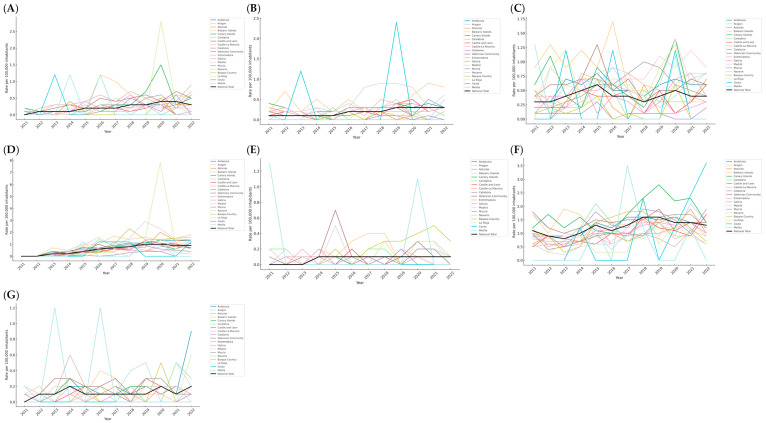 Figure 1
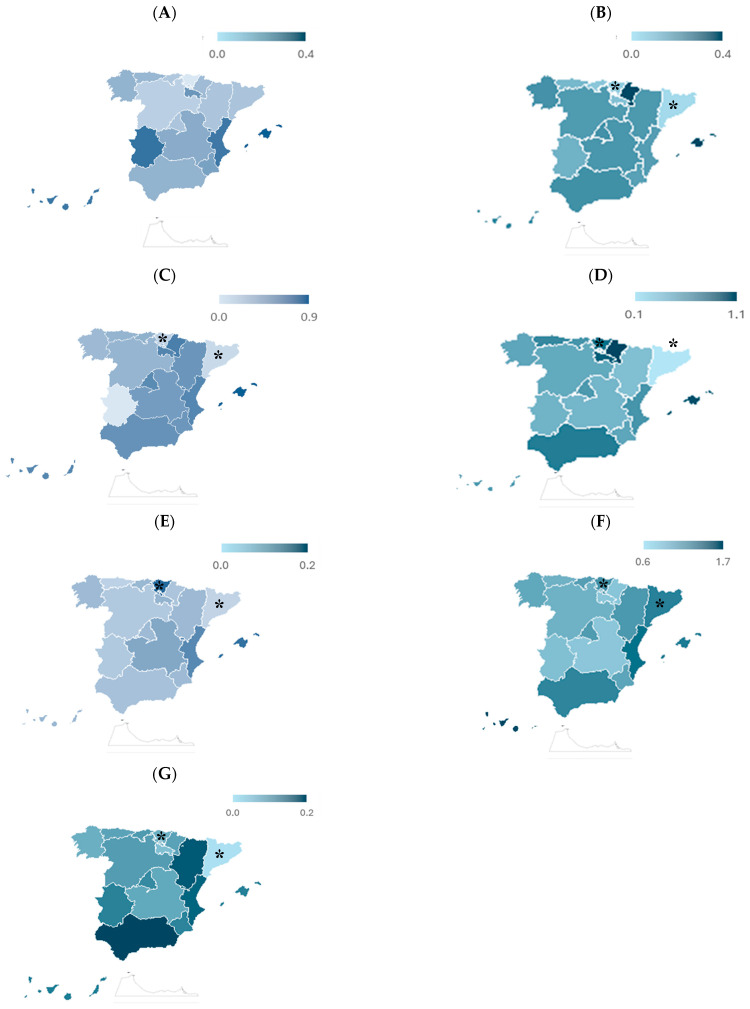 Figure 2
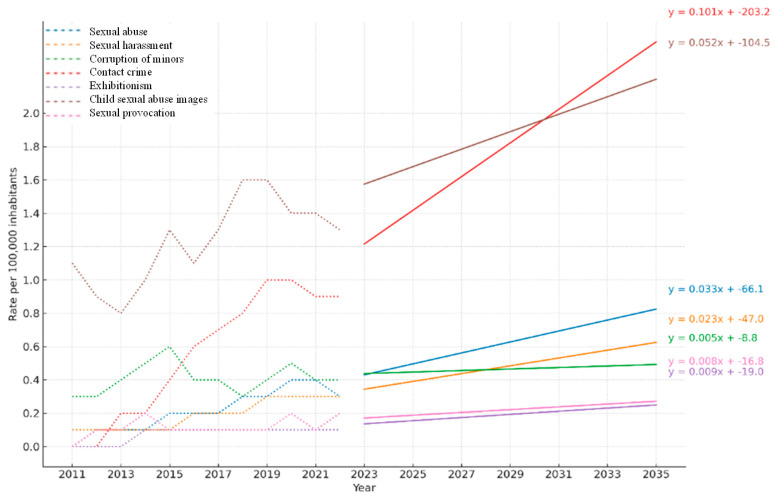 Figure 3
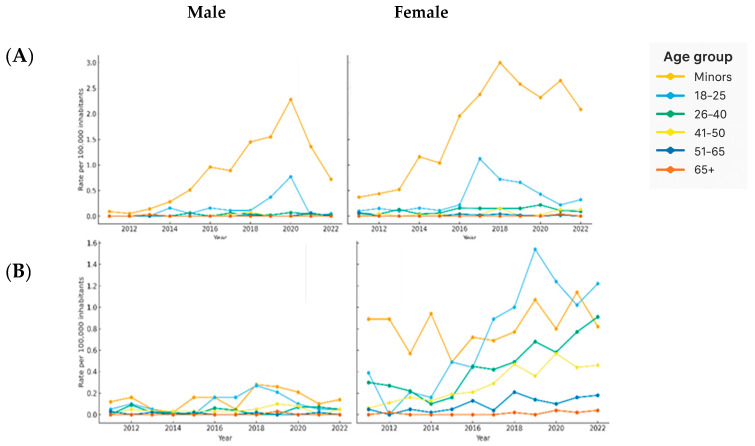 Figure 4
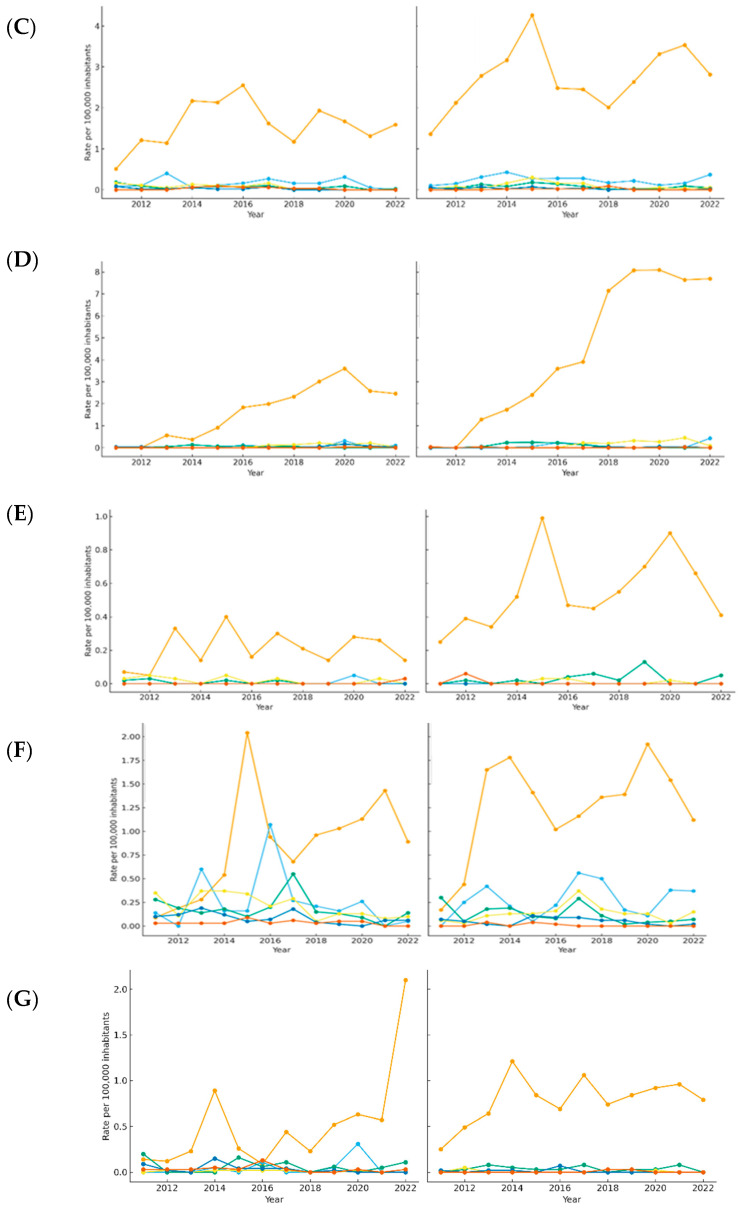 Figure 5
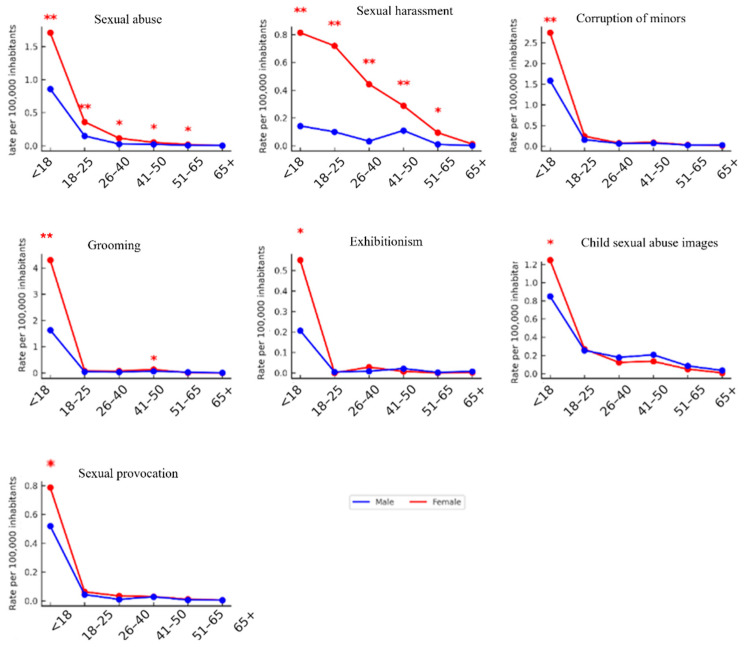 Figure 6
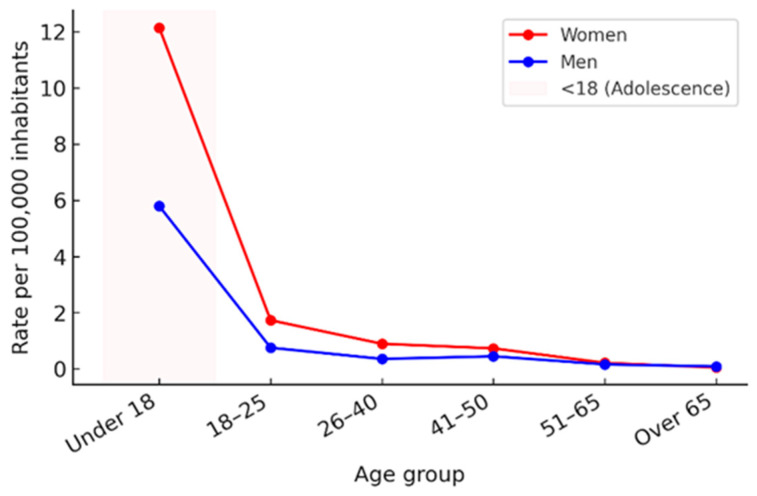 Figure 7
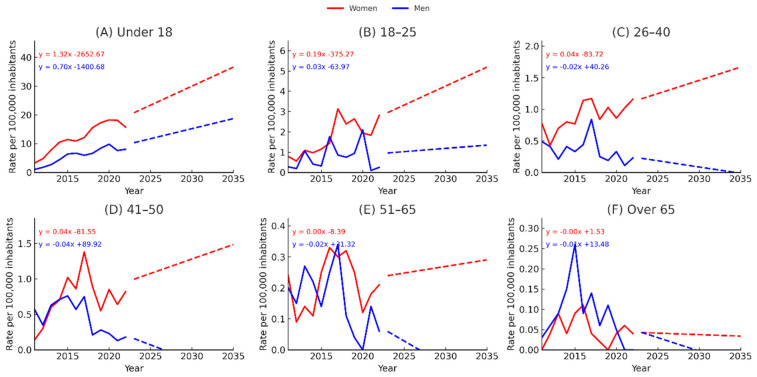 Figure 8
Peer Reviews
No public reviews on file for this paper yet. If you reviewed it on a platform where reviews are public (OpenReview, ICLR, NeurIPS, ICML), you can paste yours below so the community can read it here.
Videos
No videos yet. Explain this paper in a talk, walkthrough, or lecture? Add one.
Taxonomy
TopicsSexuality, Behavior, and Technology · Sexual Assault and Victimization Studies · LGBTQ Health, Identity, and Policy