First Observation of Embryonic Development and Paralarvae of Amphioctopus kagoshimensis
Jinchao Zhu, Juanwen Yu, Siqing Chen, Tianshi Zhang, Qing Chang, Li Bian

TL;DR
This study provides the first detailed observation of the embryonic development and early life stages of the octopus species Amphioctopus kagoshimensis under controlled conditions.
Contribution
The first comprehensive documentation of A. kagoshimensis embryonic development and paralarval stages under controlled aquaculture conditions.
Findings
Embryonic development of A. kagoshimensis lasts 29–30 days at 22.0–24.5 °C with 20 distinguishable stages.
Paralarvae exhibit planktonic behavior, phototaxis, and chromatophore development, surviving up to 30 days under lab conditions.
The species shows potential as a model for developmental studies and aquaculture due to its manageable size and breeding traits.
Abstract
Understanding the early development of cephalopods is essential for advancing aquaculture. Amphioctopus kagoshimensis, a merobenthic octopus species, has attracted increasing interest for artificial breeding. However, its reproductive and developmental characteristics remain poorly known. In this study, we successfully induced spawning and observed the complete embryonic development of A. kagoshimensis under controlled conditions at 22.0–24.5 °C and salinity of 29–32‰. Each female laid approximately 4000–5000 eggs (2.60 ± 0.05 mm in length). The embryos hatched after 29–30 days, passing through 20 distinguishable developmental stages. Newly hatched paralarvae were planktonic, with a mantle length of 1.58 ± 0.03 mm, and displayed phototactic behavior and ink expulsion. Despite high mortality, a small portion of paralarvae survived over 30 days under current rearing conditions. These…
Genes, proteins, chemicals, diseases, species, mutations and cell lines named across the full text — each resolved to its canonical identifier and authoritative record.
Click any figure to enlarge with its caption.
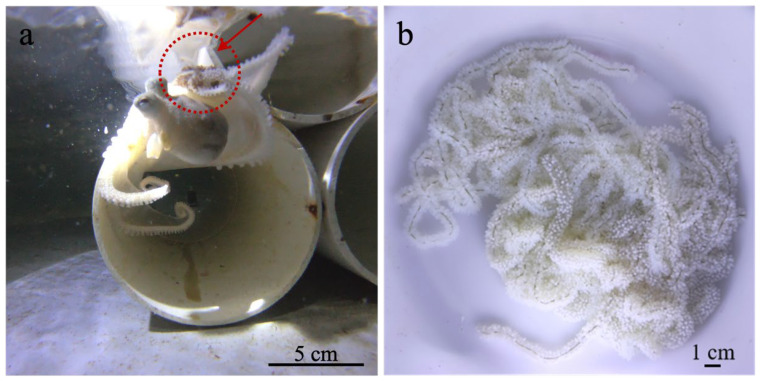 Figure 1
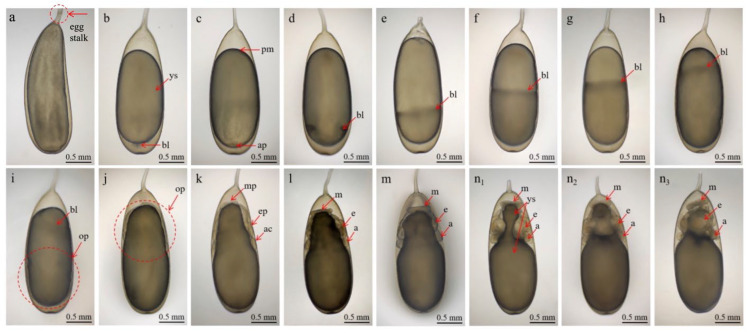 Figure 2
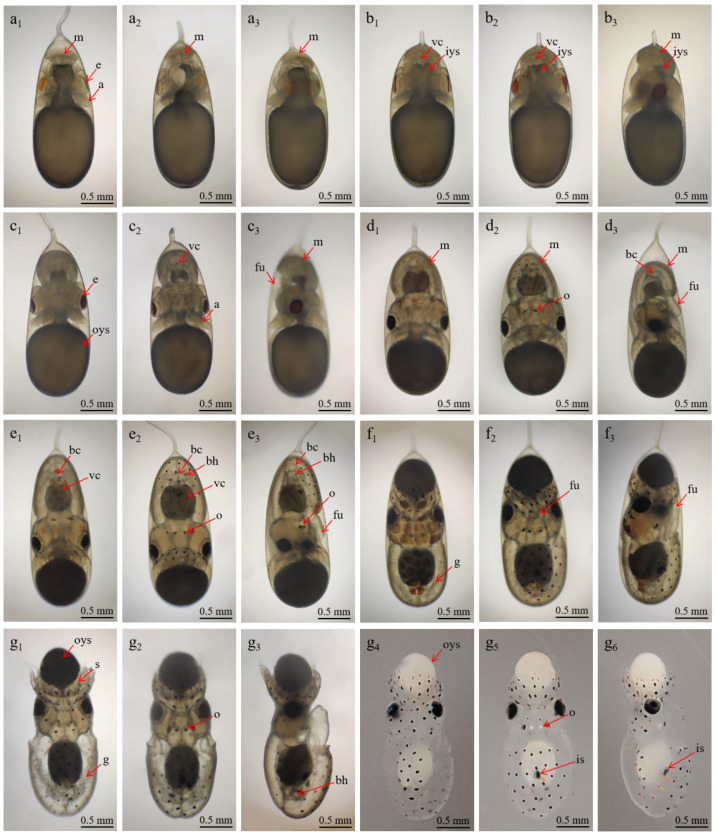 Figure 3
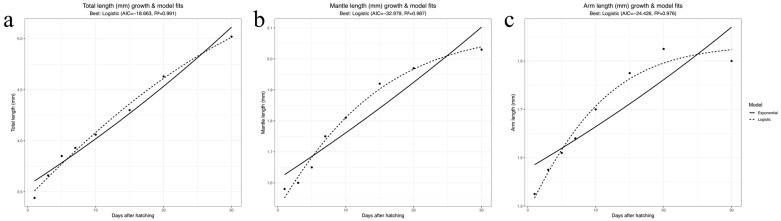 Figure 4
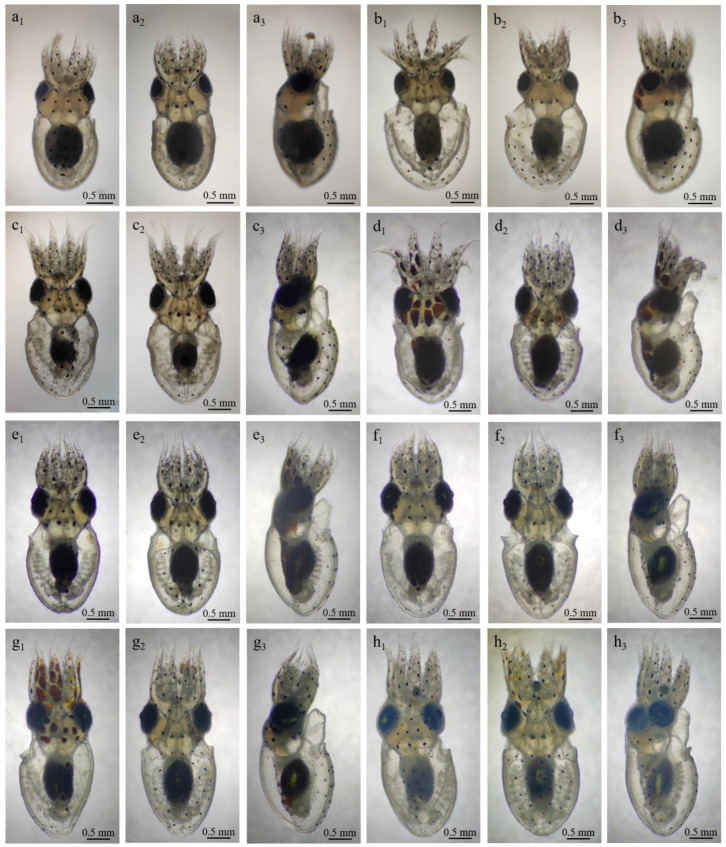 Figure 5
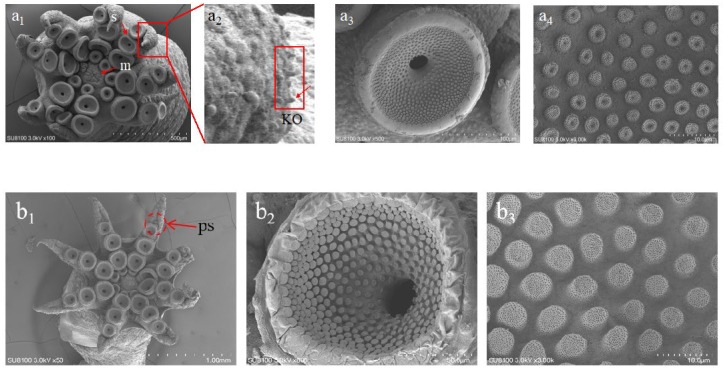 Figure 6
Peer Reviews
No public reviews on file for this paper yet. If you reviewed it on a platform where reviews are public (OpenReview, ICLR, NeurIPS, ICML), you can paste yours below so the community can read it here.
Videos
No videos yet. Explain this paper in a talk, walkthrough, or lecture? Add one.
Taxonomy
TopicsMarine Bivalve and Aquaculture Studies · Cephalopods and Marine Biology · Marine Biology and Environmental Chemistry