From the Freezer to Implant: Does Cadaver Freezing Affect the Accuracy of 3D-Printed Scaphoid Prosthesis Models?
Philipp Honigmann, Mathias Haefeli, Geert Streekstra, Johannes Dobbe

TL;DR
This study shows that frozen cadaver wrists can be used to create accurate 3D-printed scaphoid prostheses without significant errors from freezing or smoothing techniques.
Contribution
The study demonstrates that frozen cadaver specimens and segmentation smoothing do not significantly affect scaphoid prosthesis model accuracy.
Findings
No significant volume differences were found between frozen and thawed scaphoid models.
Segmentation smoothing had minimal impact on the dimensions of the scaphoid model.
Frozen specimens are suitable for preclinical modeling of patient-specific prostheses.
Abstract
Background: Cadaveric specimens used in research are commonly frozen when stored and may undergo multiple freeze–thaw cycles during experimental procedures. To streamline workflows and minimize potential tissue degradation from repeated thawing, this study evaluated whether a frozen cadaver wrist can be reliably used to model a scaphoid for the development of a patient-specific prosthesis design method in a preclinical setting. Additionally, we assessed the impact of segmentation smoothing techniques on the accuracy of the prosthesis model. Methods: High-resolution computed tomography (CT) scans were performed on a cadaver wrist in both frozen and thawed states. Scaphoid bones were segmented using two approaches: a tight (native surface) segmentation and a smoothened version optimized for prosthetic articulation. The resulting 3D models were registered, and volume and shape differences…
Genes, proteins, chemicals, diseases, species, mutations and cell lines named across the full text — each resolved to its canonical identifier and authoritative record.
Click any figure to enlarge with its caption.
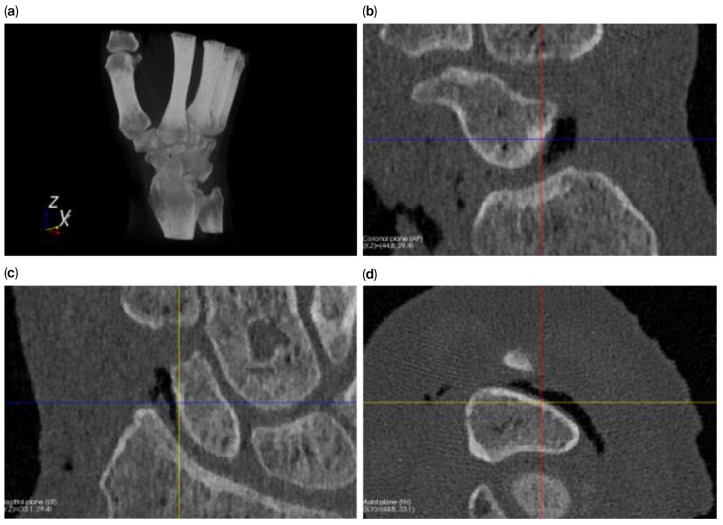 Figure 1
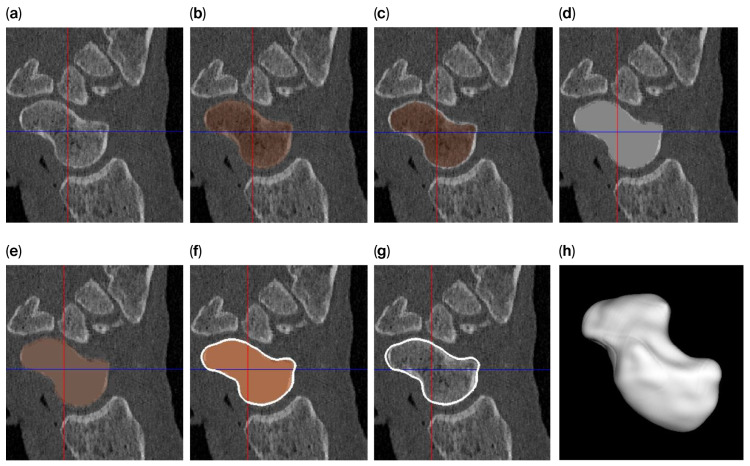 Figure 2
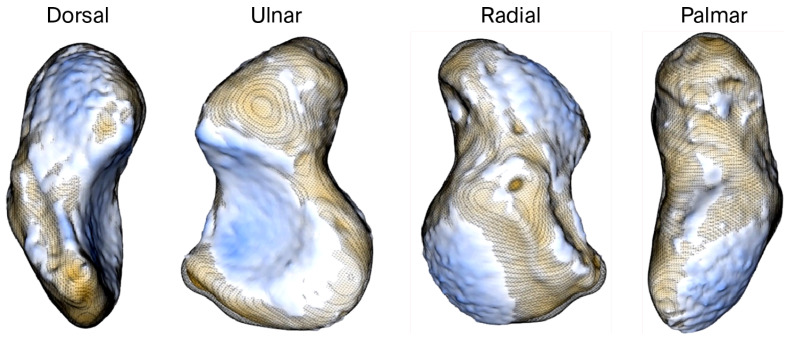 Figure 3
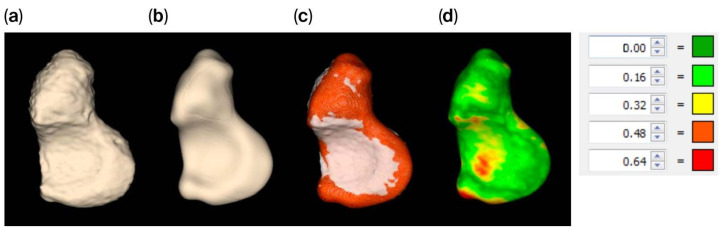 Figure 4
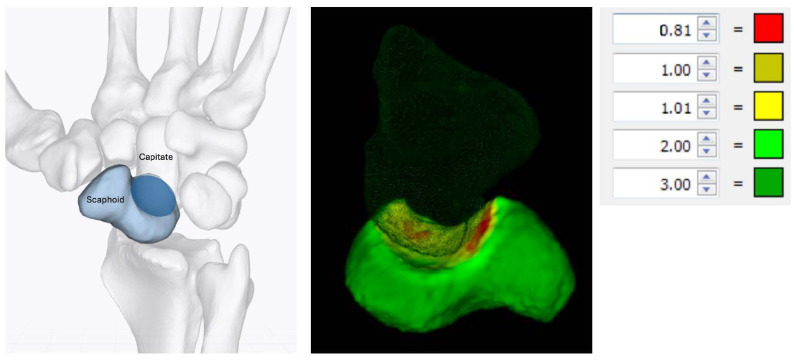 Figure 5
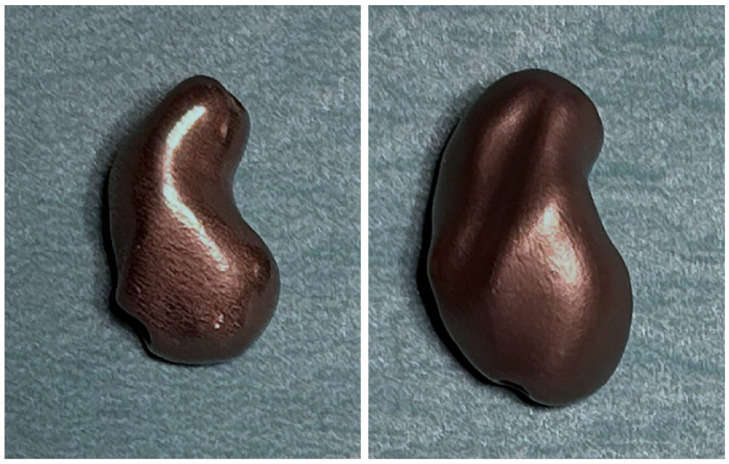 Figure 6
Peer Reviews
No public reviews on file for this paper yet. If you reviewed it on a platform where reviews are public (OpenReview, ICLR, NeurIPS, ICML), you can paste yours below so the community can read it here.
Videos
No videos yet. Explain this paper in a talk, walkthrough, or lecture? Add one.
Taxonomy
TopicsOrthopedic Surgery and Rehabilitation · Reconstructive Facial Surgery Techniques · Reconstructive Surgery and Microvascular Techniques