Importance of Spring Habitats for Amphibians: The Case of Estavelle Ecotones in the Classical Karst Region
Damiano Brognoli, Elia Lo Parrino, Giorgia Terraneo, Giorgio Grassi, Veronica Zampieri, Matteo Galbiati, Valentina Balestra, Valeria Messina, Benedetta Barzaghi, Stefano Lapadula, Raoul Manenti

TL;DR
This study shows that estavelle springs in the Classical Karst Region are important habitats for amphibians, especially for shelter and feeding.
Contribution
The paper provides the first detailed assessment of amphibian use of estavelle springs in the Classical Karst Region.
Findings
Over two-thirds of surveyed springs exhibited estavelle behavior at least once.
Amphibian presence was linked to low water flow, habitat complexity, and absence of predators like pike.
Estavelles serve as shelters for surface-dwelling amphibians and feeding sites for subterranean species.
Abstract
This study explores how amphibians use springs, especially estavelles, in the Classical Karst Region. Estavelles are springs that can also act as sinkholes or ponors when water levels drop. Despite their importance, little is known about amphibian use of these habitats. The research surveyed 61 springs from June 2020 to January 2025, recording amphibian presence, breeding stages, and environmental factors such as water flow, habitat features, and predators. Results showed that over two-thirds of springs exhibited estavelle behavior at least once. Five amphibian species were identified, with some regularly found in springs for movement and breeding, while others used them temporarily. Amphibian presence was strongly linked to springs with low water flow, habitat complexity, and absence of predators like pike. The findings suggest that estavelles and surrounding areas serve as important…
Genes, proteins, chemicals, diseases, species, mutations and cell lines named across the full text — each resolved to its canonical identifier and authoritative record.
Click any figure to enlarge with its caption.
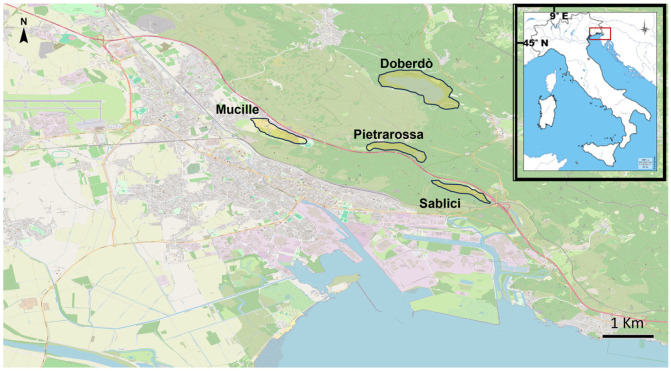 Figure 1
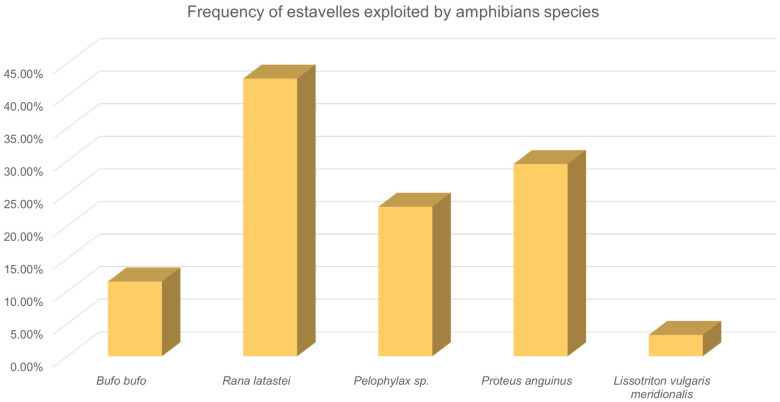 Figure 2
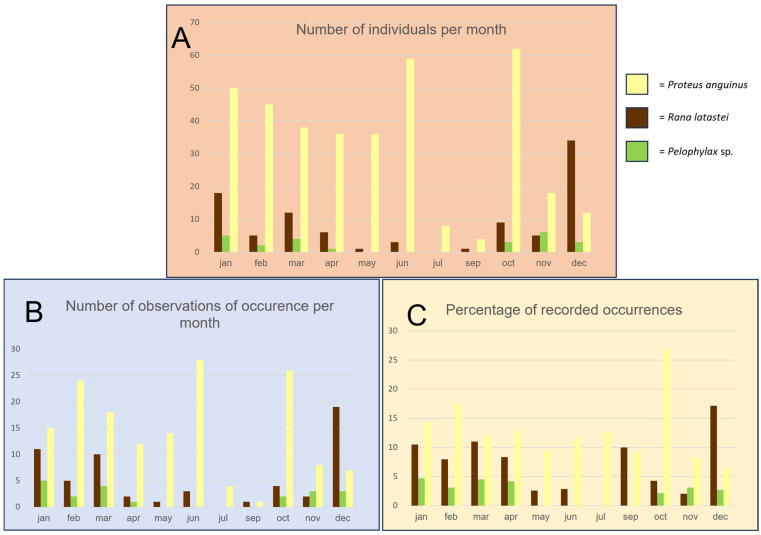 Figure 3
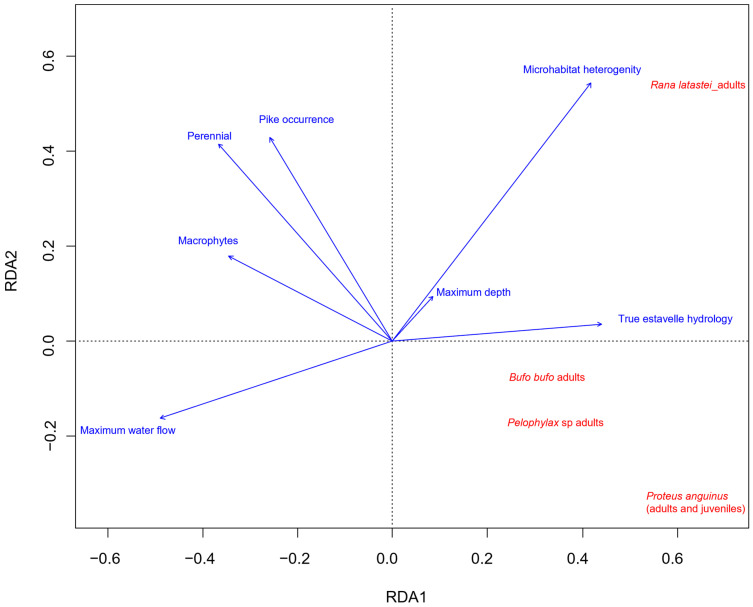 Figure 4
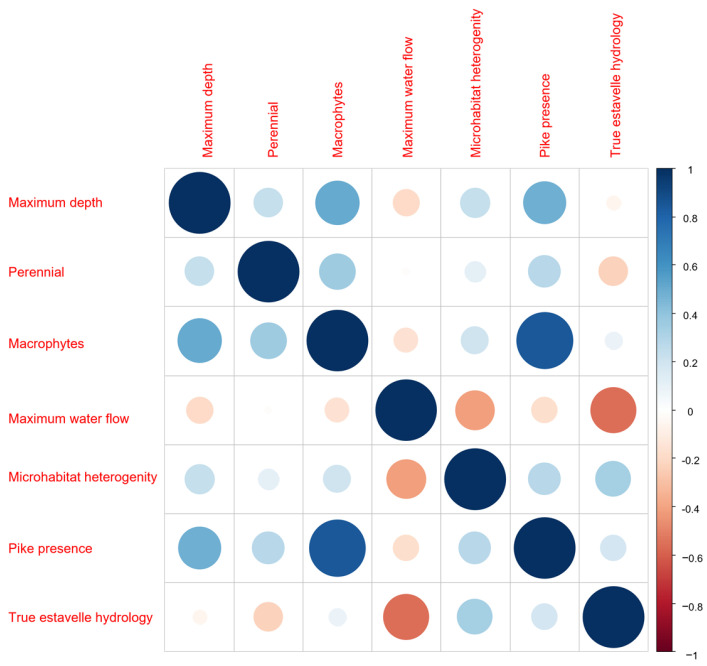 Figure 5
Peer Reviews
No public reviews on file for this paper yet. If you reviewed it on a platform where reviews are public (OpenReview, ICLR, NeurIPS, ICML), you can paste yours below so the community can read it here.
Videos
No videos yet. Explain this paper in a talk, walkthrough, or lecture? Add one.
Taxonomy
TopicsAmphibian and Reptile Biology · Subterranean biodiversity and taxonomy · Study of Mite Species