Machine Learning-Identified Potent Antimicrobial Peptides Against Multidrug-Resistant Bacteria and Skin Infections
Gizem Babuççu, Nikitha Vavilthota, Colin Bournez, Leonie de Boer, Robert A. Cordfunke, Peter H. Nibbering, Gerard J. P. van Westen, Jan W. Drijfhout, Sebastian A. J. Zaat, Martijn Riool

TL;DR
Machine learning helps discover new antimicrobial peptides that effectively fight drug-resistant bacteria and skin infections.
Contribution
ML model identifies potent AMPs against MDR bacteria and skin infections, validated experimentally.
Findings
GDST-038 and GDST-045 peptides show strong activity against Acinetobacter baumannii and Staphylococcus aureus.
Retro-inverso variants of GDST peptides demonstrate enhanced biofilm killing of A. baumannii.
GDST peptides achieve significant reduction in S. aureus biofilm and work in a 3D skin infection model without resistance development.
Abstract
Background: The escalating global crisis of antibiotic resistance necessitates the discovery of novel antimicrobial agents. Antimicrobial peptides (AMPs) represent a promising alternative to combat multidrug-resistant (MDR) pathogens. Because traditional AMP discovery is labour-intensive and costly, machine learning (ML) is applied to identify AMPs effective against MDR bacteria and skin infections. Methods: The ML-based CalcAMP model predicts the antimicrobial activity of 16,384 unique 14-amino-acid peptide sequences, resulting in a novel Guided Designed Smart antimicrobial Therapeutic (GDST) peptide catalogue. Parent sequences and retro-inverso (RI) variants of two prime GDST peptides undergo extensive testing against MDR bacteria and in skin infection models. Results: GDST-038 and GDST-045, along with their RI variants, show potent antimicrobial activity against Acinetobacter…
Genes, proteins, chemicals, diseases, species, mutations and cell lines named across the full text — each resolved to its canonical identifier and authoritative record.
Click any figure to enlarge with its caption.
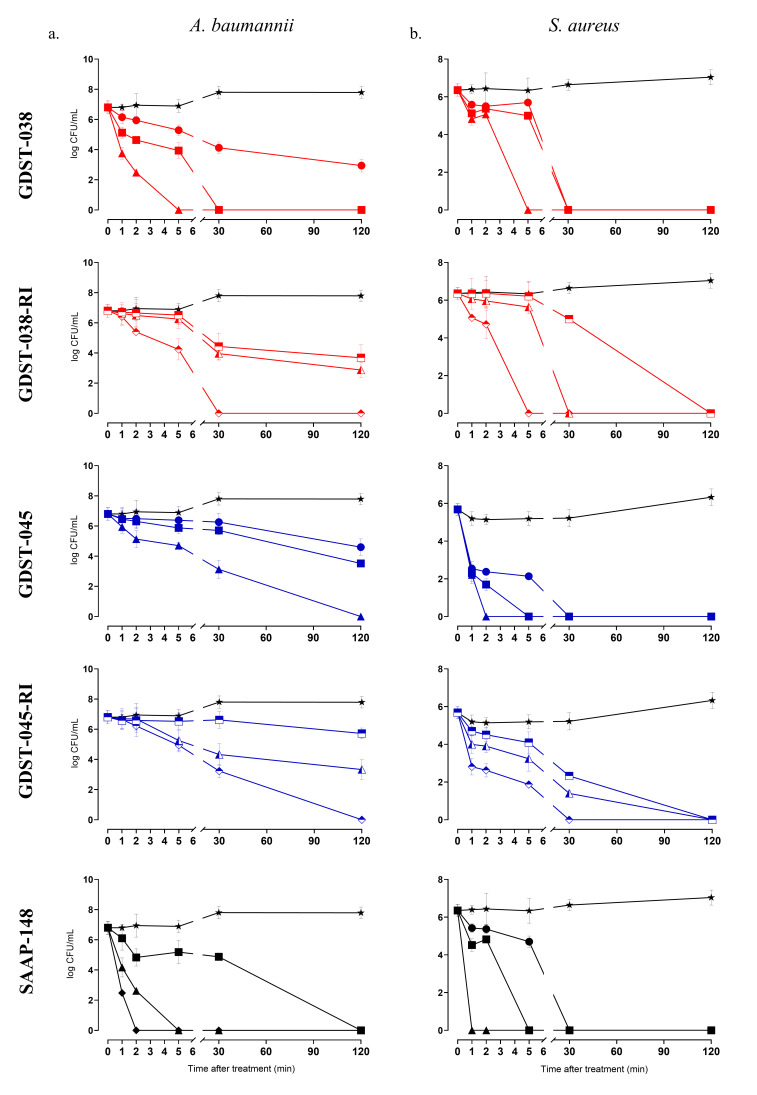 Figure 1
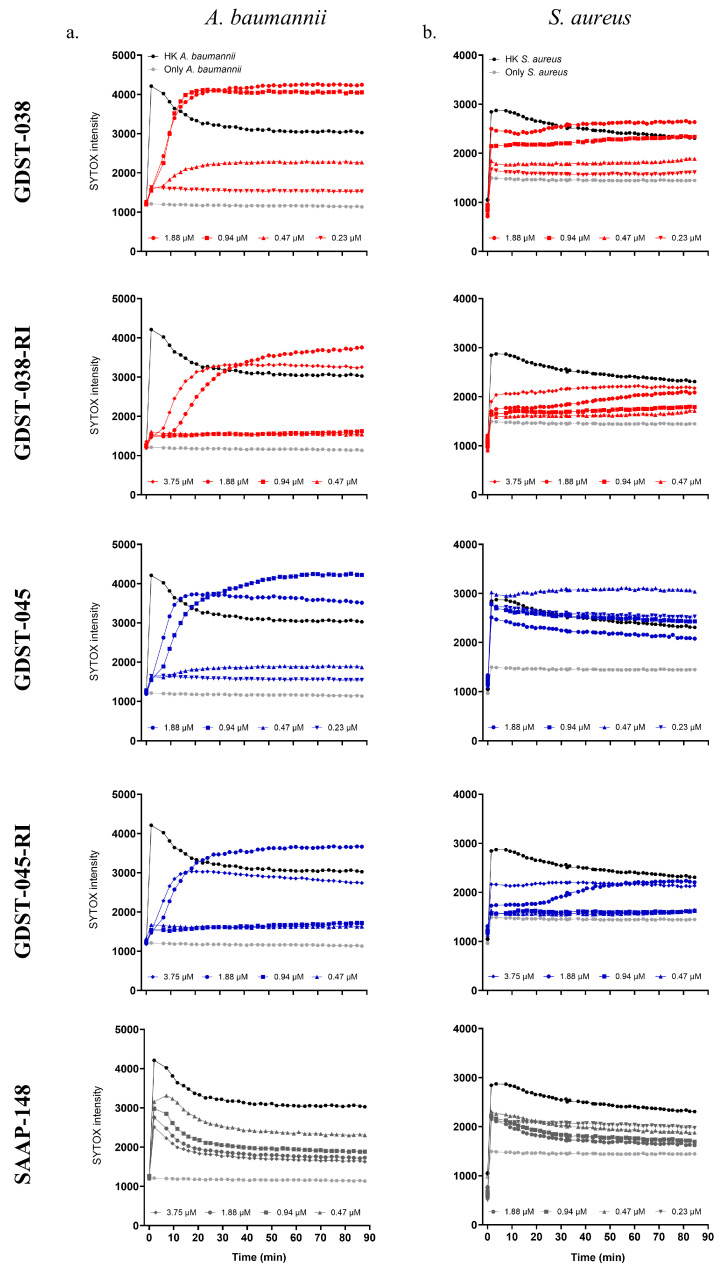 Figure 2
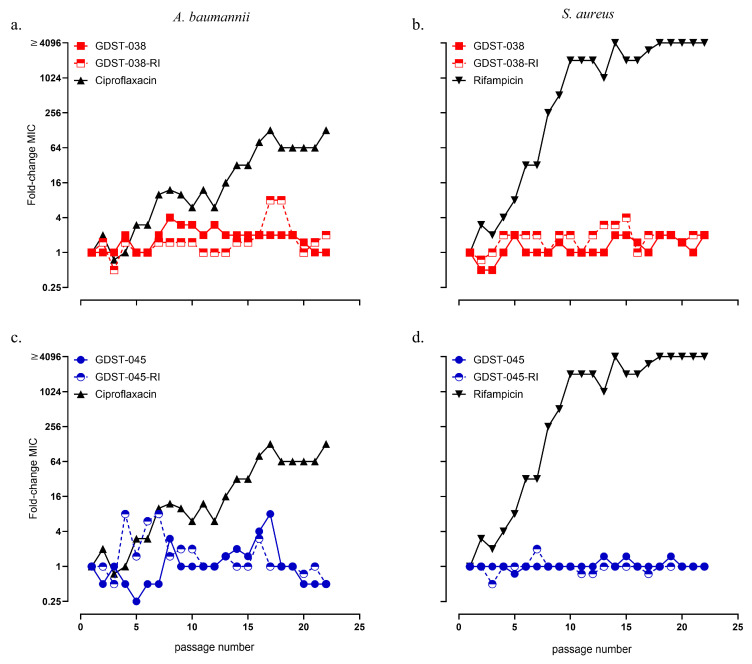 Figure 3
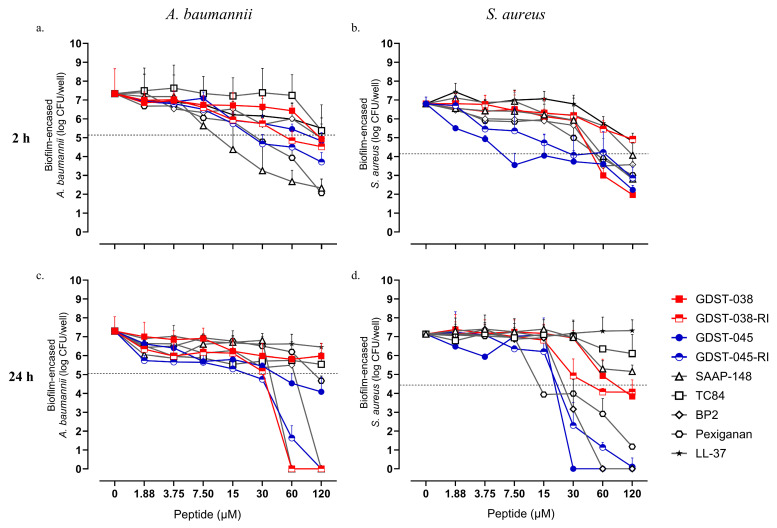 Figure 4
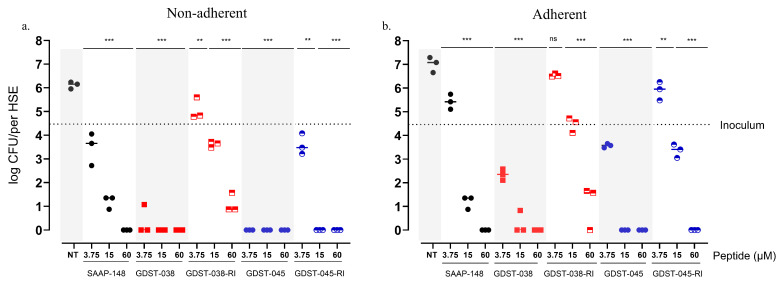 Figure 5
Peer Reviews
No public reviews on file for this paper yet. If you reviewed it on a platform where reviews are public (OpenReview, ICLR, NeurIPS, ICML), you can paste yours below so the community can read it here.
Videos
No videos yet. Explain this paper in a talk, walkthrough, or lecture? Add one.
Taxonomy
TopicsAntimicrobial Peptides and Activities · Peptidase Inhibition and Analysis · Antimicrobial agents and applications