A Case Study of a Deaf Autistic Adolescent’s Affective and Linguistic Expressions
Kristin Walker, Jenny L. Singleton, Aaron Shield

TL;DR
This case study explores how a Deaf autistic adolescent uses facial expressions and body language in American Sign Language.
Contribution
The study provides new insights into linguistic and affective expressions in a Deaf autistic individual using signed language.
Findings
Brent showed absent or reduced facial expressions for both linguistic and affective purposes.
He used alternative strategies like manual signs and body enactment to communicate.
Body movement was inconsistently used for negation, affirmation, or emphasis.
Abstract
Facial expressions and body language play crucial roles in communication by conveying emotional and contextual information. In signed languages, facial expressions also serve linguistic functions. While previous research on autistic individuals’ facial expressions has focused primarily on affective expressions in hearing people, studying deaf autistic individuals offers insight into how autism affects linguistic and affective facial expressions. This case study examines the nonmanual expressions of “Brent,” a Deaf autistic adolescent natively exposed to American Sign Language (ASL). Five video recordings (four monologues and one conversation, totaling 35 m) were coded for nonmanual expressions, including affective facial expressions, question marking, negation, and other functions. Across 590 coded utterances, Brent showed absent or reduced facial expressions for both linguistic and…
Genes, proteins, chemicals, diseases, species, mutations and cell lines named across the full text — each resolved to its canonical identifier and authoritative record.
Click any figure to enlarge with its caption.
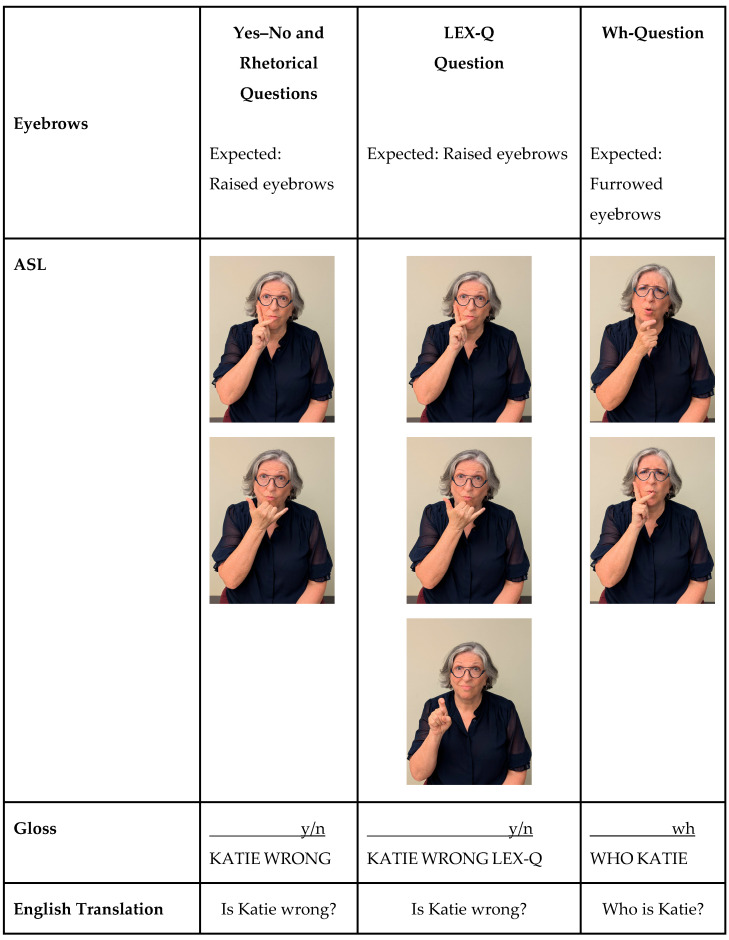 Figure 1
Peer Reviews
No public reviews on file for this paper yet. If you reviewed it on a platform where reviews are public (OpenReview, ICLR, NeurIPS, ICML), you can paste yours below so the community can read it here.
Videos
No videos yet. Explain this paper in a talk, walkthrough, or lecture? Add one.
Taxonomy
TopicsHearing Impairment and Communication · Autism Spectrum Disorder Research · Family and Disability Support Research