Dalbavancin as Suppressive Therapy for Implant-Associated Osteoarticular Infections
Rosa Escudero-Sanchez, Laura Morata, Luis Buzón, Sofia de la Villa, Alicia Rico, María José Nuñez Orantos, Laura Guio Carrion, María Tasias Pitarch, Jose Luis del Pozo, José M. Barbero, Joan Gómez-Junyent, María José García Pais, Pablo Bachiller Luque

TL;DR
Dalbavancin is a safe and effective long-term antibiotic option for managing implant-related bone and joint infections when a cure is not possible.
Contribution
This study evaluates dalbavancin as suppressive therapy for implant-associated osteoarticular infections and identifies factors related to treatment failure.
Findings
Dalbavancin provided adequate symptom control in 74.4% of patients over a median follow-up of 836.5 days.
Only one adverse effect was reported, indicating good tolerability of the drug.
Three patients developed resistance, highlighting the need for monitoring during long-term use.
Abstract
Introduction: Suppressive antibiotic therapy (SAT) is a therapeutic alternative for complex infections where a cure is considered unlikely or impossible. SAT involves the prolonged, often indefinite, administration of antibiotics, typically given orally, to control symptoms. However, the increasing incidence of multidrug-resistant microorganisms limits the availability of oral options. Dalbavancin is a parenteral antibiotic with broad coverage against Gram-positive bacteria that offers the advantage of an extended dosing interval. The aim of this study was to describe the characteristics and clinical outcomes of patients with implant-associated osteoarticular infections receiving dalbavancin as SAT. A secondary objective was to identify factors associated with SAT failure with dalbavancin. Materials and Methods: We conducted a multicentre, observational study with retrospective…
Genes, proteins, chemicals, diseases, species, mutations and cell lines named across the full text — each resolved to its canonical identifier and authoritative record.
Click any figure to enlarge with its caption.
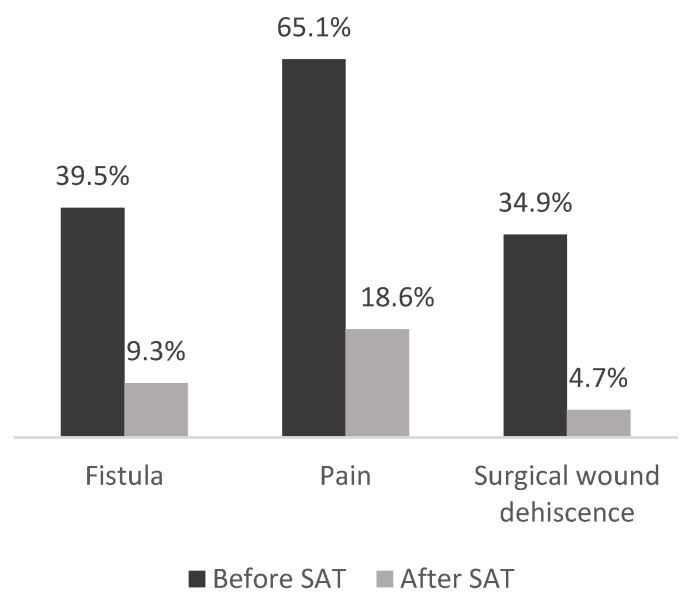 Figure 1
Peer Reviews
No public reviews on file for this paper yet. If you reviewed it on a platform where reviews are public (OpenReview, ICLR, NeurIPS, ICML), you can paste yours below so the community can read it here.
Videos
No videos yet. Explain this paper in a talk, walkthrough, or lecture? Add one.
Taxonomy
TopicsOrthopedic Infections and Treatments · Antimicrobial agents and applications · Bone fractures and treatments