The Potential Roles of Prophages in the Pathogenicity of Klebsiella pneumoniae Strains from Kenya
Juliah K. Akhwale, Ivy J. Mutai, Janet Y. Nale

TL;DR
This study explores how prophages in Klebsiella pneumoniae from Kenya may contribute to the bacteria's pathogenicity and antimicrobial resistance.
Contribution
The study provides the first evidence of diverse prophages in Klebsiella pneumoniae from sub-Saharan Africa and their potential roles in pathogenicity.
Findings
Most Klebsiella pneumoniae genomes encode multiple prophages, with many carrying virulence genes.
Phylogenetic analysis shows three distinct prophage clades, suggesting horizontal gene transfer potential.
Approximately 30% of intact prophages contain genes linked to iron uptake, adherence, and immune evasion.
Abstract
Background/Objectives: Antimicrobial resistance (AMR) in Klebsiella pneumoniae poses a serious threat to healthcare, especially in sub-Saharan Africa (SSA). To complement AMR infection control in Kenya, here, clinical and environmental genomes were investigated to determine the potential roles prophages play in K. pneumoniae pathogenicity. Methods: Prophages were extracted from 89 Kenyan K. pneumoniae genomes. The intact prophages were examined for virulence genes carriage, and their phylogenetic relationships were established. Results: Eighty-eight (~99%) of the genomes encode at least a single prophage, and there is an average of four prophages and 2.8% contributory genomes per bacterial strain. From the 364 prophages identified, 250 (68.7%) were intact, while 58 (15.9%) and 57 (15.7%) were questionable and incomplete, respectively. Approximately, 30% of the intact prophages encode 38…
Genes, proteins, chemicals, diseases, species, mutations and cell lines named across the full text — each resolved to its canonical identifier and authoritative record.
Click any figure to enlarge with its caption.
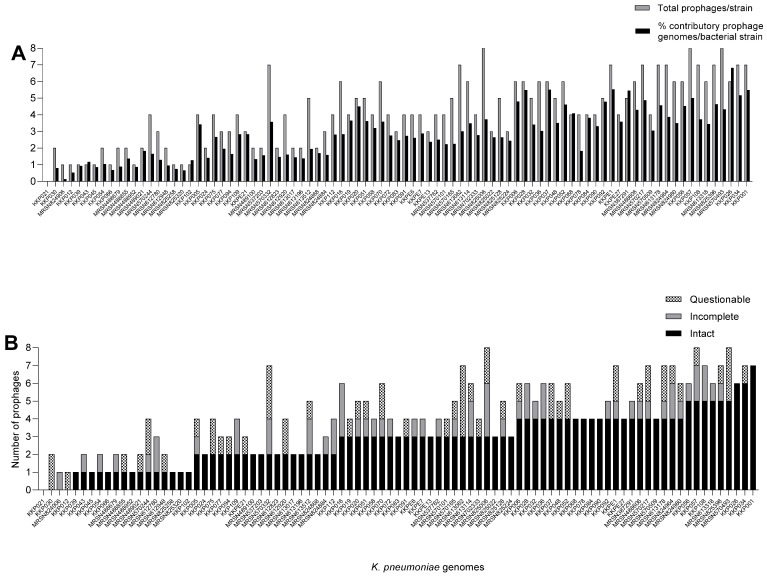 Figure 1
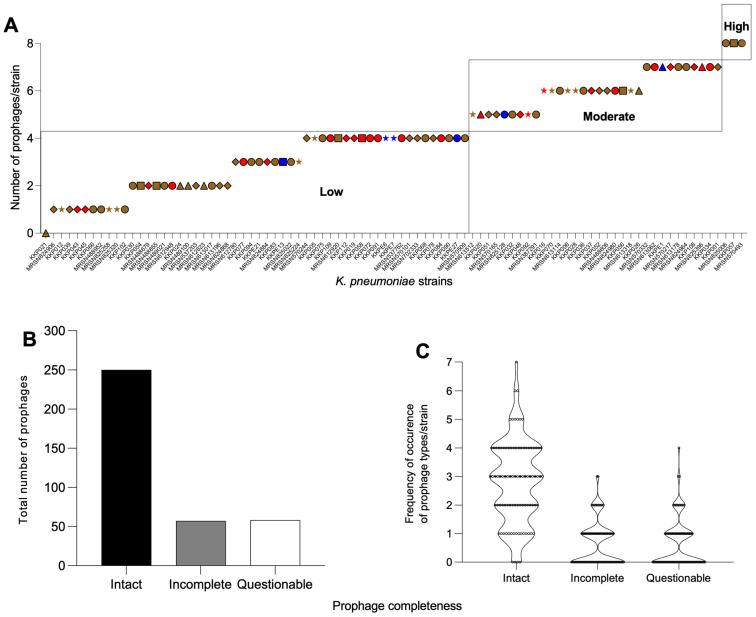 Figure 2
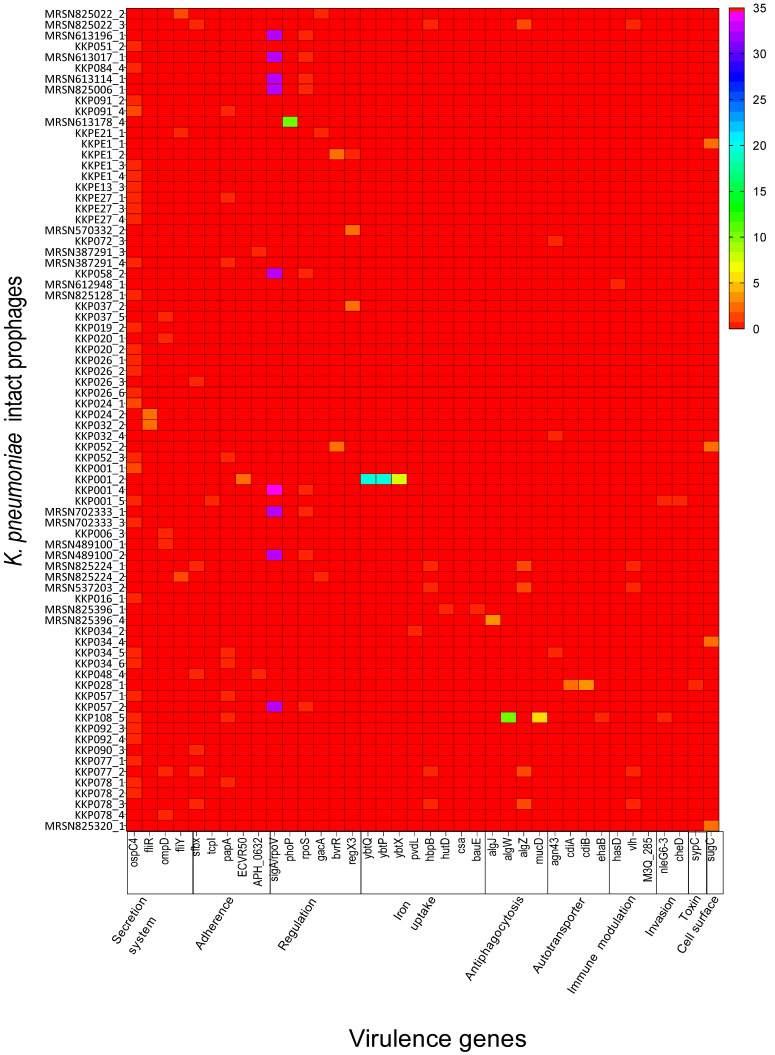 Figure 3
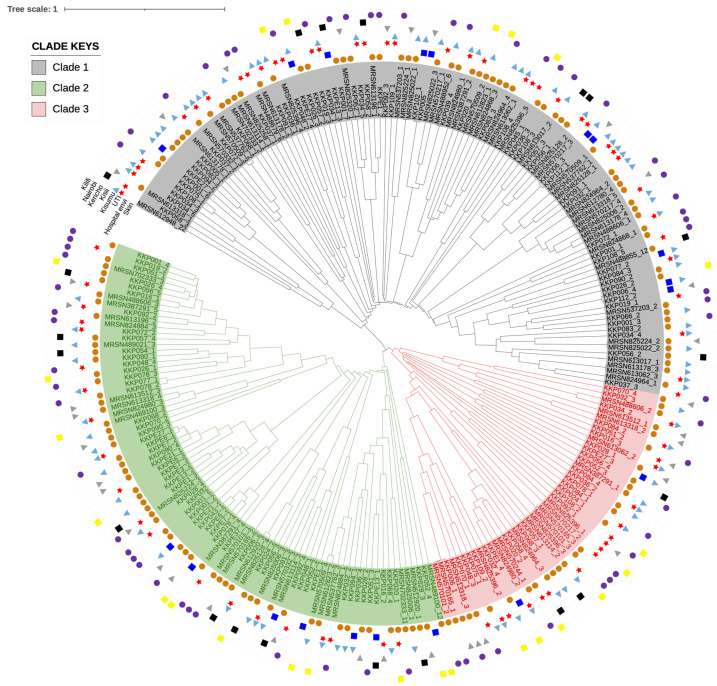 Figure 4
Peer Reviews
No public reviews on file for this paper yet. If you reviewed it on a platform where reviews are public (OpenReview, ICLR, NeurIPS, ICML), you can paste yours below so the community can read it here.
Videos
No videos yet. Explain this paper in a talk, walkthrough, or lecture? Add one.
Taxonomy
TopicsBacteriophages and microbial interactions · Bacterial Genetics and Biotechnology · Vibrio bacteria research studies