Functional and Metabolomic Analyses of Chamomile Jelly Derived from Gelatin Capsule Waste with Inulin and Polydextrose as Prebiotic Sugar Substitutes
Sasina Sanprasert, Anurak Uchuwittayakul, Pudthaya Kumnerdsiri, Lalitphan Kitsanayanyong, Anusorn Seubsai, Jaksuma Pongsetkul, Kantiya Petsong, Supatra Karnjanapratum, Chalalai Jaisan, Samart Sai-ut, Saroat Rawdkuen, Passakorn Kingwascharapong

TL;DR
This study creates a functional chamomile jelly using waste gelatin capsules and prebiotic substitutes, resulting in a nutritious, sustainable product.
Contribution
The novel use of gelatin capsule waste and prebiotic sugar substitutes to create a functional jelly with health benefits.
Findings
Replacing sugar with inulin or polydextrose increased gel strength and hardness compared to the control.
INU-50 jelly received the highest consumer acceptance score and maintained quality during storage.
INU-50 jelly promoted Lactobacillus plantarum growth and provided essential nutrients without cholesterol.
Abstract
Jelly is a popular confectionery, and research increasingly focuses on nutritionally enhanced formulations. In this study, gelatin capsule waste was valorized as a natural gelling base for chamomile jelly, providing an innovative approach to upcycling food-grade waste into functional products. The effects of replacing sugar with inulin (INU) or polydextrose (PDX) (25–100%) on chemical, physical, and sensory properties were investigated. Sugar replacement decreased carbohydrate content while increasing ash and fat, slightly increased turbidity, and reduced lightness (L*) and yellowness (b*). Gels with inulin and polydextrose exhibited higher gel strength (55.97–81.45 g) and hardness (9.77–10.20 N) than the control, whereas antioxidant activity remained largely unaffected. Among the formulations, 50% inulin (INU-50) received the highest consumer acceptance score (6.88 ± 1.05) and…
Genes, proteins, chemicals, diseases, species, mutations and cell lines named across the full text — each resolved to its canonical identifier and authoritative record.
Click any figure to enlarge with its caption.
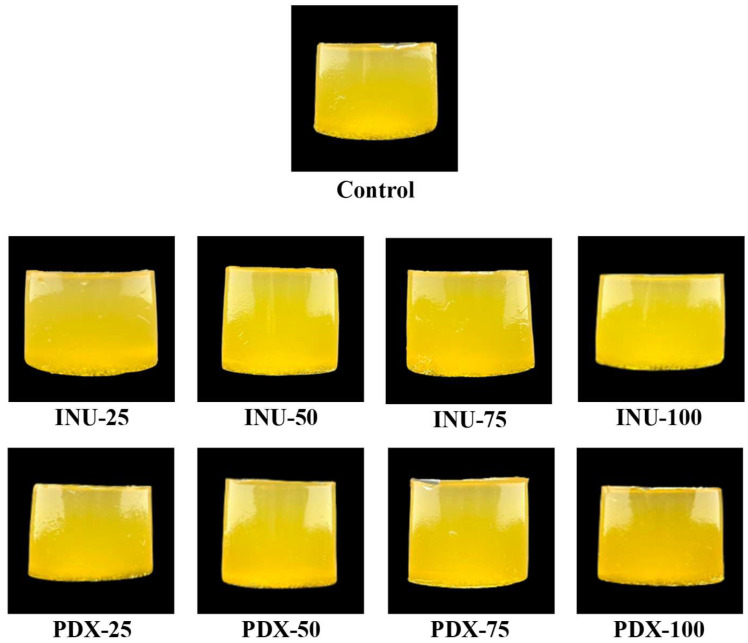 Figure 1
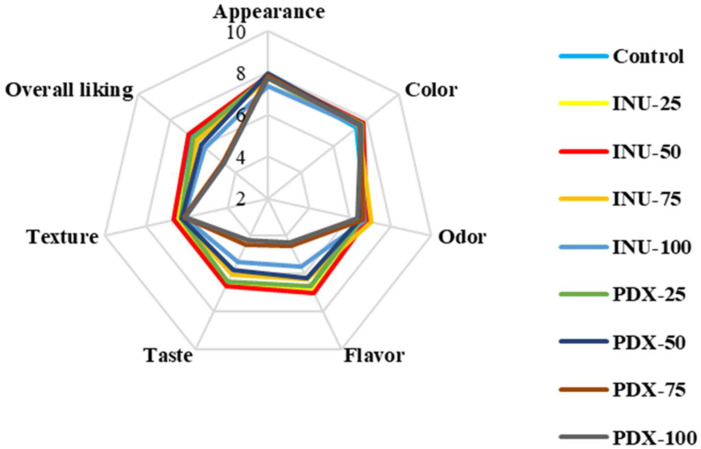 Figure 2
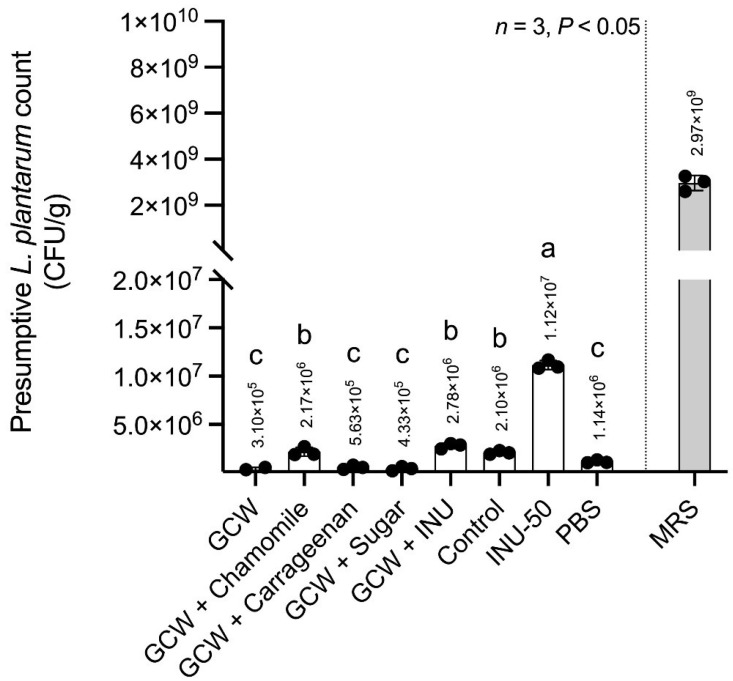 Figure 3
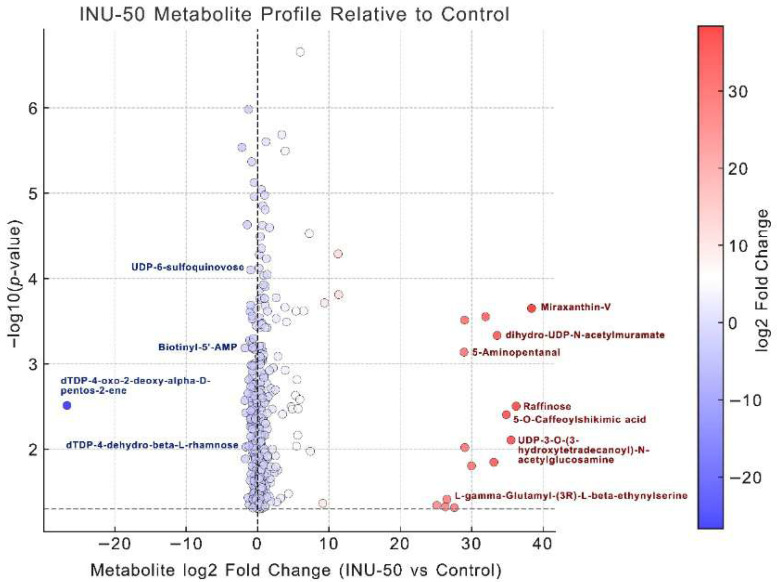 Figure 4
Peer Reviews
No public reviews on file for this paper yet. If you reviewed it on a platform where reviews are public (OpenReview, ICLR, NeurIPS, ICML), you can paste yours below so the community can read it here.
Videos
No videos yet. Explain this paper in a talk, walkthrough, or lecture? Add one.
Taxonomy
TopicsMicrobial Metabolites in Food Biotechnology · Polysaccharides Composition and Applications · Polysaccharides and Plant Cell Walls