Clinical Impact of Treating Versus Not Treating Asymptomatic Bacteriuria/Candiduria in the First Two Months After Kidney Transplantation
Biagio Pinchera, Rosa Carrano, Isabella Di Filippo, Vincenzo Fotticchia, Mariangela Petrone, Francesco Antimo Alfè, Gianmarco Borriello, Amerigo Piccione, Fabrizio Salemi, Ivan Gentile

TL;DR
This study found that treating asymptomatic bacterial or yeast infections in kidney transplant patients during the first two months does not improve outcomes and may increase antibiotic resistance risks.
Contribution
The study provides evidence that treating asymptomatic bacteriuria/candiduria in kidney transplant recipients does not improve clinical outcomes and may increase MDR infection risks.
Findings
Treating ASB/ASC did not significantly affect mortality or secondary clinical outcomes.
Treated patients had a higher rate of MDR colonization/infection compared to untreated patients.
MDR pathogen isolation was linked to increased risks of septic shock, bacteremia, hospitalization, and renal function decline.
Abstract
Background/Objectives: The management of asymptomatic bacteriuria (ASB) and candiduria (ASC) in kidney transplant recipients during the early post-transplant period is controversial. This study aimed to evaluate whether treating, versus not treating, ASB and ASC episodes in the first two months after kidney transplantation influences clinical outcomes and the emergence of multidrug-resistant (MDR) infections. Methods: We conducted a single-center retrospective cohort study enrolling patients with ASB or ASC occurring in the first two months after kidney transplantation between January 2019 and July 2024. Patients were classified into treated and untreated groups. The primary endpoint was 30-day mortality. Secondary endpoints included mortality at 90, 180 and 360 days; incidence of sepsis or septic shock; bacteremia/candidemia, hospitalization, graft loss; decline in renal function,…
Genes, proteins, chemicals, diseases, species, mutations and cell lines named across the full text — each resolved to its canonical identifier and authoritative record.
Click any figure to enlarge with its caption.
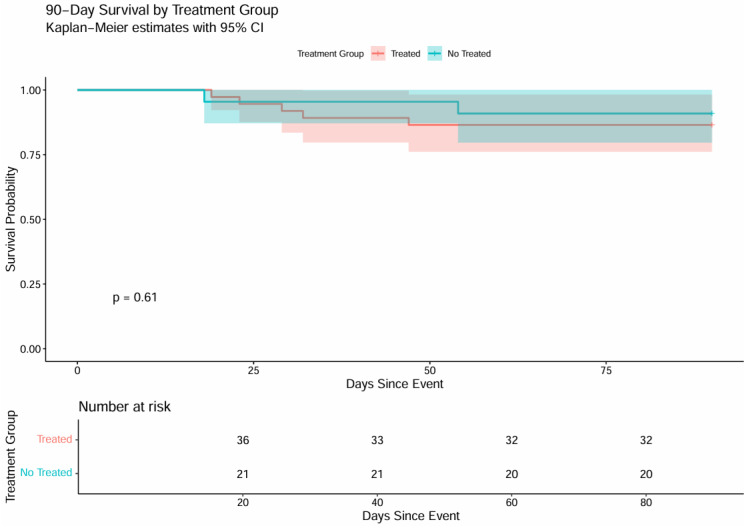 Figure 1
Peer Reviews
No public reviews on file for this paper yet. If you reviewed it on a platform where reviews are public (OpenReview, ICLR, NeurIPS, ICML), you can paste yours below so the community can read it here.
Videos
No videos yet. Explain this paper in a talk, walkthrough, or lecture? Add one.
Taxonomy
TopicsCytomegalovirus and herpesvirus research · Urinary Tract Infections Management · Pediatric Urology and Nephrology Studies