Superoxide Dismutase 3 Deficiency Disrupts the Regulation of Oxidative Stress Caused by Polystyrene Nanoplastics
Yugyeong Sim, Jin-Hyoung Kim, Jeong-Soo Lee, Jinyoung Jeong, Hyun-Ju Cho

TL;DR
This study shows that a deficiency in the SOD3 enzyme worsens the harmful effects of polystyrene nanoplastics in zebrafish, highlighting the enzyme's role in managing oxidative stress.
Contribution
The study reveals the novel role of SOD3 in mitigating oxidative stress caused by nanoplastics using a zebrafish model.
Findings
Sod3a mutant zebrafish showed increased accumulation of polystyrene nanoplastics in tissues.
Deficiency in SOD3 led to higher oxidative stress, cell death, and immune and intestinal dysfunction in zebrafish.
The study highlights the importance of extracellular antioxidant defenses in mitigating nanoplastic toxicity.
Abstract
Nanoplastics have been recognized as emerging pollutants posing potential risks to ecosystems and human health. They are now detected ubiquitously in the environment and even human tissues, where their small size allows for tissue accumulation and cellular penetration. Growing evidence links nanoplastics to oxidative stress, yet the specific contribution of extracellular accumulation to toxicity remains poorly understood. To address this, we used zebrafish, a transparent vertebrate model suitable for toxicological studies, to explore the role of extracellular antioxidant defenses in polystyrene nanoplastic (PSNP)-induced oxidative stress. In particular, we focused on superoxide dismutase 3 (SOD3), which is an enzyme that regulates extracellular reactive oxygen species by catalyzing the detoxification of superoxide radicals. Zebrafish Sod3a is a homolog of human SOD3, preserving…
Genes, proteins, chemicals, diseases, species, mutations and cell lines named across the full text — each resolved to its canonical identifier and authoritative record.
Click any figure to enlarge with its caption.
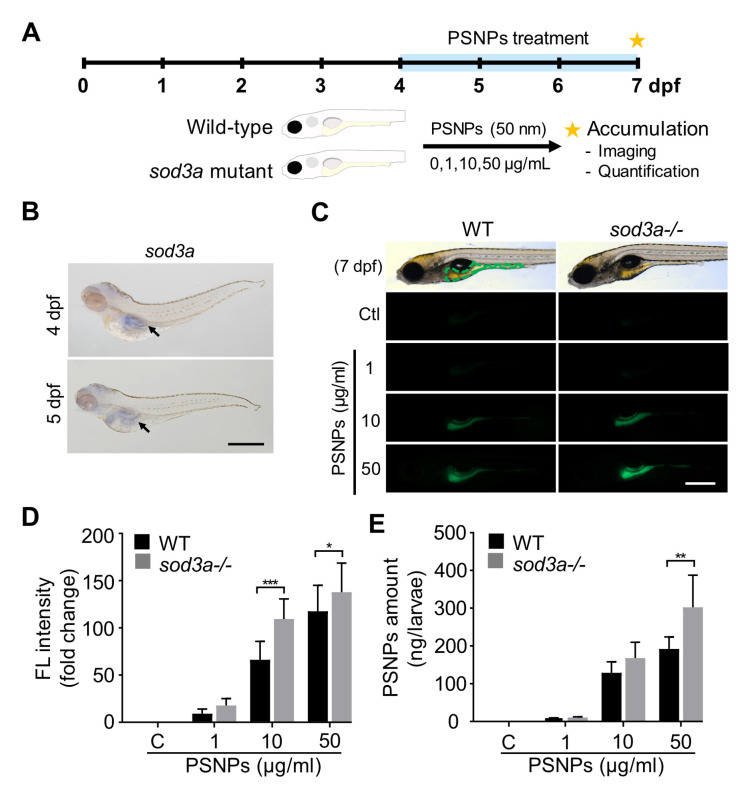 Figure 1
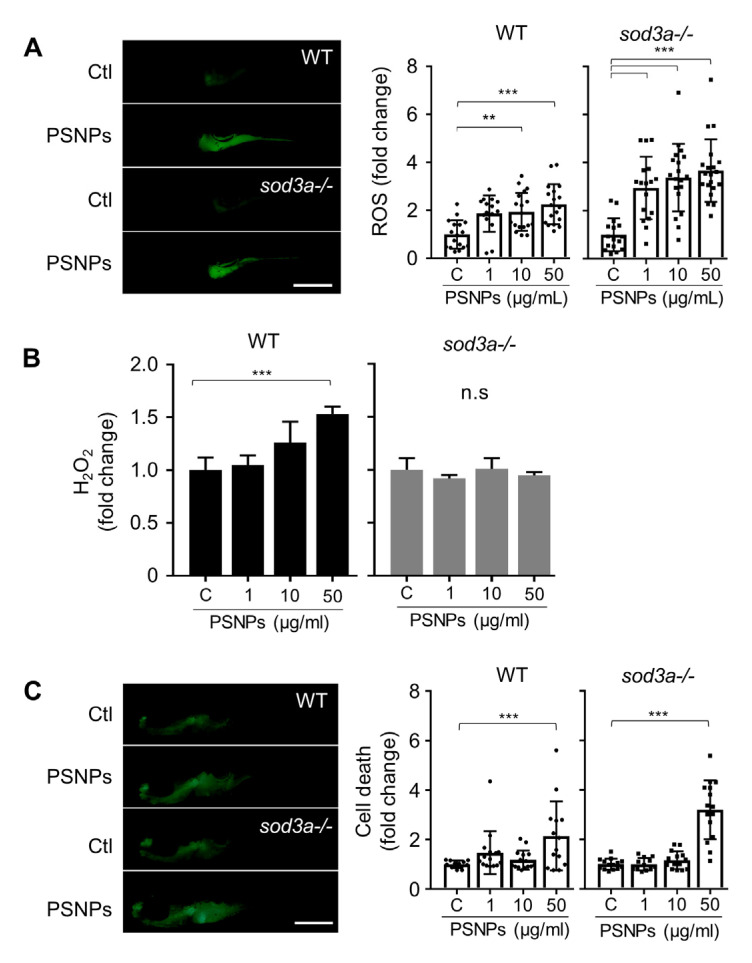 Figure 2
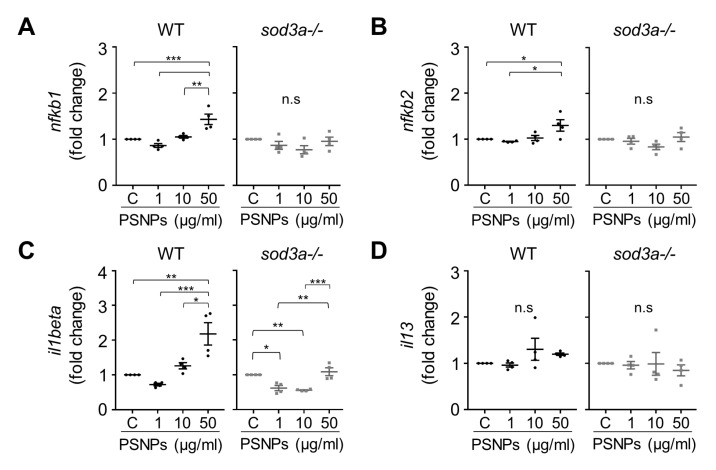 Figure 3
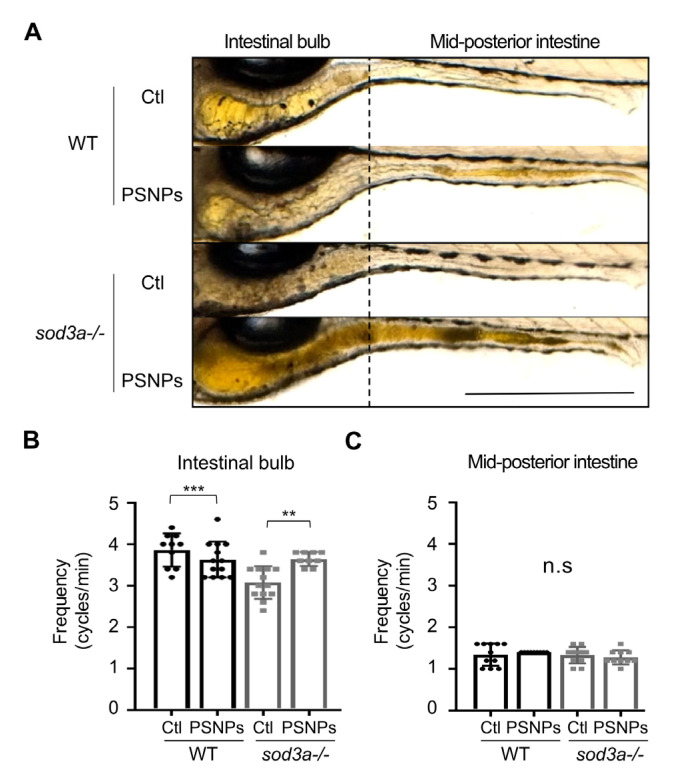 Figure 4
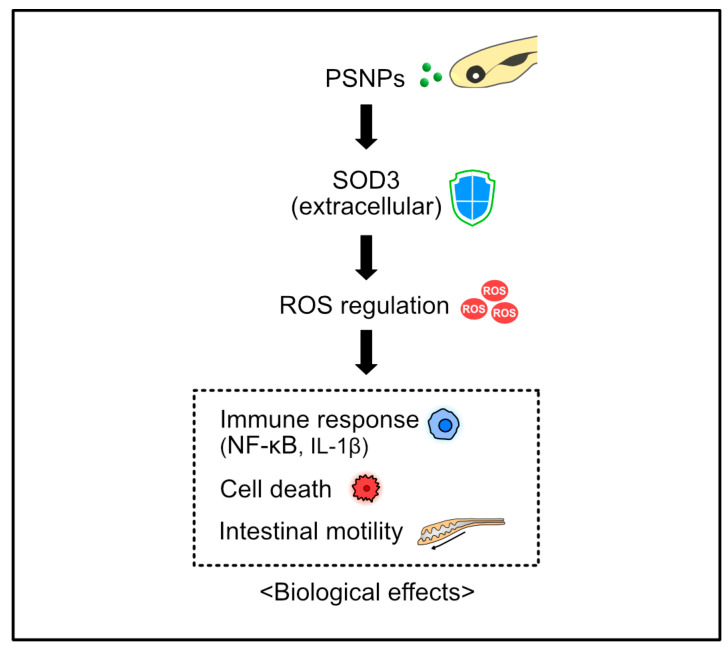 Figure 5
Peer Reviews
No public reviews on file for this paper yet. If you reviewed it on a platform where reviews are public (OpenReview, ICLR, NeurIPS, ICML), you can paste yours below so the community can read it here.
Videos
No videos yet. Explain this paper in a talk, walkthrough, or lecture? Add one.
Taxonomy
TopicsMicroplastics and Plastic Pollution · Effects and risks of endocrine disrupting chemicals · biodegradable polymer synthesis and properties