Immune cell-resolved transcriptomics provides insights into the basis for variations of fish genetic resistance to viral disease
Thomas C. Clark, Valentin Thomas, Richard S. Taylor, Mathieu Charles, Audrey Laurent, Isabelle Schwartz-Cornil, Bertrand Collet, Delphine Lallias, Daniel J. Macqueen, Samuel A. M. Martin, Pierre Boudinot

TL;DR
This study uses transcriptomics to explore how immune cells in fish respond differently to a virus, revealing genetic factors behind resistance and susceptibility.
Contribution
The study integrates bulk and single-cell RNA-seq to map immune cell-specific transcriptomic responses in fish with extreme resistance or susceptibility to a virus.
Findings
Resistant and susceptible fish showed distinct transcriptomic responses to VHSV, with resistant fish exhibiting broader immune gene activation.
Monocytic cells in resistant fish upregulated proinflammatory genes, while susceptible fish showed increased IFN-induced gene expression.
The study highlights a conserved core of interferon-stimulated genes and line-specific immune responses in vertebrates.
Abstract
The genetic basis of host resistance to viral infections is generally shaped by complex interactions between host genetic variations affecting antiviral immunity and the rapid evolutionary adaptability of viruses. In this study, we investigated two isogenic rainbow trout lines exhibiting extreme resistance or susceptibility to the rhabdovirus VHSV. We compared transcriptomes of the pronephros — a major lymphoid organ in fish — at steady state and following VHSV infection. By integrating bulk tissue RNA-seq with single-cell RNA-seq, we mapped the divergent transcriptomic responses of resistant and susceptible fish to specific immune cell types. At steady state, differences in antiviral pathways were minimal. However, VHSV triggered markedly distinct transcriptomic shifts between the lines. Both resistant and susceptible fish exhibited a broad transcriptional response enriched in core…
Genes, proteins, chemicals, diseases, species, mutations and cell lines named across the full text — each resolved to its canonical identifier and authoritative record.
Click any figure to enlarge with its caption.
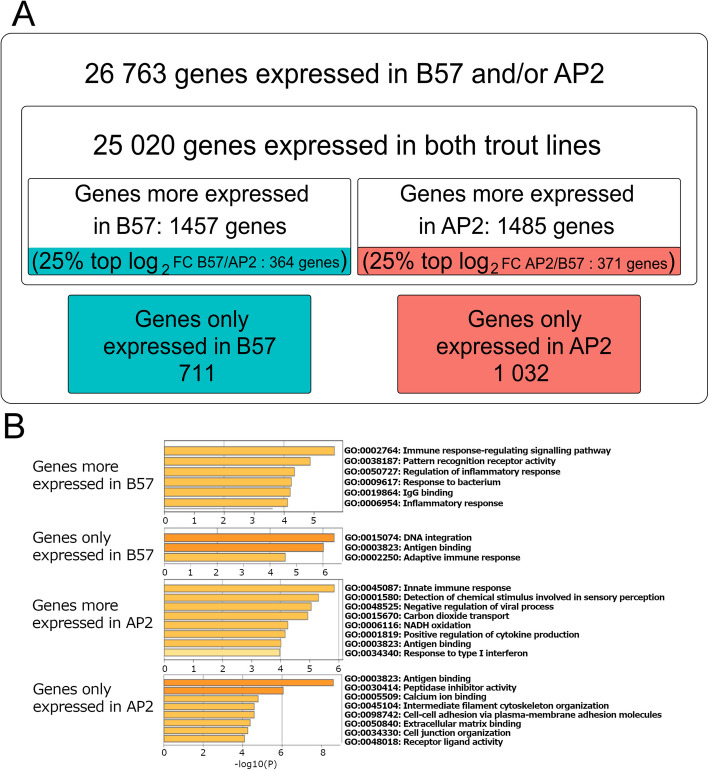 Figure 1
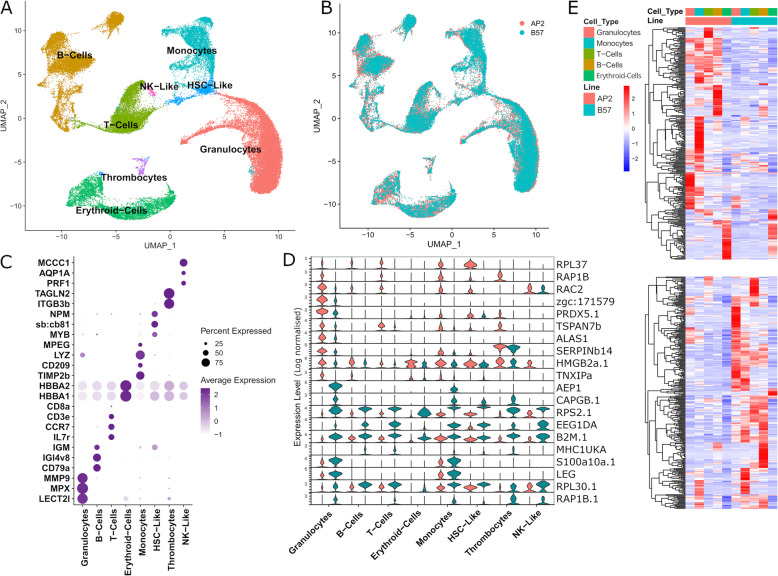 Figure 2
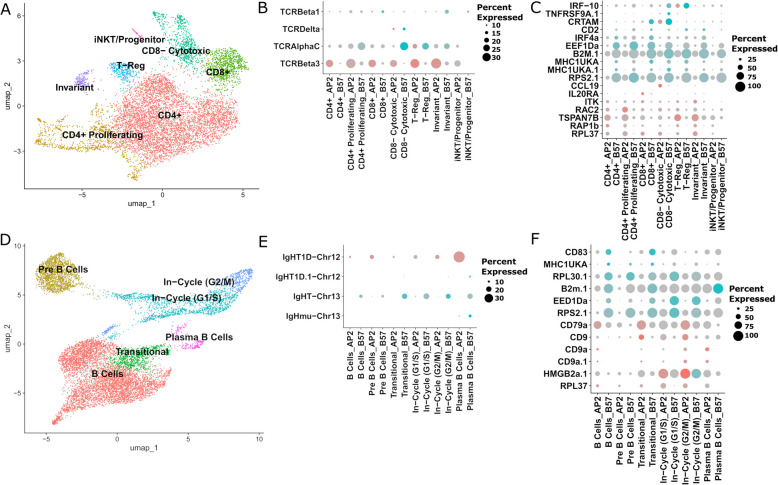 Figure 3
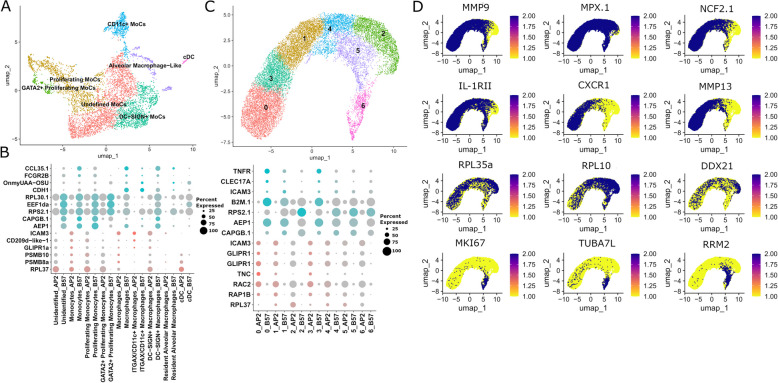 Figure 4
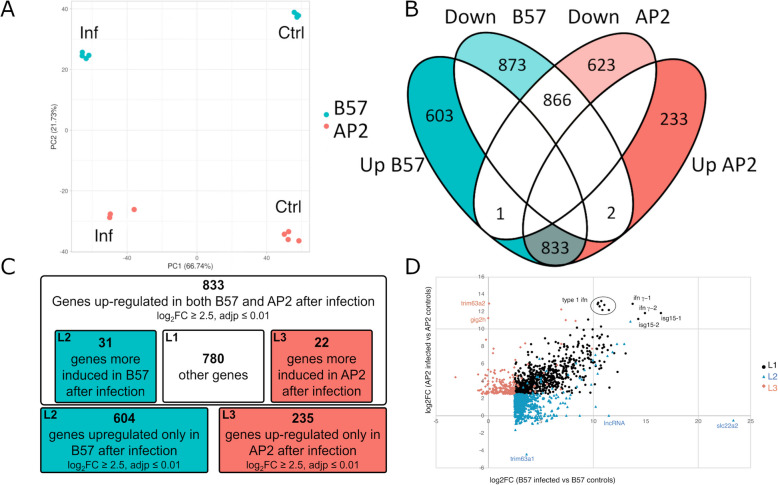 Figure 5
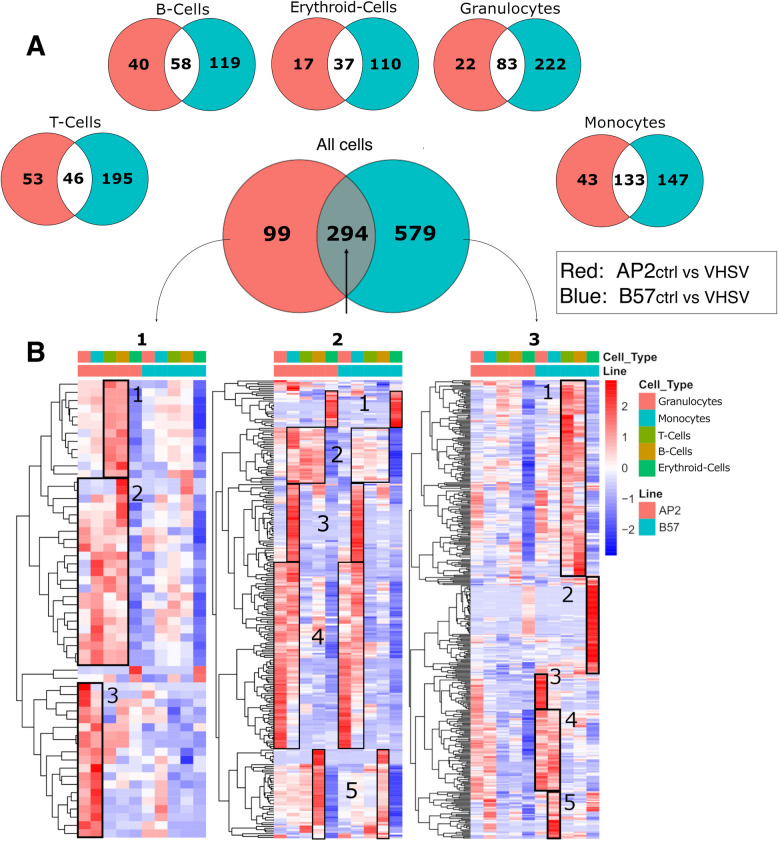 Figure 6
Peer Reviews
No public reviews on file for this paper yet. If you reviewed it on a platform where reviews are public (OpenReview, ICLR, NeurIPS, ICML), you can paste yours below so the community can read it here.
Videos
No videos yet. Explain this paper in a talk, walkthrough, or lecture? Add one.
Taxonomy
TopicsAquaculture disease management and microbiota · interferon and immune responses · Invertebrate Immune Response Mechanisms