External validation of a web- and artificial intelligence-based HIV/STI risk assessment tool: performance evaluation using data from Sydney sexual health centre
Phyu Mon Latt, Anik Ray, Heng Lu, Nyi N. Soe, Xianglong Xu, Yining Bao, Jason J. Ong, Eric P. F. Chow, Rick Varma, Lei Zhang, Christopher K. Fairley

TL;DR
A machine learning tool for predicting HIV and STI risk was tested in a new clinic and showed moderate accuracy, with performance varying by demographic group.
Contribution
The study provides external validation of MySTIRisk in a different Australian sexual health center, revealing its generalizability and performance variations.
Findings
MySTIRisk showed AUC values of 0.67 for HIV and 0.73 for gonorrhoea, lower than original validation metrics.
The model performed better for HIV in men who have sex with men and for gonorrhoea in younger attendees.
At balanced thresholds, the tool identified 58.6–64.1% of infections with testing only 25.8–39.4% of the population.
Abstract
HIV and sexually transmitted infections (STIs) continue to pose significant public health challenges globally. MySTIRisk, developed at Melbourne Sexual Health Centre (MSHC), is a machine learning-based tool that predicts individual risk for HIV, syphilis, gonorrhoea, and chlamydia using demographic and behavioural data. While initial validation showed promising results, external validation is crucial to assess its generalisability. This study externally validates MySTIRisk using data from the Sydney Sexual Health Centre (SSHC), Australia’s second-largest sexual health centre. Following TRIPOD guidelines, we analysed consultations from patients aged 18 years and older attending SSHC between January 2013 and December 2023. Pre-trained MySTIRisk models were applied directly without modification. Performance was evaluated using the area under the receiver operating characteristic curve…
Genes, proteins, chemicals, diseases, species, mutations and cell lines named across the full text — each resolved to its canonical identifier and authoritative record.
Click any figure to enlarge with its caption.
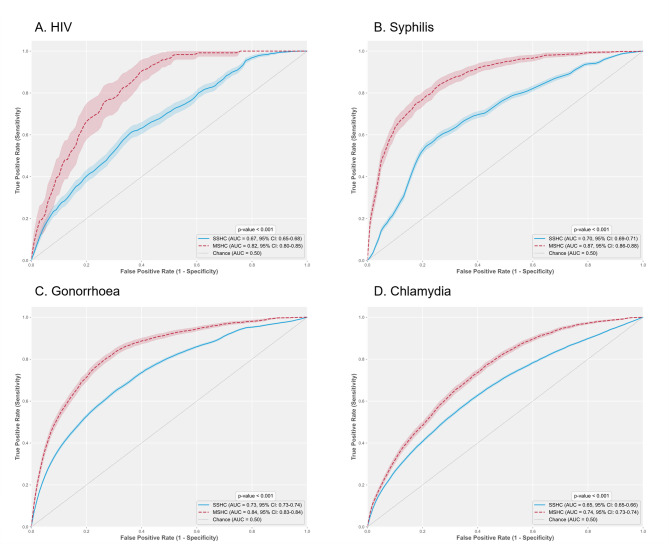 Figure 1
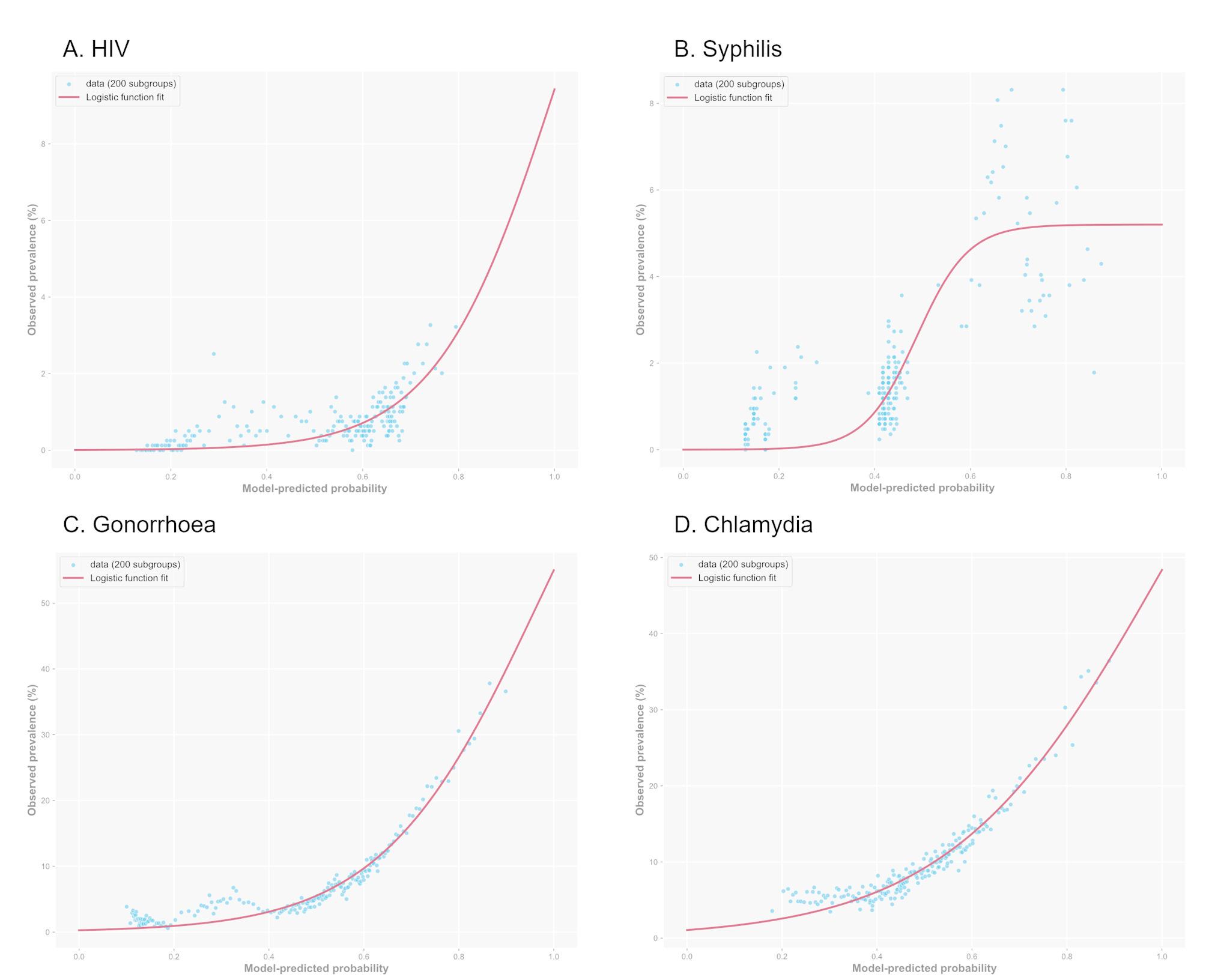 Figure 3
Peer Reviews
No public reviews on file for this paper yet. If you reviewed it on a platform where reviews are public (OpenReview, ICLR, NeurIPS, ICML), you can paste yours below so the community can read it here.
Videos
No videos yet. Explain this paper in a talk, walkthrough, or lecture? Add one.
Taxonomy
TopicsReproductive tract infections research · HIV/AIDS Research and Interventions · Adolescent Sexual and Reproductive Health