Efficacy and safety of emergent balloon aortic valvuloplasty as a rescue therapy for cardiogenic shock due to severe aortic stenosis in non-TAVI centers
Mayuka Masuda, Wataru Fujimoto, Masamichi Iwasaki, Kenzo Uzu, Takuma Sawa, Amane Kozuki, Ryo Nishio, Noritoshi Hiranuma, Makoto Takemoto, Koji Kuroda, Soichiro Yamashita, Junichi Imanishi, Takafumi Todoroki, Masanori Okuda, Hiromasa Otake

TL;DR
This study examines the effectiveness of emergency balloon aortic valvuloplasty in treating severe aortic stenosis with cardiogenic shock, finding it may help faster recovery.
Contribution
The study evaluates the efficacy and safety of emergent balloon aortic valvuloplasty as a rescue therapy in non-TAVI centers for cardiogenic shock due to severe aortic stenosis.
Findings
Emergent BAV was associated with earlier withdrawal from mechanical support and faster rehabilitation.
The CFS score at discharge remained stable in the emergent group but worsened in the non-emergent group.
There was no significant difference in 30-day mortality or procedural complications between emergent and non-emergent BAV.
Abstract
The prognosis of aortic stenosis (AS) with cardiogenic shock remains poor, and optimal initial treatment remains unclear. Emergent balloon aortic valvuloplasty (BAV) is a treatment option for salvage and recent studies have reported that early release of valve obstruction by emergent BAV could improve prognosis. This study aimed to assess the efficacy and safety of emergent BAV for severe AS with cardiogenic shock. Among 8,230 patients hospitalized for heart failure, 7924 patients with heart failure unrelated to severe AS were excluded. Among the remaining 306 patients, 256 patients who developed cardiogenic shock due to other causes except severe AS were further excluded. Finally, a total of 41 patients with severe AS in cardiogenic shock were enrolled and divided into the emergent (underwent BAV within 6 h of admission, n = 9) and non-emergent (underwent BAV more than 6 h after…
Genes, proteins, chemicals, diseases, species, mutations and cell lines named across the full text — each resolved to its canonical identifier and authoritative record.
Click any figure to enlarge with its caption.
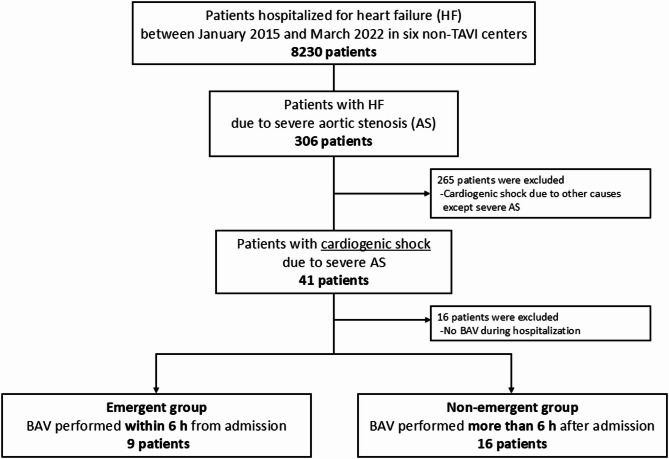 Figure 1
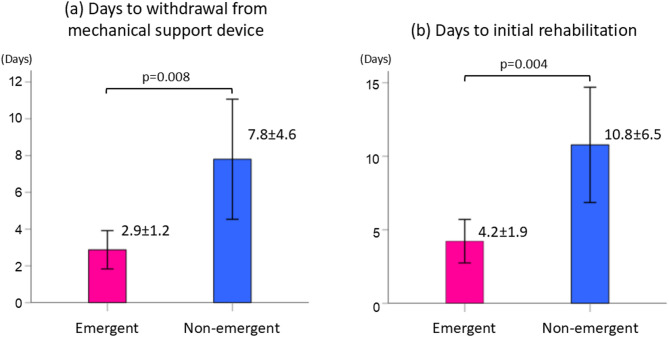 Figure 2
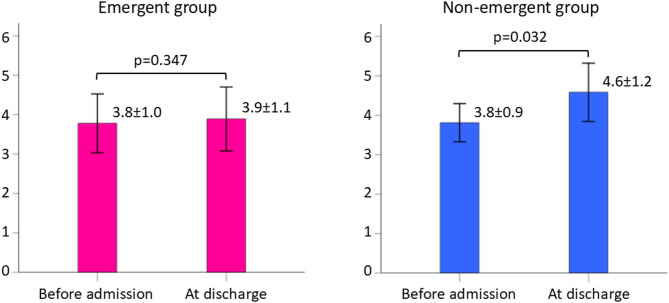 Figure 3
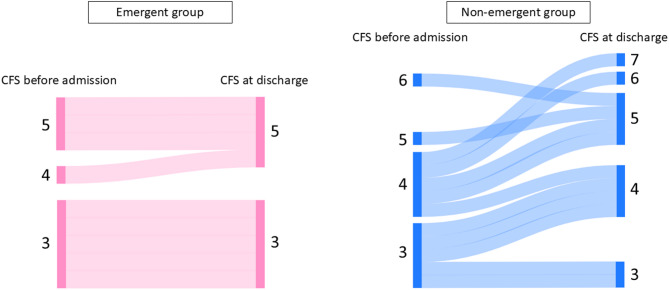 Figure 4
Peer Reviews
No public reviews on file for this paper yet. If you reviewed it on a platform where reviews are public (OpenReview, ICLR, NeurIPS, ICML), you can paste yours below so the community can read it here.
Videos
No videos yet. Explain this paper in a talk, walkthrough, or lecture? Add one.
Taxonomy
TopicsCardiac Valve Diseases and Treatments · Mechanical Circulatory Support Devices · Aortic Disease and Treatment Approaches