Neurotrophic factor-α1/carboxypeptidase E regulates critical protein networks to rescue neurodegeneration, defective synaptogenesis and impaired autophagy in Alzheimer’s disease mice
Lan Xiao, Pranav Sharma, Xuyu Yang, Daniel Abebe, Y. Peng Loh

TL;DR
A gene therapy using NF-α1/CPE improves memory and reduces Alzheimer's disease pathology in mice by regulating key proteins involved in brain health.
Contribution
This study reveals new proteins and pathways regulated by NF-α1/CPE gene therapy in Alzheimer's disease.
Findings
NF-α1/CPE-E342Q gene therapy prevents memory loss and neurodegeneration in AD mice.
Proteomic analysis identified over 2000 proteins affected, including those involved in synaptogenesis and autophagy.
Two new proteins, Snx4 and Trim28, linked to Aβ and tau pathology, are down-regulated by NF-α1/CPE.
Abstract
The global aging population is increasingly inflicted with Alzheimer’s disease (AD), but a cure is still unavailable. Neurotrophic factor-α1/carboxypeptidase E (NF-α1/CPE) gene therapy has been shown to prevent and reverse memory loss and pathology in AD mouse models. However, the mechanisms of action of NF-α1/CPE are not fully understood. We investigated if a non-enzymatic form of NF-α1/CPE-E342Q is efficient in reversing AD pathology and carried out a proteomic study to uncover the mechanisms of action of NF-α1/CPE in AD mice. AAV-human NF-α1/CPE or a non-enzymatic form, NF-α1/CPE-E342Q, was delivered into the hippocampus of 3 × Tg-AD male mice. The effects on cognitive function, neurodegeneration, synaptogenesis and autophagy were investigated. A quantitative proteomic analysis of the hippocampus was carried out. Hippocampal delivery of AAV-NF-α1/CPE-E342Q prevented memory loss,…
Genes, proteins, chemicals, diseases, species, mutations and cell lines named across the full text — each resolved to its canonical identifier and authoritative record.
Click any figure to enlarge with its caption.
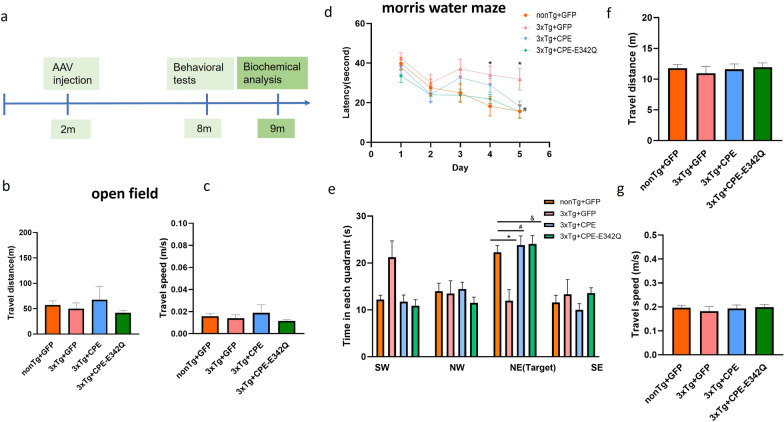 Figure 1
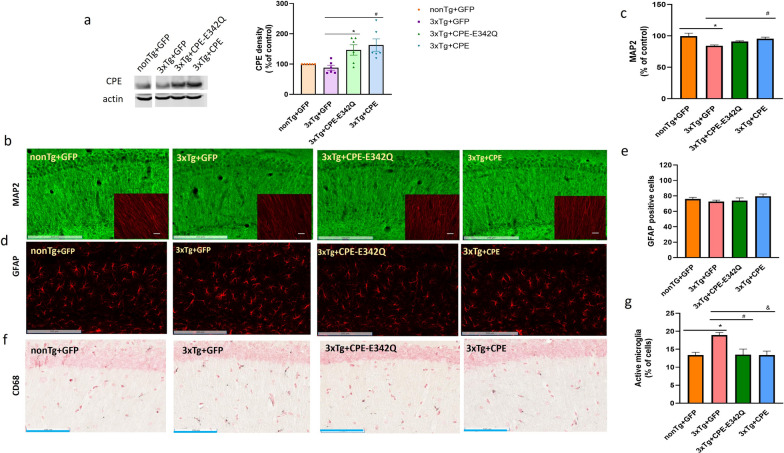 Figure 2
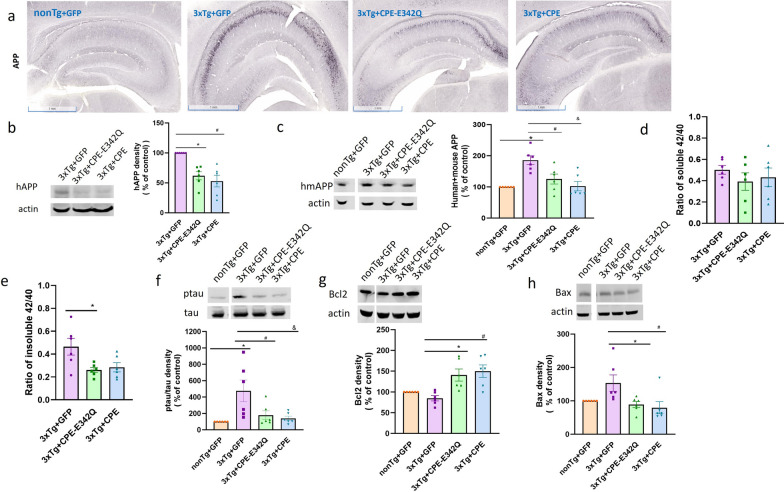 Figure 3
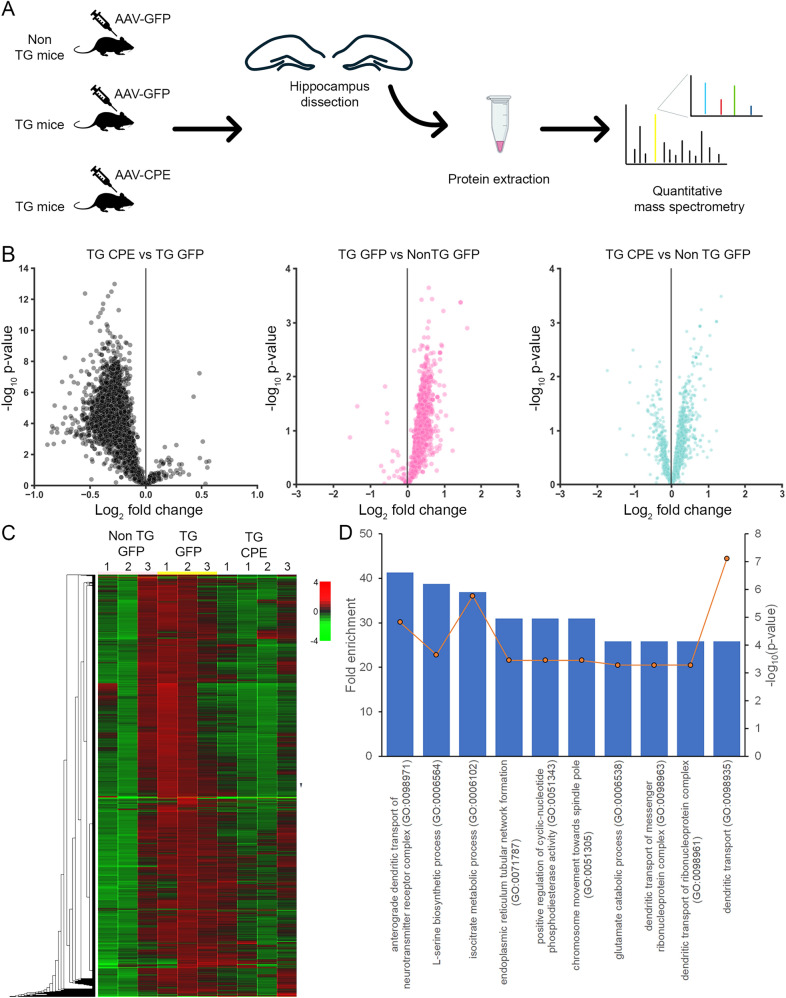 Figure 4
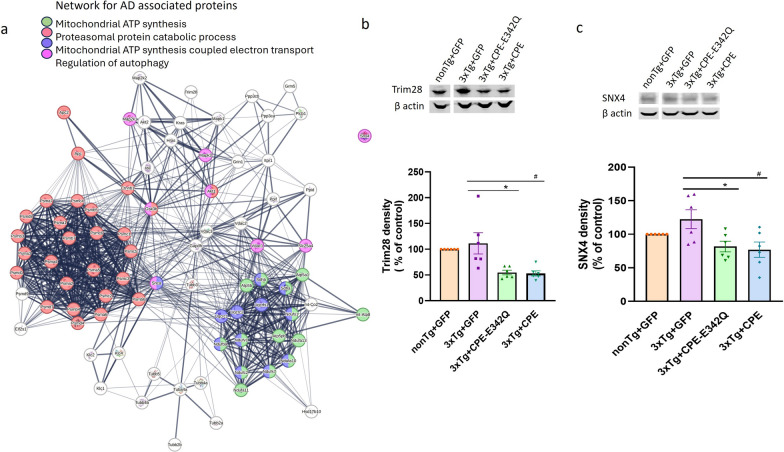 Figure 5
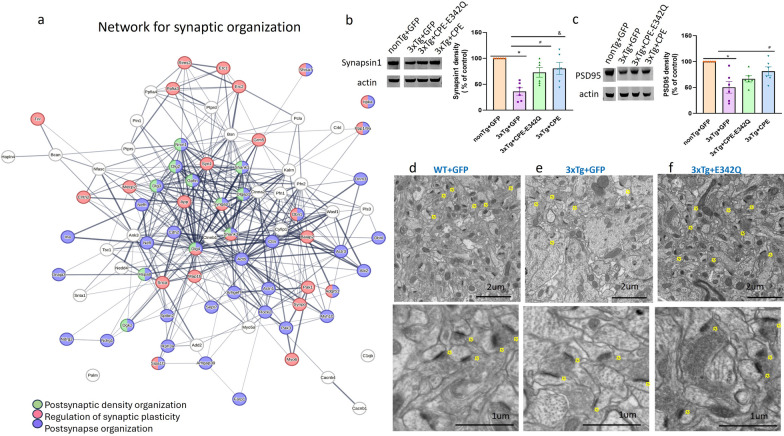 Figure 6
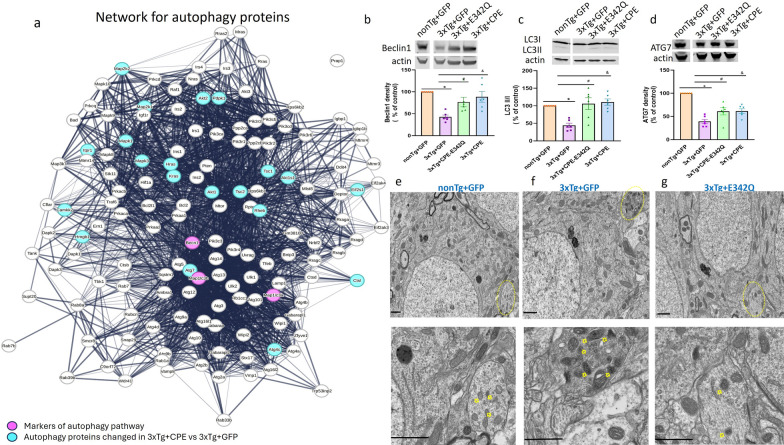 Figure 7
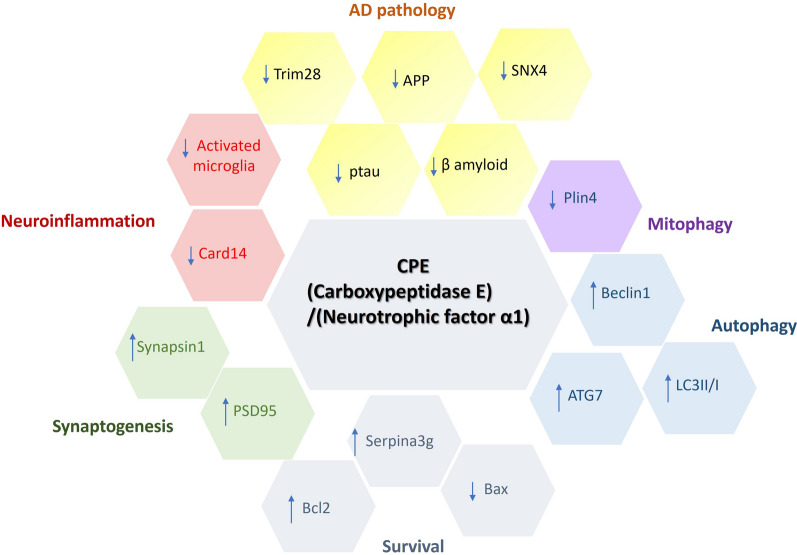 Figure 8
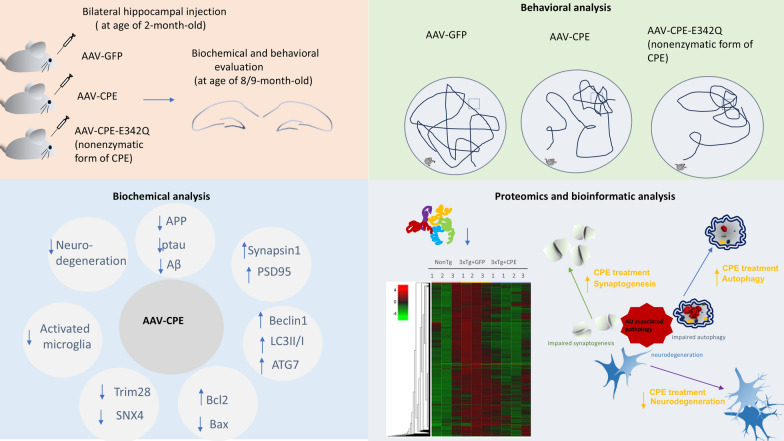 Figure 9
Peer Reviews
No public reviews on file for this paper yet. If you reviewed it on a platform where reviews are public (OpenReview, ICLR, NeurIPS, ICML), you can paste yours below so the community can read it here.
Videos
No videos yet. Explain this paper in a talk, walkthrough, or lecture? Add one.
Taxonomy
TopicsNerve injury and regeneration · Alzheimer's disease research and treatments · Endoplasmic Reticulum Stress and Disease