Multi-omics analysis reveal clinical-gut-brain interactions in female ibs patients with adverse childhood experiences
Michelle Binod, Lin Chang, Ming Wei Hung, Tien S. Dong, Lisa A. Kilpatrick, Anthony Tomasevic, Michelle Choy, Andrea Shin, Emeran A. Mayer, Arpana Church

TL;DR
This study shows how early life stress affects the brain and gut microbiome in women with IBS, leading to worse symptoms and altered brain function.
Contribution
The study identifies a multi-omic signature linking adverse childhood experiences to IBS in women through brain, gut, and clinical features.
Findings
Women with IBS and high ACE scores show greater anxiety, stress, and somatic symptoms compared to healthy controls.
High ACE IBS patients have reduced beneficial gut bacteria like Akkermansia and Bifidobacterium linked to symptom severity.
Machine learning models accurately distinguished IBS patients with high ACE from others with 78% accuracy and an AUC of 0.87.
Abstract
The brain-gut system, which involves bidirectional communication between the central nervous system and the gut, plays a central role in stress responses. Its dysregulation is implicated in irritable bowel syndrome (IBS), a stress-sensitive, female-predominant disorder characterized by abdominal pain and altered bowel habits. Adverse childhood experiences (ACE) increase the risk and severity of IBS, likely by amplifying stress responsiveness and gut-brain dysfunction in females. However, the mechanisms involved are unknown. This study aimed to identify a multi-omic signature linking ACE exposure to IBS females via clinical, neuroimaging, and gut microbiome features as compared to healthy control (HC) females. Data was analyzed from participants with Rome positive IBS and HCs. Four subgroups were created based on IBS diagnosis and ACE score with high ACE defined as ≥2 and low as ACE…
Genes, proteins, chemicals, diseases, species, mutations and cell lines named across the full text — each resolved to its canonical identifier and authoritative record.
Click any figure to enlarge with its caption.
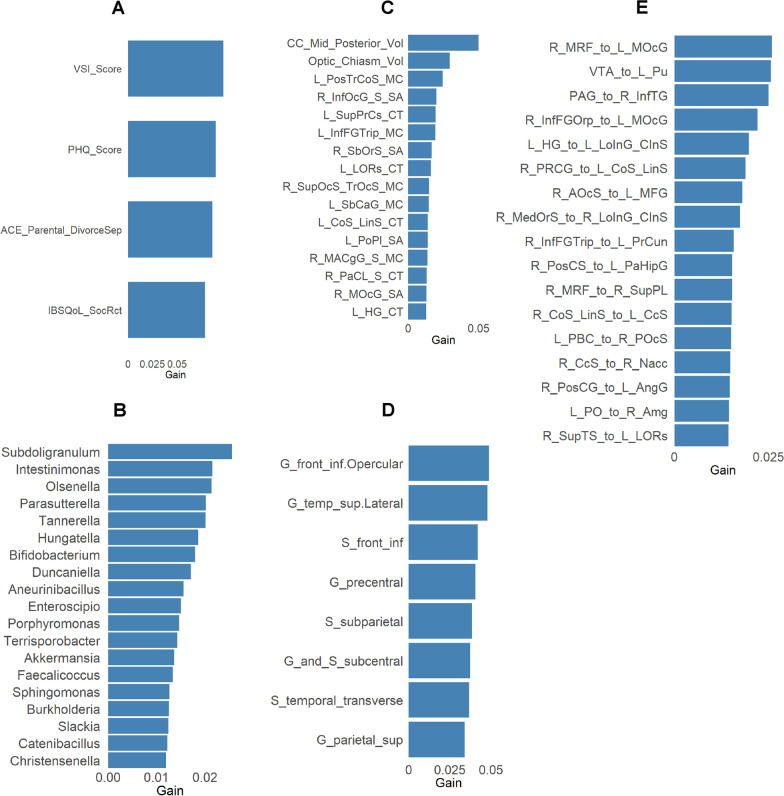 Figure 1
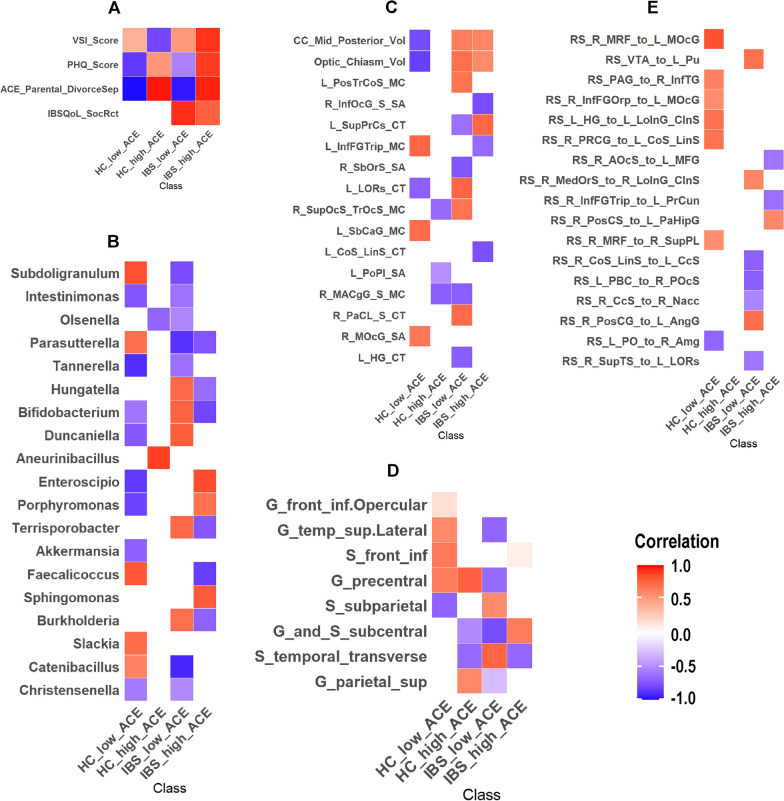 Figure 2
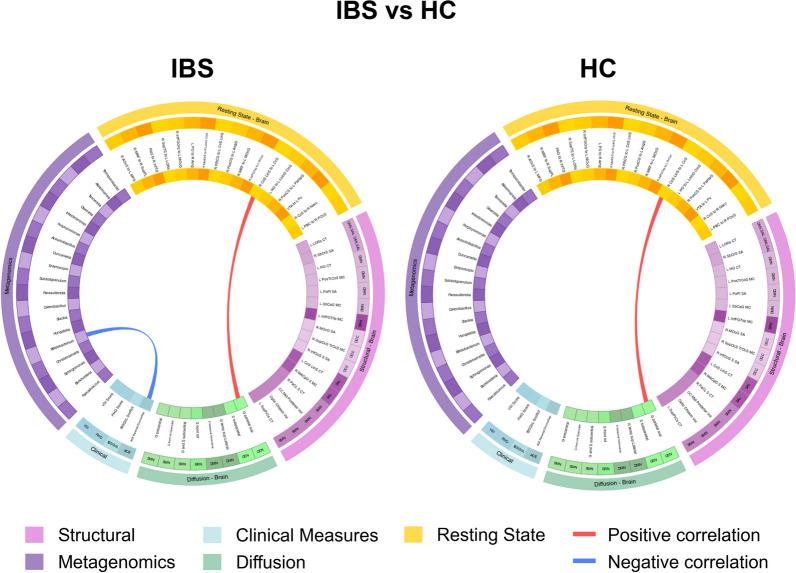 Figure 3
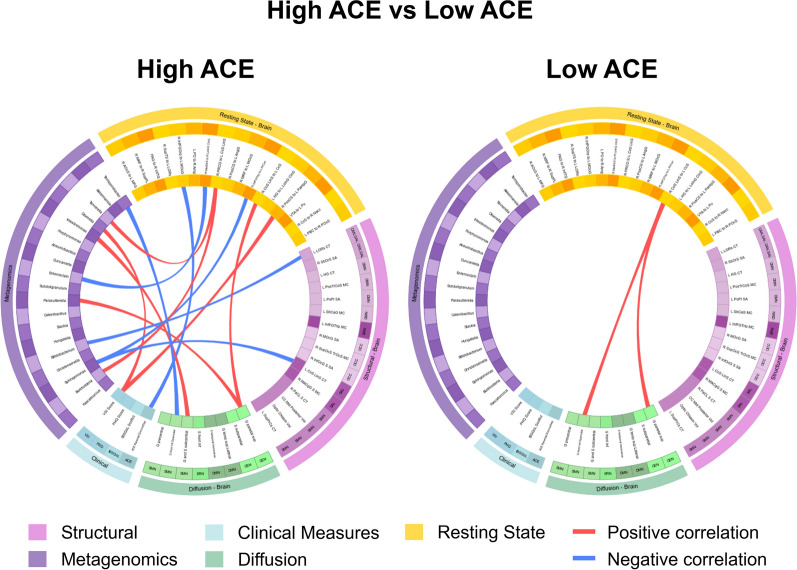 Figure 4
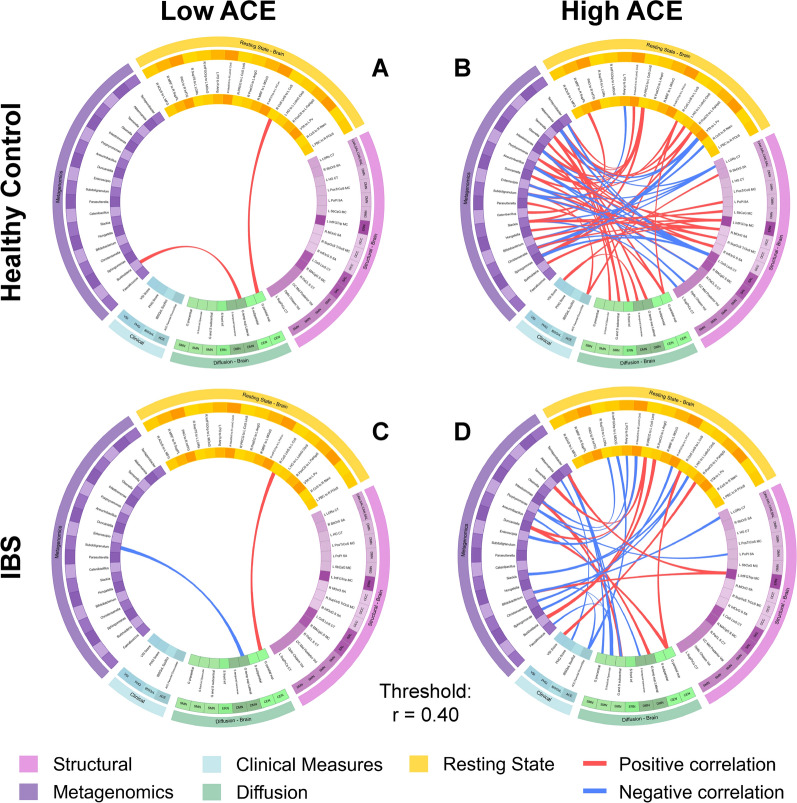 Figure 5
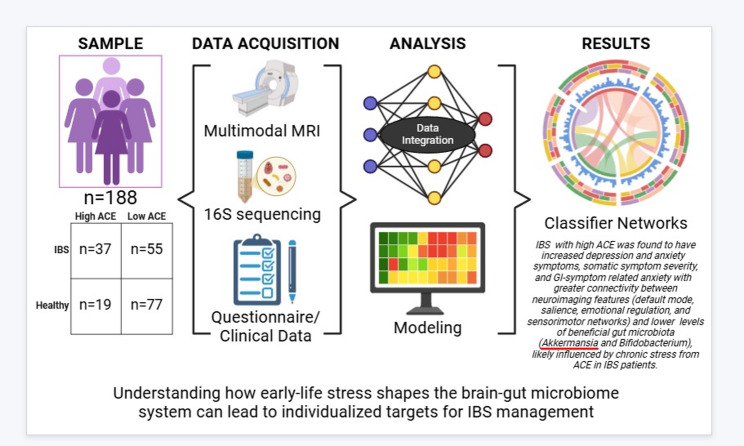 Figure 6
Peer Reviews
No public reviews on file for this paper yet. If you reviewed it on a platform where reviews are public (OpenReview, ICLR, NeurIPS, ICML), you can paste yours below so the community can read it here.
Videos
No videos yet. Explain this paper in a talk, walkthrough, or lecture? Add one.
Taxonomy
TopicsGut microbiota and health · Gastrointestinal motility and disorders · Tryptophan and brain disorders