Ruthenium Bis-Sulfonate Complexes: Synthesis and Application in Asymmetric Hydrogenation
Yifei Zhou, Pim Vink, Ibrahim Kılınç, Olga O. Sokolova, Fedor M. Miloserdov

TL;DR
This paper reports the synthesis of new ruthenium complexes that improve the efficiency of asymmetric hydrogenation reactions.
Contribution
The study introduces Ru(BINAP)(OMs)2 as a more effective catalyst compared to existing versions.
Findings
Ru(L)(X)2 complexes were successfully synthesized and characterized.
Ru(BINAP)(OMs)2 outperformed Ru(BINAP)(OAc)2 in catalytic asymmetric hydrogenation.
Anion variation significantly impacts catalytic performance in these reactions.
Abstract
A series of Ru(L)(X)2 complexes (L = bidentate ligand; X = OMs, OTs, OTf) was synthesized and characterized. Ru(BINAP)(OMs)2 showed improved catalytic performance over the established Ru(BINAP)(OAc)2 catalyst, highlighting the impact of anion variation on catalytic asymmetric hydrogenations.
Genes, proteins, chemicals, diseases, species, mutations and cell lines named across the full text — each resolved to its canonical identifier and authoritative record.
Click any figure to enlarge with its caption.
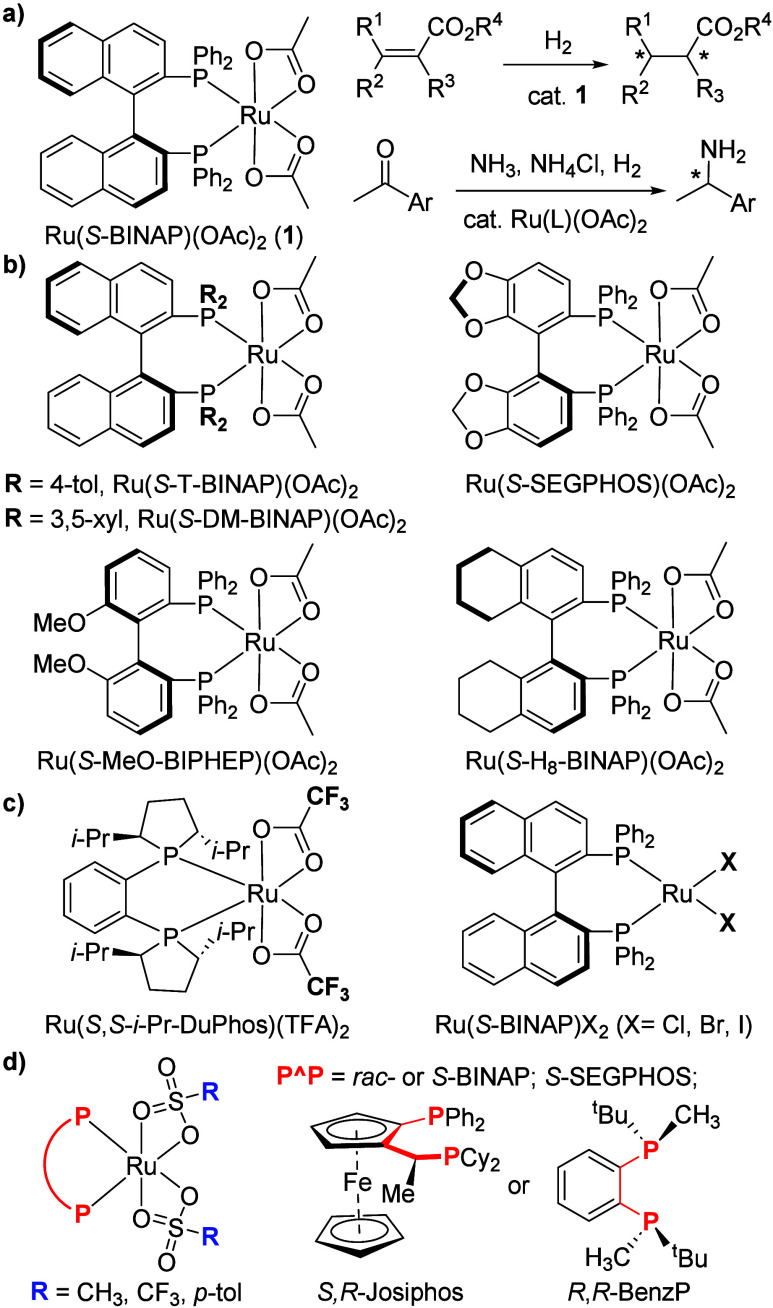 Figure 1
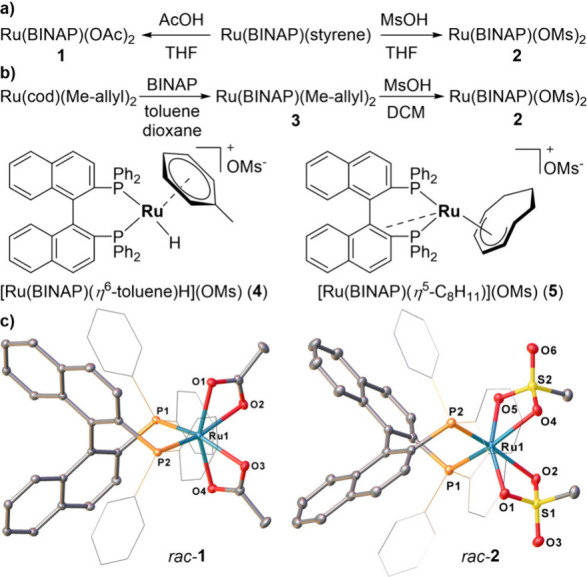 Figure 2
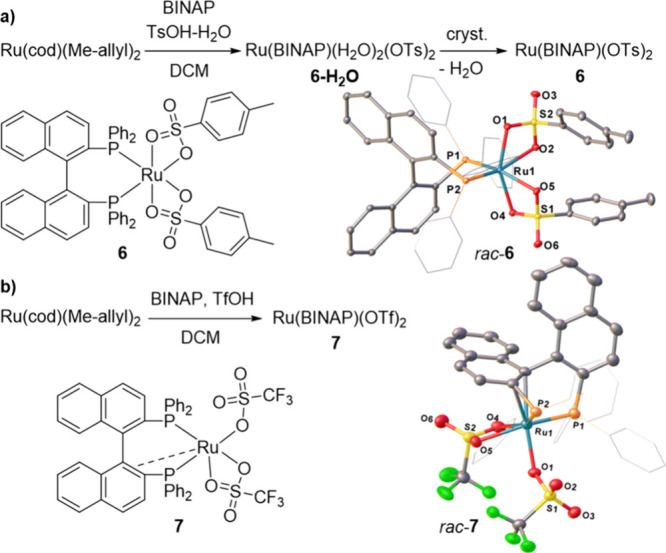 Figure 3
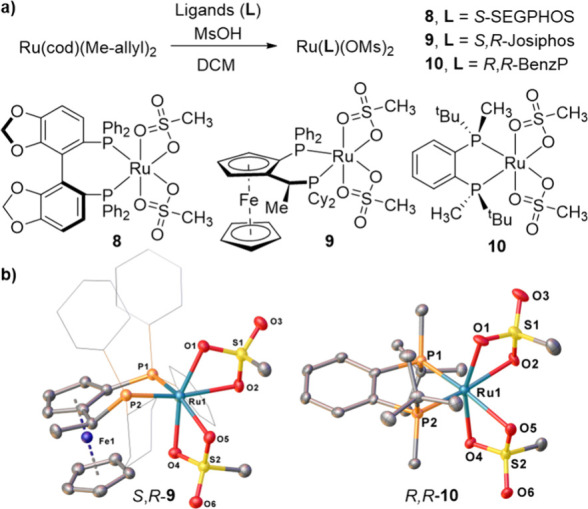 Figure 4
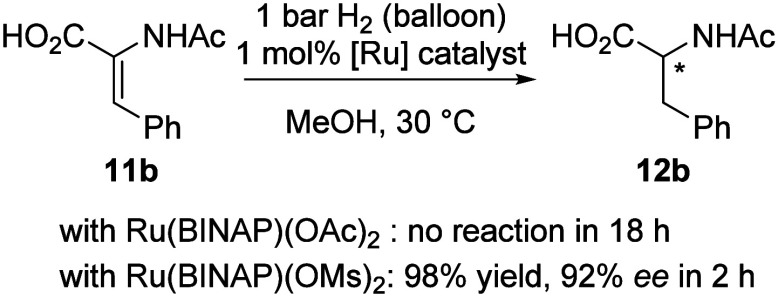 Figure 5
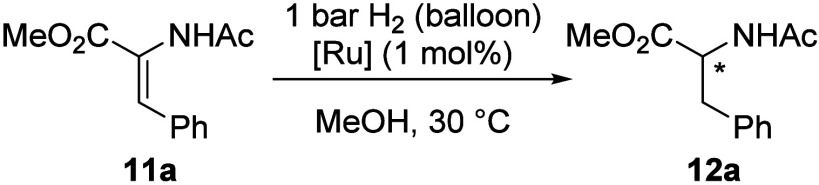 Figure 6
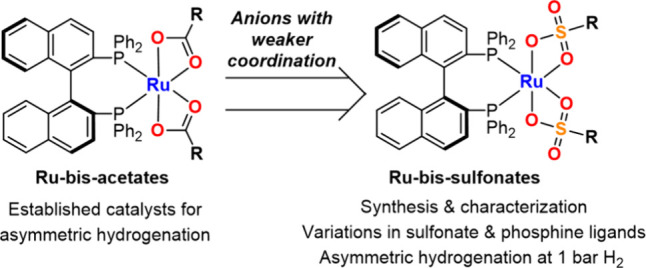 Figure 7
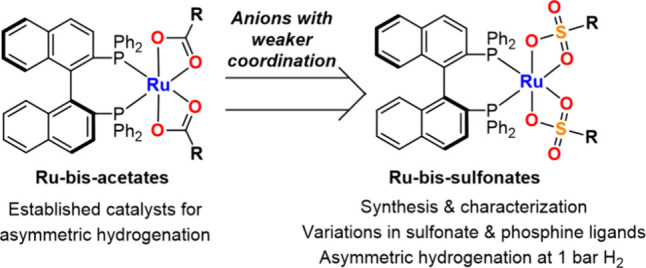 Figure 8
Peer Reviews
No public reviews on file for this paper yet. If you reviewed it on a platform where reviews are public (OpenReview, ICLR, NeurIPS, ICML), you can paste yours below so the community can read it here.
Videos
No videos yet. Explain this paper in a talk, walkthrough, or lecture? Add one.
Taxonomy
TopicsAsymmetric Hydrogenation and Catalysis · N-Heterocyclic Carbenes in Organic and Inorganic Chemistry · Catalysis for Biomass Conversion