Pancreatic involvement in EPG5-related disorders
Dennis T. Famili, Gehad Elghazali, Emanuela Argili, Russell P. Saneto, Michael Harris, Oleg Gerasimenko, Julia Gerasimenko, Manolis Fanto, Hormos Salimi Dafsari, Heinz Jungbluth

TL;DR
This paper reports pancreatic involvement in patients with EPG5-related Vici syndrome, highlighting the role of autophagy in pancreatic health.
Contribution
The study identifies previously unrecognized pancreatic manifestations in EPG5-related disorders.
Findings
Three patients with EPG5-related Vici syndrome showed pancreatic involvement, including amylase elevations and insufficiency.
Autophagy defects may contribute to pancreatitis through mechanisms like vacuole formation and mitochondrial dysfunction.
The findings expand the known phenotypic spectrum of EPG5-related disorders to include pancreatic dysfunction.
Abstract
Vici syndrome is a severe neurodevelopmental multisystem disorder characterized by callosal agenesis, cataracts, cardiomyopathy, combined immunodeficiency and hypopigmentation. There may be additional variable involvement of other organs. VS is caused by recessive mutations in EPG5, encoding a tethering factor with important roles in autophagy, an essential cellular homeostatic mechanism involved in metabolic adaptation, infection defence and quality control of proteins and organelles. Acute pancreatitis is an inflammatory syndrome caused by an acute injury resulting in failure of safeguarding mechanisms preventing autodigestion. Chronic pancreatitis is characterized by replacement of pancreatic parenchyma with fibrotic tissue following repeated injury, resulting in endocrine and exocrine insufficiency. In addition to common causes such as excessive ethanol consumption, gallstones and…
Genes, proteins, chemicals, diseases, species, mutations and cell lines named across the full text — each resolved to its canonical identifier and authoritative record.
Click any figure to enlarge with its caption.
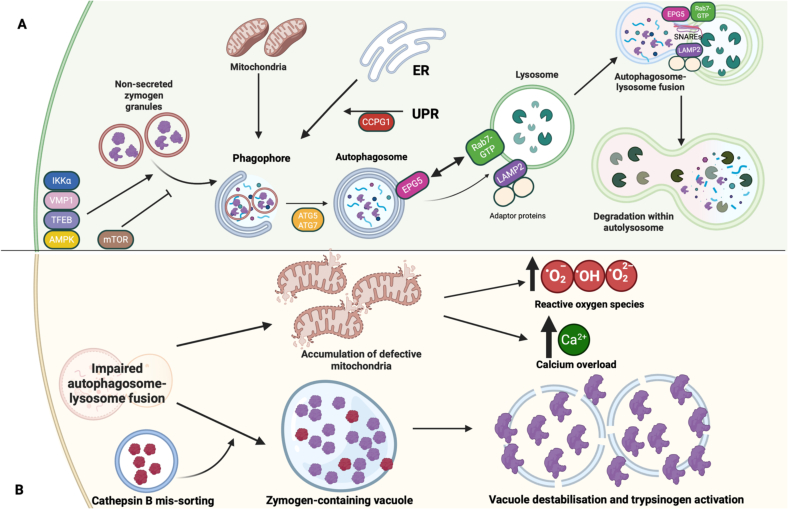 Figure 1
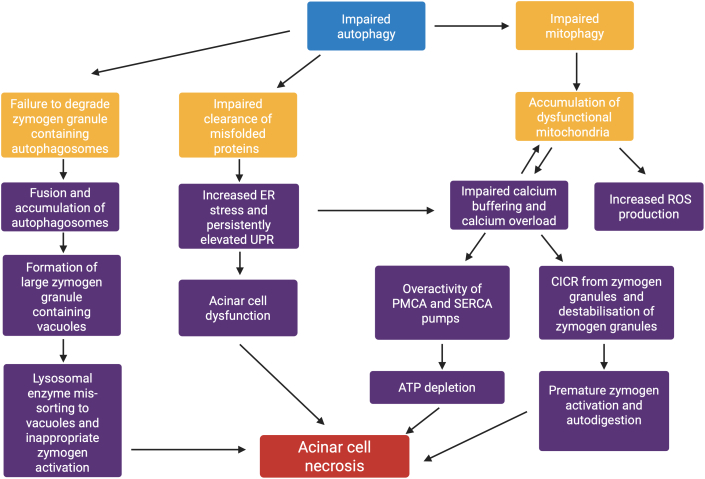 Figure 2
Peer Reviews
No public reviews on file for this paper yet. If you reviewed it on a platform where reviews are public (OpenReview, ICLR, NeurIPS, ICML), you can paste yours below so the community can read it here.
Videos
No videos yet. Explain this paper in a talk, walkthrough, or lecture? Add one.
Taxonomy
TopicsAutophagy in Disease and Therapy · Genomics and Rare Diseases · Hereditary Neurological Disorders