A Solvent Selection Framework for Porous Organic Polymers
Xue Fang, Ulzhalgas Karatayeva, John D. Worth, Merve Gumussoy Girgin, Safa Ali Al Siyabi, Dauren Mukhanov, Ella M. Gale, Charl F. J. Faul, Natalie Fey

TL;DR
This paper introduces a new method to choose solvents for making porous organic polymers, improving their performance in capturing CO2.
Contribution
The novel MLoc algorithm enables rapid determination of solubility parameters for new materials using UV/vis absorbance data.
Findings
MLoc algorithm uses UV/vis absorbance data to determine Hansen solubility parameters for novel porous organic polymers.
Using solvents with similar HSPs to the polymer improved CO2 uptake by 220% compared to a previous method.
A database of HSPs for 17 polymers and over 80 reactions is provided for future research.
Abstract
Selecting suitable solvents to control the morphology and properties of novel functional materials remains a significant challenge, especially when there is limited or no prior knowledge of the material and its solubility. In this work, we present a solvent selection toolkit for functional porous organic polymers. We have developed the MLoc algorithm for the fast determination of Hansen solubility parameters (HSPs) for novel materials. This approach requires ultraviolet and visible (UV/vis) absorbance data, measured for a number of candidate solvents using a standard laboratory setup. Based on these measurements, MLoc determines the HSPs for novel porous organic materials using a centroid-location algorithm based on Hansen distance. The results of this algorithm can guide the fine-tuning of both morphology and carbon-capture performance of target polymers, which we illustrate in a case…
Genes, proteins, chemicals, diseases, species, mutations and cell lines named across the full text — each resolved to its canonical identifier and authoritative record.
Click any figure to enlarge with its caption.
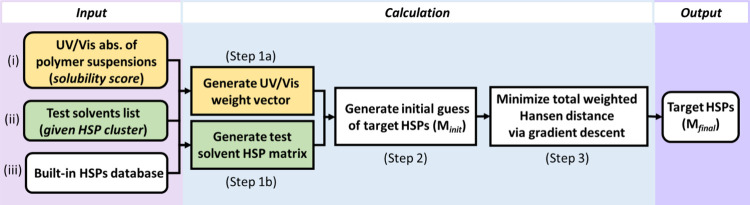 Figure 1
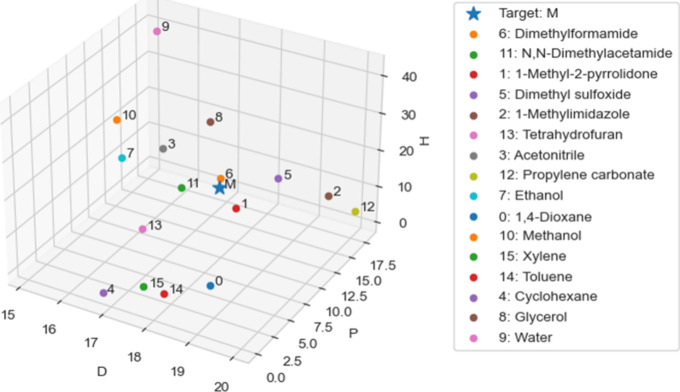 Figure 2
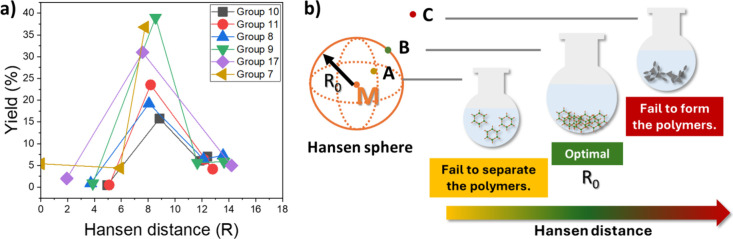 Figure 3
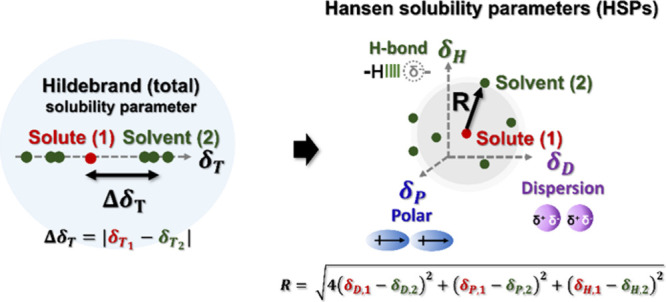 Figure 4
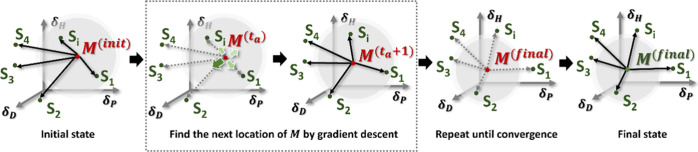 Figure 5
 Figure 6
 Figure 7
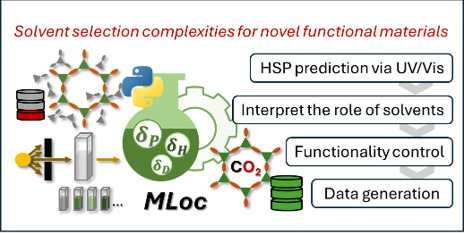 Figure 8
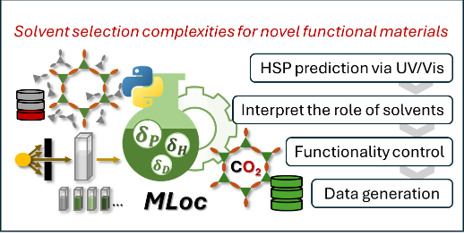 Figure 9
 Figure 10
 Figure 11
 Figure 12
 Figure 13
 Figure 14
 Figure 15
 Figure 16
Peer Reviews
No public reviews on file for this paper yet. If you reviewed it on a platform where reviews are public (OpenReview, ICLR, NeurIPS, ICML), you can paste yours below so the community can read it here.
Videos
No videos yet. Explain this paper in a talk, walkthrough, or lecture? Add one.
Taxonomy
TopicsCovalent Organic Framework Applications · Carbon dioxide utilization in catalysis · Oxidative Organic Chemistry Reactions