Asymmetric Dynamics Between the Protomers of the σ2 Receptor Homodimer
Manming Xu, Saleh Alyemni, Veniamin A. Borin, Ranabir Majumder, Nathaniel V Nucci, Thomas Keck, Kevin Frankowski, Pratul K. Agarwal, Shozeb Haider

TL;DR
This study reveals that the sigma-2 receptor homodimer has asymmetric movements between its two parts, which could explain how it functions and responds to ligands like cholesterol.
Contribution
The study identifies anticorrelated helical motions and salt bridge switching as drivers of asymmetric dynamics in the sigma-2 receptor homodimer.
Findings
Asymmetric dynamics in the σ2R homodimer are driven by anticorrelated helical motions and salt bridge switching.
Cholesterol binding enhances protomer asymmetry by stabilizing one subunit and altering the other's dynamics.
Species-specific allosteric interactions and asymmetric membrane coupling are observed in the bound state.
Abstract
The sigma-2 receptor (σ2R/TMEM97) is a clinically relevant membrane protein involved in cholesterol regulation and overexpressed in cancer and neurodegenerative diseases. Despite its therapeutic potential, the dynamic mechanisms underlying σ2R function and ligand binding remain poorly understood. Here, we combined adaptive sampling molecular dynamics simulations with quasi-anharmonic analysis and unsupervised machine learning method to investigate the conformational behavior of the σ2R homodimer in both apo and cholesterol-bound states. Our results reveal asymmetric dynamics between the two protomers. This asymmetry is driven by anticorrelated helical motions and mutually exclusive salt bridge formation, including a switching mechanism between K55–E139 and D122–R140. Cholesterol binding further enhances this asymmetry by stabilizing one protomer and altering the dynamics of the other.…
Genes, proteins, chemicals, diseases, species, mutations and cell lines named across the full text — each resolved to its canonical identifier and authoritative record.
Click any figure to enlarge with its caption.
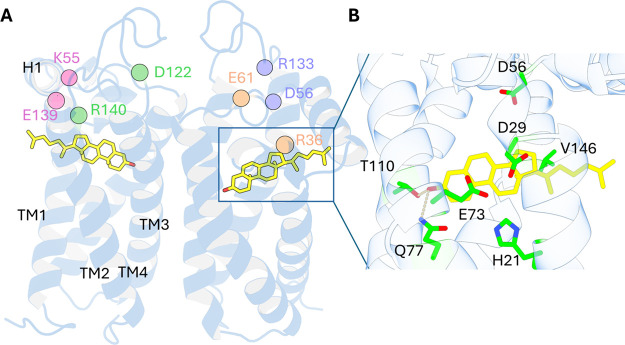 Figure 1
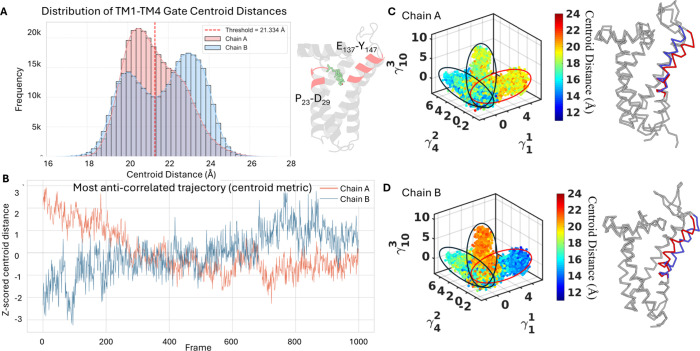 Figure 2
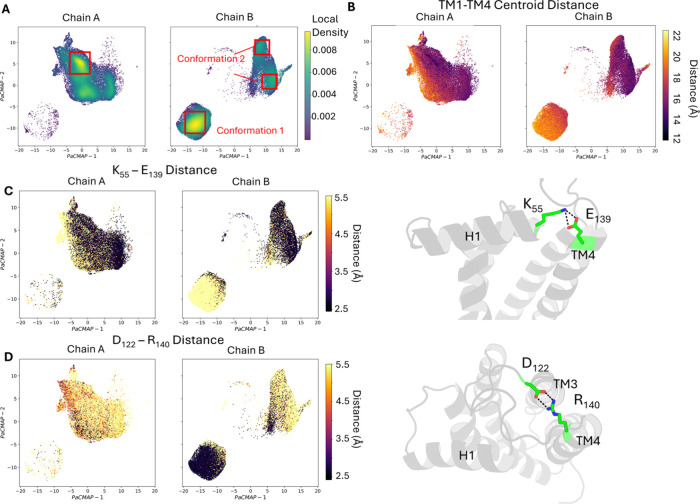 Figure 3
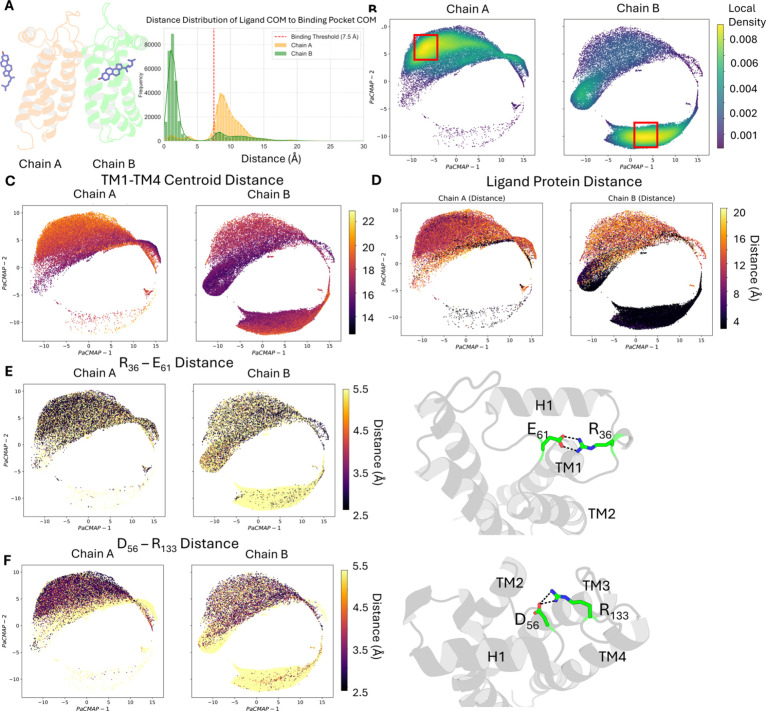 Figure 4
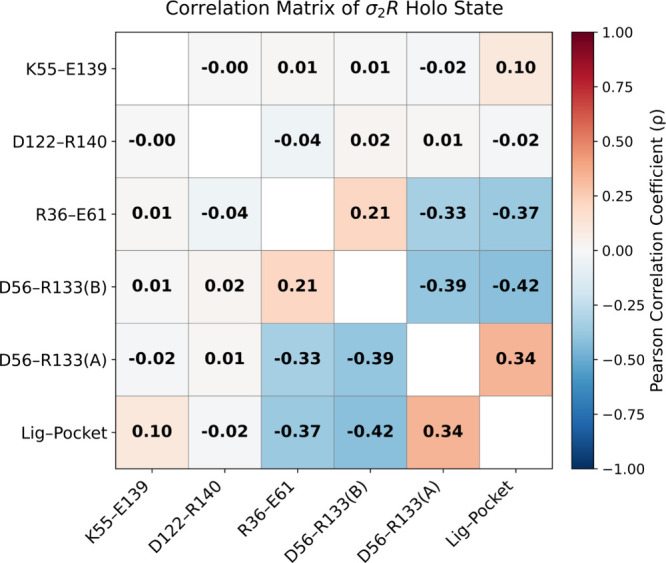 Figure 5
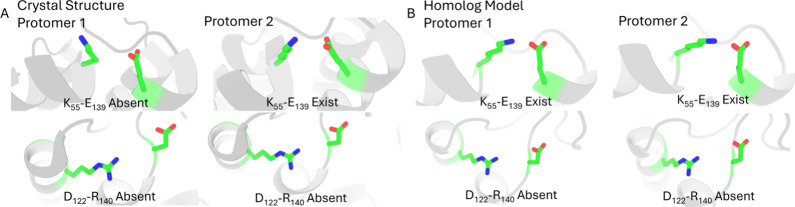 Figure 6
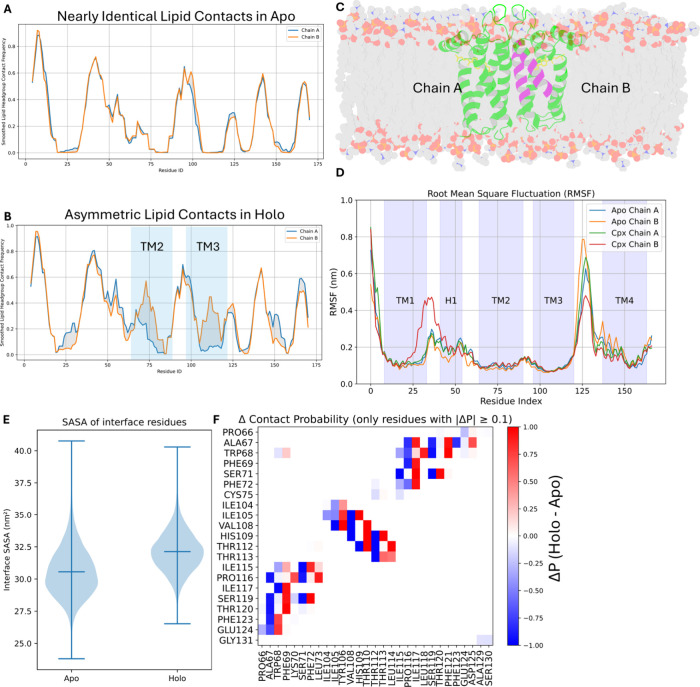 Figure 7
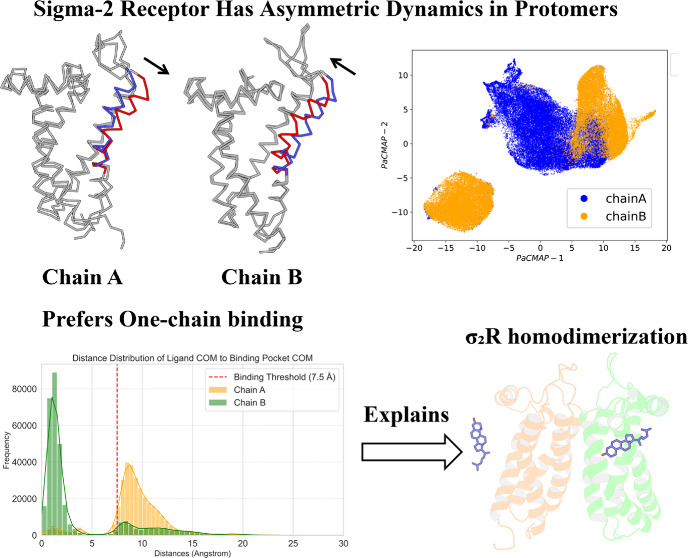 Figure 8
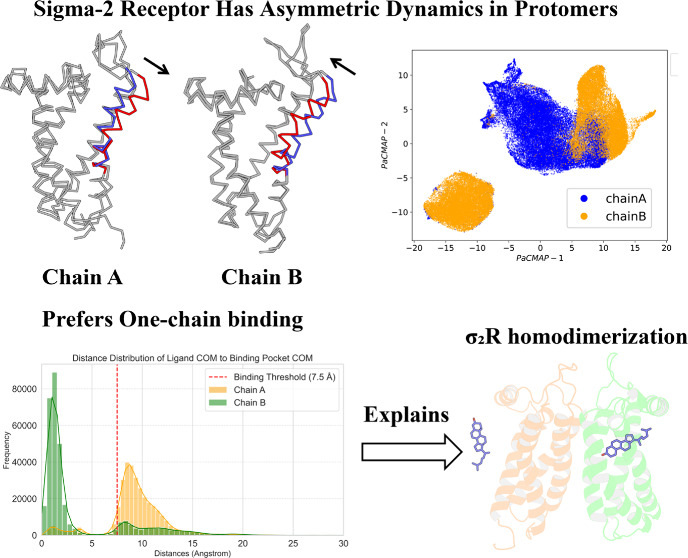 Figure 9
 Figure 10
Peer Reviews
No public reviews on file for this paper yet. If you reviewed it on a platform where reviews are public (OpenReview, ICLR, NeurIPS, ICML), you can paste yours below so the community can read it here.
Videos
No videos yet. Explain this paper in a talk, walkthrough, or lecture? Add one.
Taxonomy
TopicsPharmacological Receptor Mechanisms and Effects · Receptor Mechanisms and Signaling · Nicotinic Acetylcholine Receptors Study