A Series of Trigonal Arylimido Iron Complexes and the Influence of Oxidation State and Steric Demand on Reactivity
Andres Gonzalez, Sascha Reith, Alexander Reckziegel, C. Gunnar Werncke

TL;DR
This paper explores how different aryl azides react with iron complexes, showing how steric effects and oxidation states influence reactivity and product formation.
Contribution
The study reveals new insights into the reactivity of trigonal arylimido iron complexes influenced by oxidation state and steric demand.
Findings
Trigonal anionic iron(II) imidyl complexes with long Fe–N bonds were synthesized.
Steric demand affects the formation of tetrazenido complexes and C–H amination reactions.
Computational analysis shows isoenergetic electronic states for different oxidation forms.
Abstract
We describe the reaction between the linear iron(I/II) silylamides [FeL2]0,– (L = N{Dipp}SiMe3) and aryl azides N3R with different steric demand (R = Ph, 2-Me-C6H4 (Tol), 2,4-Me2-C6H3 (Xyl), 2,6- i Pr2-C6H3 (Dipp), 2,4,6- i Pr3-C6H2 (Tripp)). Obtained trigonal anionic high-spin iron(II) imidyl complexes exhibit long Fe–N bonds of approximately 1.76 Å. In case of the largest substituent (R = Tripp) a slow SiMe3-shift from the ancillary ligand to the imido nitrogen is observed. In contrast, for the smallest azide (PhN3) the tetrazenido complex [Fe(η2-κN:1 κN4-N4Ph2)L2] is obtained. Isolable imido complexes react nucleophilic toward benzaldehyde and mesityl isocyanate under cycloaddition to metallacycles. In case of the neutral precursor [FeL2] imido iron species were only obtained for R = Tol or Xyl, with Fe–N bonds of approximately 1.74 Å. Based on computational analysis these…
Genes, proteins, chemicals, diseases, species, mutations and cell lines named across the full text — each resolved to its canonical identifier and authoritative record.
Click any figure to enlarge with its caption.
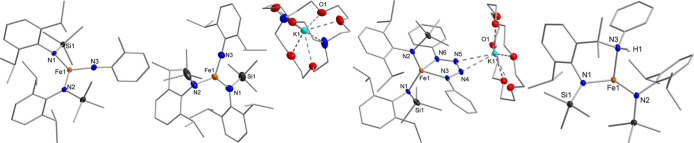 Figure 1
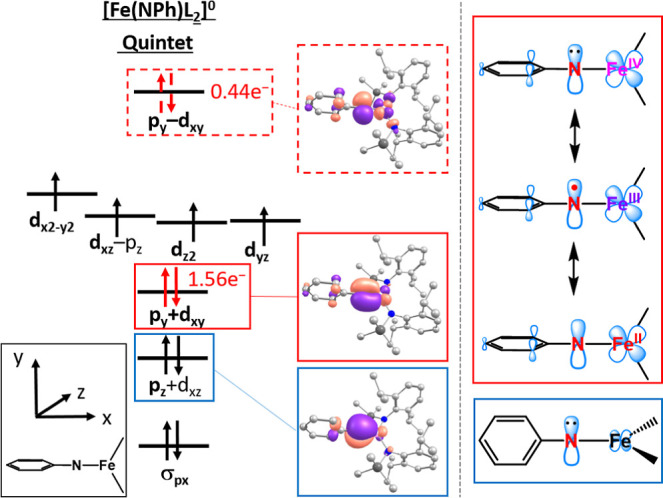 Figure 2
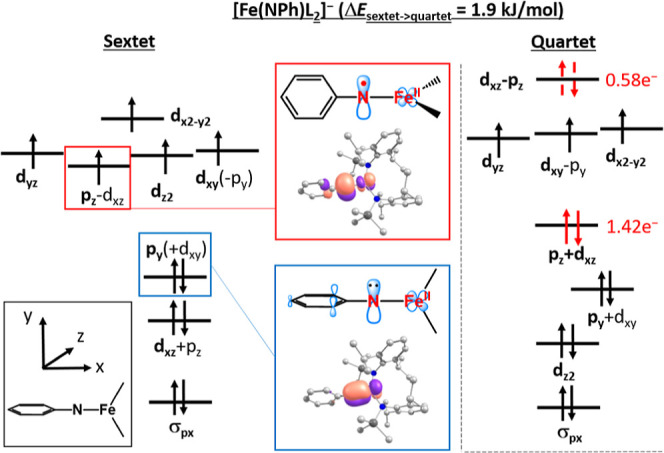 Figure 3
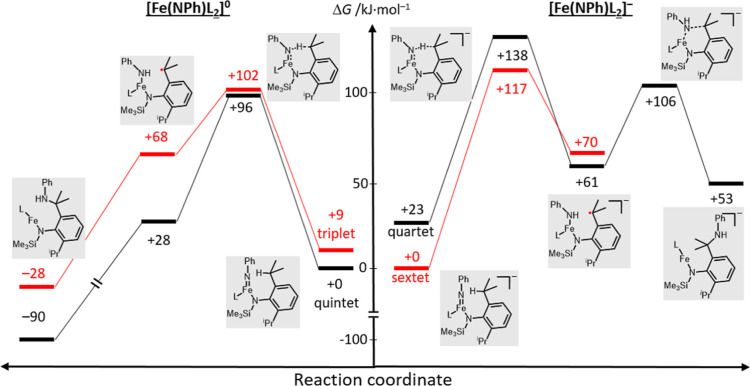 Figure 4
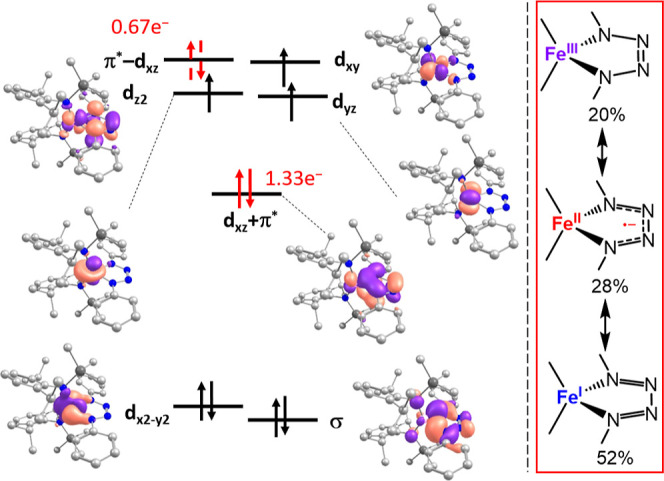 Figure 5
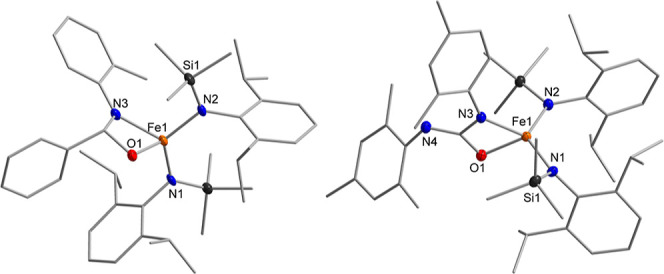 Figure 6
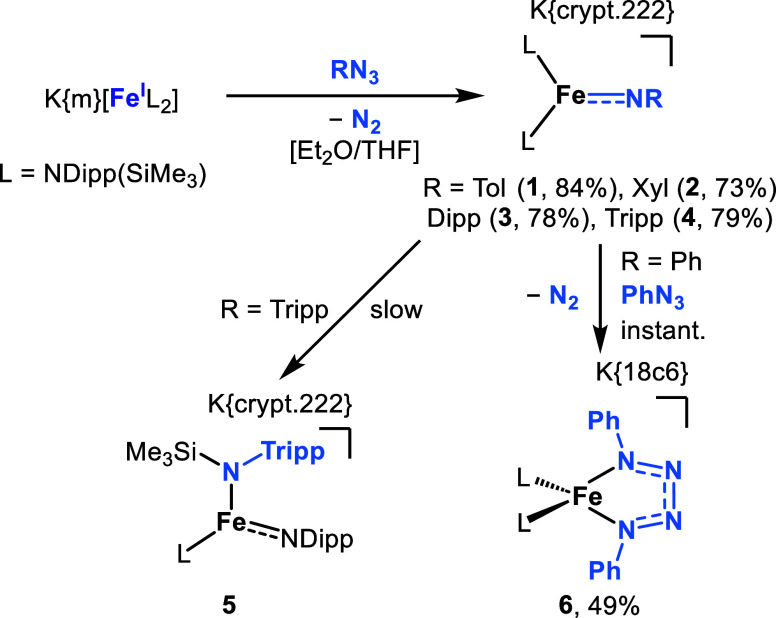 Figure 7
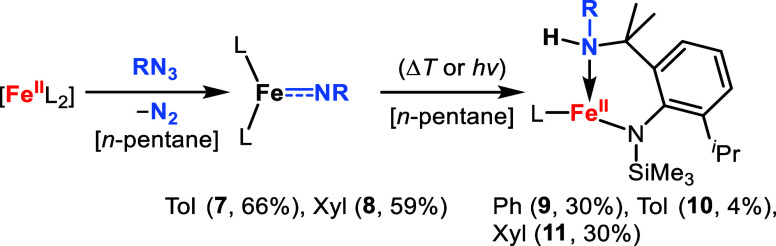 Figure 8
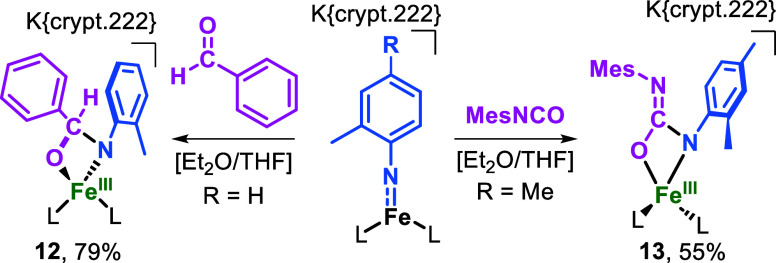 Figure 9
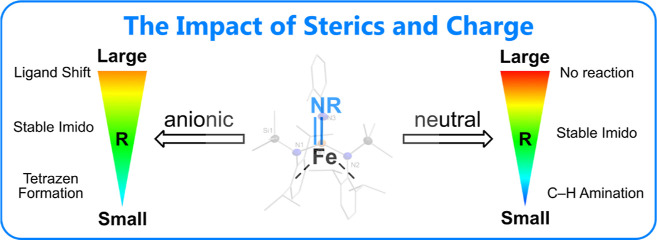 Figure 10
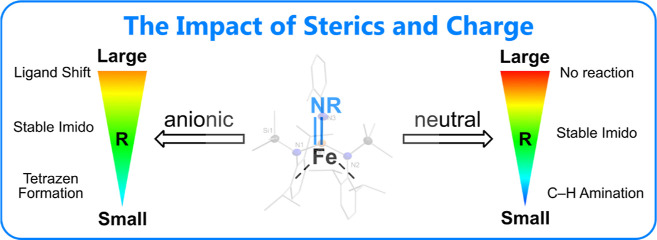 Figure 11
Peer Reviews
No public reviews on file for this paper yet. If you reviewed it on a platform where reviews are public (OpenReview, ICLR, NeurIPS, ICML), you can paste yours below so the community can read it here.
Videos
No videos yet. Explain this paper in a talk, walkthrough, or lecture? Add one.
Taxonomy
TopicsMagnetism in coordination complexes · Organometallic Complex Synthesis and Catalysis · Synthesis and characterization of novel inorganic/organometallic compounds