CT perfusion lesions are present in most MRI confirmed lacunar strokes
James O. Thomas, Milanka Visser, Carlos Garcia-Esperon, Neil J. Spratt, Dennis Cordato, Cecilia Cappelen-Smith, Longting Lin, Mark W. Parsons

TL;DR
Most lacunar strokes confirmed by MRI show perfusion abnormalities on CT scans, but small or late-detected strokes may not.
Contribution
The study reveals that CT perfusion detects perfusion lesions in 78% of lacunar strokes, despite limitations in current algorithms.
Findings
CT perfusion detects focal perfusion abnormalities in 78% of lacunar strokes confirmed by MRI.
Perfusion-negative strokes are smaller, less severe, and imaged later than perfusion-positive ones.
Brainstem perforator strokes are less likely to show up on CT perfusion.
Abstract
•Focal perfusion abnormalities are present in 78% of all lacunar strokes.•Low signal to noise ratio on subcortical CT perfusion limits interpretation.•Brainstem perforator strokes are less likely to be seen on CT perfusion.•Perfusion-negative lacunar strokes tend to be smaller and less severe. Focal perfusion abnormalities are present in 78% of all lacunar strokes. Low signal to noise ratio on subcortical CT perfusion limits interpretation. Brainstem perforator strokes are less likely to be seen on CT perfusion. Perfusion-negative lacunar strokes tend to be smaller and less severe. Lacunar stroke remains diagnostically challenging in acute settings due to limited sensitivity of routine imaging. While CT perfusion (CTP) is widely used for evaluating stroke, its role in the identification of subcortical lacunar infarcts is less clear. Current core/penumbra algorithms used for CTP…
Genes, proteins, chemicals, diseases, species, mutations and cell lines named across the full text — each resolved to its canonical identifier and authoritative record.
Click any figure to enlarge with its caption.
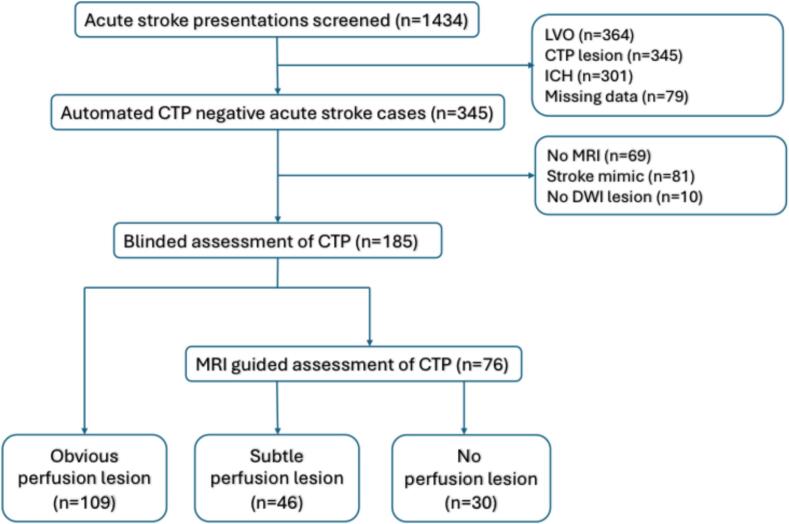 Figure 1
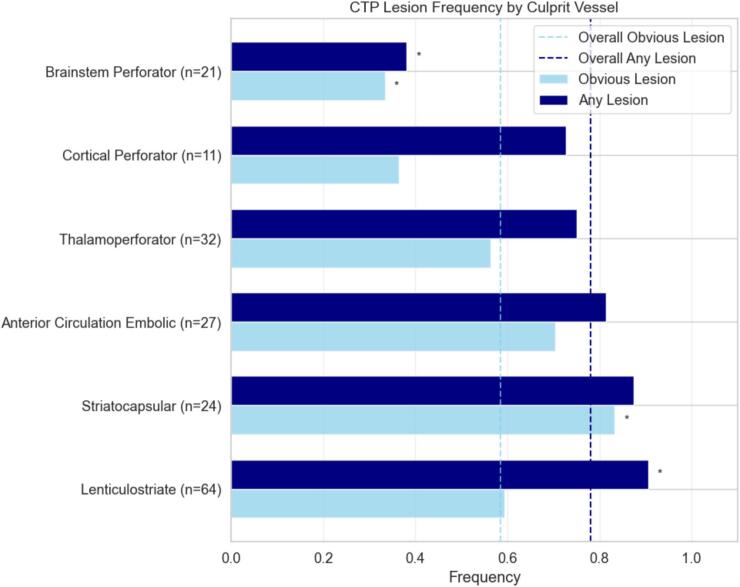 Figure 2
 Figure 3
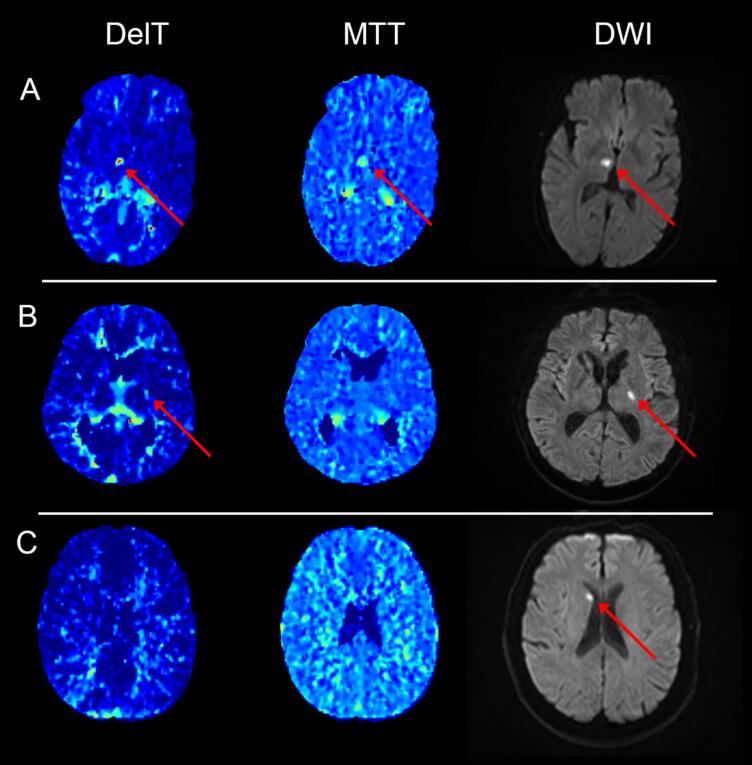 Figure 4
Peer Reviews
No public reviews on file for this paper yet. If you reviewed it on a platform where reviews are public (OpenReview, ICLR, NeurIPS, ICML), you can paste yours below so the community can read it here.
Videos
No videos yet. Explain this paper in a talk, walkthrough, or lecture? Add one.
Taxonomy
TopicsAcute Ischemic Stroke Management · Advanced MRI Techniques and Applications · Cerebrovascular and Carotid Artery Diseases