Integrating qualitative insights with large secondary data: a protocol for a community-engaged mixed-methods study on adolescent substance use
Kazi Priyanka Silmi, Paris Adkins-Jackson, Blanca Meléndrez, Nghi Dang, Segen Zeray, Carlos Cardenas-Iniguez, Erika Pugh, Yailene Perez, Nayeli Cervantes, Precious Peters, Stephanie Hammonds, Igdalia Covarrubias Reyna, Delfina Álvarez, Maribel Arias, Jovita Murillo

TL;DR
This study combines community input with large data to understand how neighborhood factors affect substance use among Hispanic adolescents.
Contribution
The paper introduces a community-engaged mixed-methods protocol integrating primary qualitative data with secondary data from the ABCD Study.
Findings
The protocol emphasizes partnerships between academic and community organizations to co-develop research phases.
Qualitative interviews capture adolescents' lived experiences of neighborhood influences on health behaviors.
Secondary data analysis uses advanced modeling to link neighborhood factors to substance use patterns.
Abstract
Understanding the factors of risk and resilience for youth substance use requires interdisciplinary and multi-level methodological approaches that integrate the community of study into the research process. This protocol describes a novel, community-engaged, modified convergent mixed-methods design to investigate factors of neighborhood social risk and resilience (NSRR) in relation to substance use and neurocognition among Hispanic adolescents living in neighborhoods with unequal opportunities and restricted access to resources. We propose a design for integrating primary qualitative data with secondary data from the Adolescent Brain Cognitive Development (ABCD) Study, the largest longitudinal adolescent cohort in the United States. Guided by community-engaged research practices, and socio-ecological and health disparities frameworks, the protocol centers on the experience of young…
Genes, proteins, chemicals, diseases, species, mutations and cell lines named across the full text — each resolved to its canonical identifier and authoritative record.
Click any figure to enlarge with its caption.
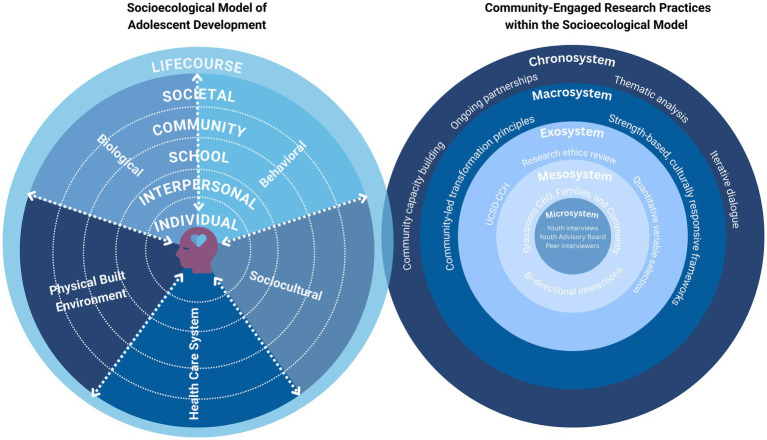 Figure 1
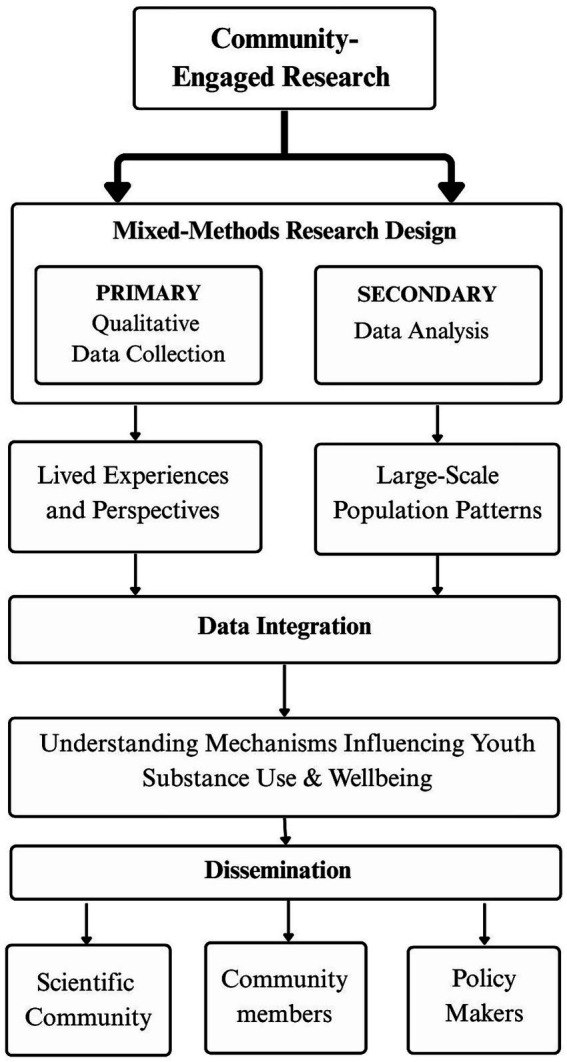 Figure 2
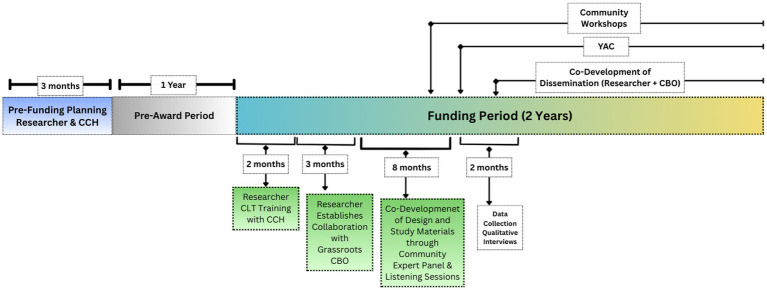 Figure 3
Peer Reviews
No public reviews on file for this paper yet. If you reviewed it on a platform where reviews are public (OpenReview, ICLR, NeurIPS, ICML), you can paste yours below so the community can read it here.
Videos
No videos yet. Explain this paper in a talk, walkthrough, or lecture? Add one.
Taxonomy
TopicsSubstance Abuse Treatment and Outcomes · Health Policy Implementation Science · Prenatal Substance Exposure Effects