An unusual presentation in relapse case of histoid leprosy
Mahesh Mathur, Sumit Paudel, Nabita Bhattarai, Sandhya Regmi, Sambidha Karki, Sharad Shrestha

TL;DR
This paper presents a rare case of histoid leprosy relapse with an unusual umbilicated skin lesion despite adequate treatment.
Contribution
The novelty lies in documenting a relapse case with an atypical presentation after proper multidrug therapy.
Findings
Histoid leprosy can relapse even after 12 months of multibacillary multidrug therapy.
An umbilicated lesion was observed, which is an unusual presentation in histoid leprosy.
The high lepra bacilli load in such cases complicates diagnosis and treatment.
Abstract
Histoid leprosy (HL) is a very rare and highly infectious variant of lepromatous leprosy, presenting as skin-coloured, succulent nodules and plaques on apparently healthy skin. It is histologically characterized by a dense bundle of histiocytes arranged in storiform manner. Usually, it occurs in patients with leprosy who relapse after dapsone monotherapy or inadequate antileprotic treatment; it can even arise de novo. We present a case of umbilicated presentation in a patient with a case of relapse HL, even after adequate treatment with multibacillary multidrug therapy for 12 months. Although rare, the higher load of lepra bacilli in these cases makes it a matter of concern, and challenging for leprologists to make early diagnosis and treatment. Relapse and unusual lesions in histoid leprosy.
Genes, proteins, chemicals, diseases, species, mutations and cell lines named across the full text — each resolved to its canonical identifier and authoritative record.
Click any figure to enlarge with its caption.
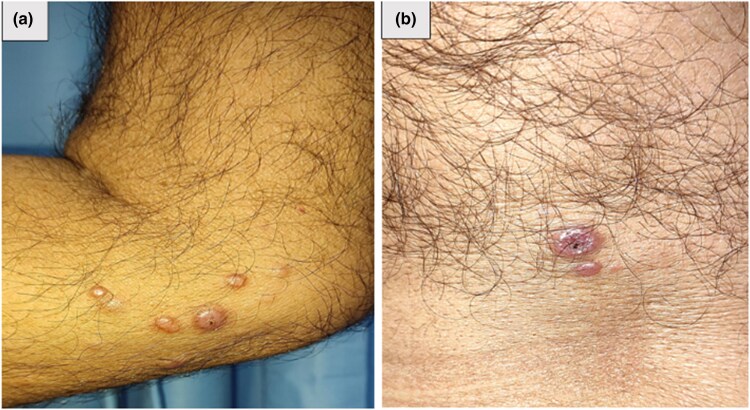 Figure 1
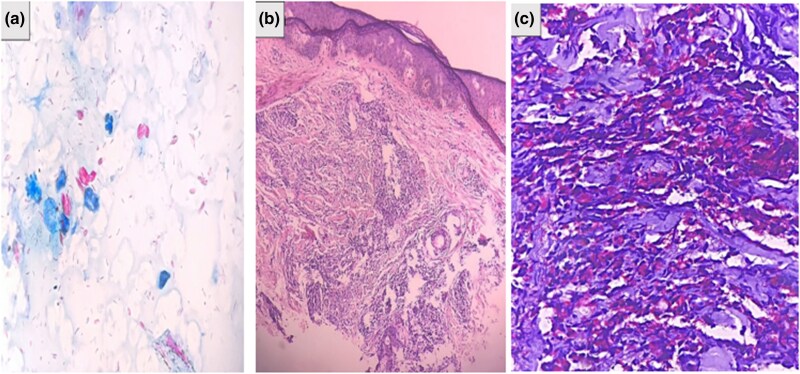 Figure 2
Peer Reviews
No public reviews on file for this paper yet. If you reviewed it on a platform where reviews are public (OpenReview, ICLR, NeurIPS, ICML), you can paste yours below so the community can read it here.
Videos
No videos yet. Explain this paper in a talk, walkthrough, or lecture? Add one.
Taxonomy
TopicsLeprosy Research and Treatment · Methemoglobinemia and Tumor Lysis Syndrome · Mycobacterium research and diagnosis