Flow cytometry-based validation of soluble biomarker detection
Yiting Tang, Xiang Wu, Huating Zhang, Liu Dong, Ruoshui Cao, Jian Chen, Jiajun Zhu, Lianlong Hu, Qingyu Zhou, Jianming Zhou, Ke Qian, Yong Lin, Shuying Chen

TL;DR
This study validates a flow cytometry assay for detecting four soluble immune markers with high sensitivity and accuracy, which could aid in diagnosing lung cancer.
Contribution
A validated multiplex flow cytometry assay for simultaneous detection of sCD25, sCD40L, sCD130, and sTREM-1 in serum.
Findings
The assay achieved low LOD values for sCD25, sCD40L, sCD130, and sTREM-1, showing high sensitivity.
Significant differences in soluble marker levels were observed between lung cancer patients and healthy individuals.
The method demonstrated reproducibility through intra- and inter-assay variability assessments.
Abstract
Accurate and reliable measurement of soluble markers, such as sCD25, sCD40L, sCD130, and sTREM-1, is crucial for understanding their roles in immune responses and inflammatory conditions. This study presents the validation of a multiplex flow cytometry assay using the BD FACSLyric flow cytometer, designed to simultaneously quantify these four soluble markers in serum samples. The assay utilizes a bead-based immunoassay kit that is compatible with BD FACSLyric to enable precise detection of low concentrations of these markers. The methodological approach includes detailed sample preparation, bead conjugation, and assay optimization. Data acquisition was performed on the BD FACSLyric, with a minimum of 10 000 events recorded per sample to ensure robust data collection. The validation results demonstrated that the assay achieved low limits of detection (LOD) for sCD25, sCD40L, sCD130,…
Genes, proteins, chemicals, diseases, species, mutations and cell lines named across the full text — each resolved to its canonical identifier and authoritative record.
Click any figure to enlarge with its caption.
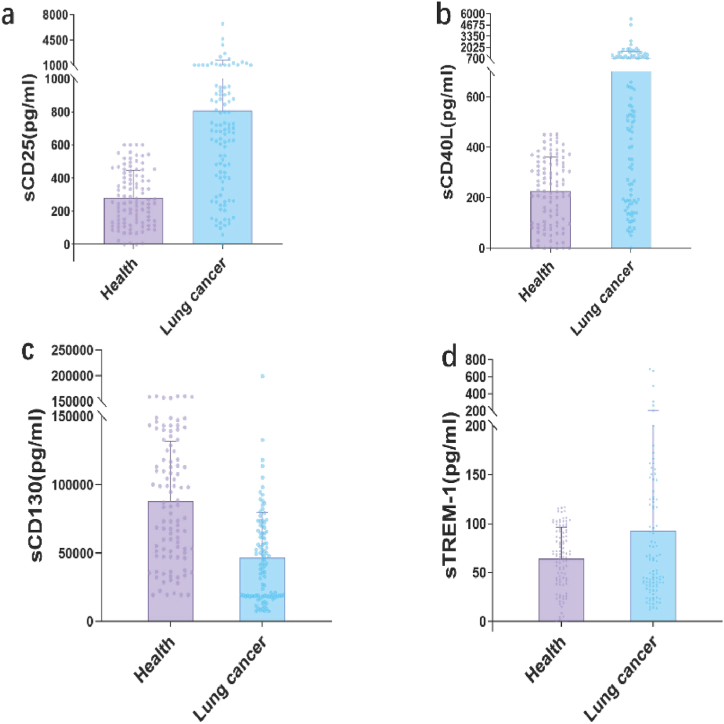 Figure 1
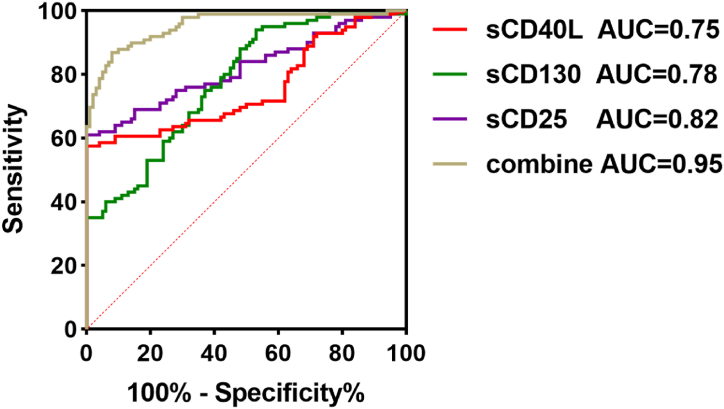 Figure 2
Peer Reviews
No public reviews on file for this paper yet. If you reviewed it on a platform where reviews are public (OpenReview, ICLR, NeurIPS, ICML), you can paste yours below so the community can read it here.
Videos
No videos yet. Explain this paper in a talk, walkthrough, or lecture? Add one.
Taxonomy
TopicsSingle-cell and spatial transcriptomics · Microfluidic and Bio-sensing Technologies · Advanced Biosensing Techniques and Applications