Tibial to ulnar nerve amplitude ratio as a marker of length-dependent neuropathy
Chikashi Yano, Tomonori Nakamura, Masahiro Ando, Yujiro Higuchi, Jun-Hui Yuan, Akiko Yoshimura, Takahiro Hobara, Fumikazu Kojima, Yu Hiramatsu, Satoshi Nozuma, Yusuke Sakiyama, Akihiro Hashiguchi, Raymond L. Rosales, Kimiyoshi Arimura, Hiroshi Takashima

TL;DR
A new nerve conduction measure helps distinguish between acquired and inherited neuropathies with high accuracy.
Contribution
The tibial to ulnar nerve amplitude ratio is introduced as a novel diagnostic marker for length-dependent neuropathy.
Findings
The tibial to ulnar amplitude ratio is significantly higher in CIDP compared to CMT patients.
The ratio has 95.5% sensitivity and 85.5% specificity for distinguishing CIDP from CMT.
The marker performs well in CIDP-mimicking CMT cases with similar accuracy.
Abstract
•Tibial to ulnar amplitude ratio separates acquired and inherited neuropathies.•The ratio is higher in chronic inflammatory demyelinating polyradiculoneuropathy.•Area under the curve 0.95 with 95.5% sensitivity and 85.5% specificity. Tibial to ulnar amplitude ratio separates acquired and inherited neuropathies. The ratio is higher in chronic inflammatory demyelinating polyradiculoneuropathy. Area under the curve 0.95 with 95.5% sensitivity and 85.5% specificity. To evaluate the utility of nerve conduction studies as a marker of length-dependent neuropathy. We conducted a retrospective study of 44 chronic inflammatory demyelinating polyradiculoneuropathy (CIDP) patients and 365 genetically confirmed Charcot-Marie-Tooth disease (CMT) patients, including those with PMP22 duplications or mutations in GJB1, MFN2, MPZ, and MME. Nerve conduction study parameters were compared, with…
Genes, proteins, chemicals, diseases, species, mutations and cell lines named across the full text — each resolved to its canonical identifier and authoritative record.
Click any figure to enlarge with its caption.
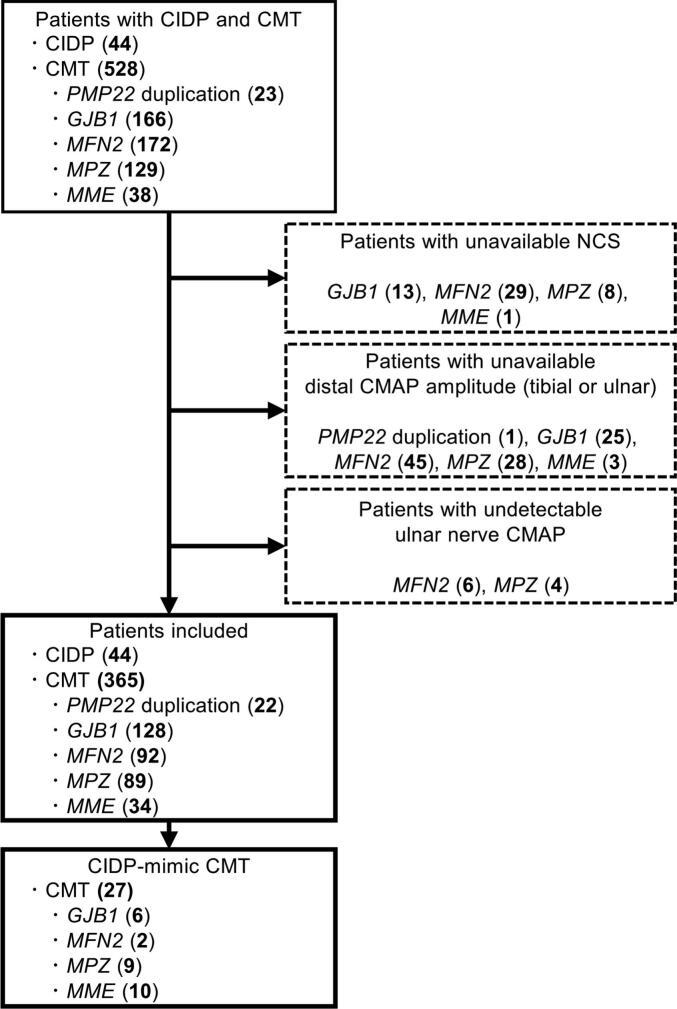 Figure 1
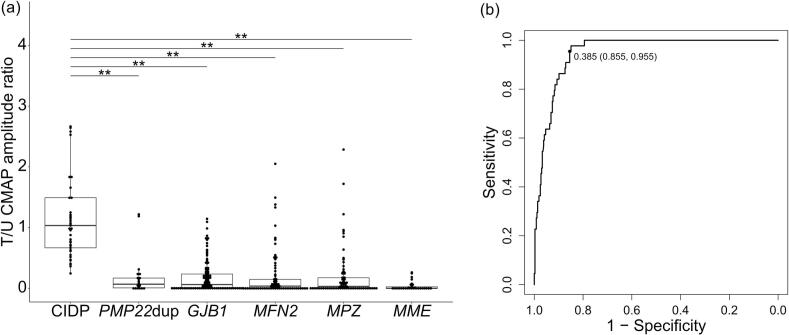 Figure 2
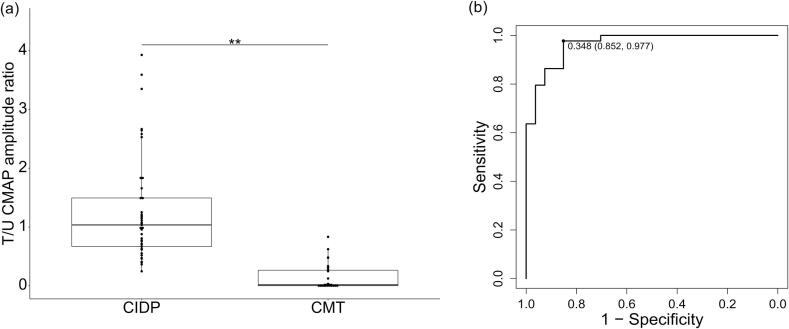 Figure 3
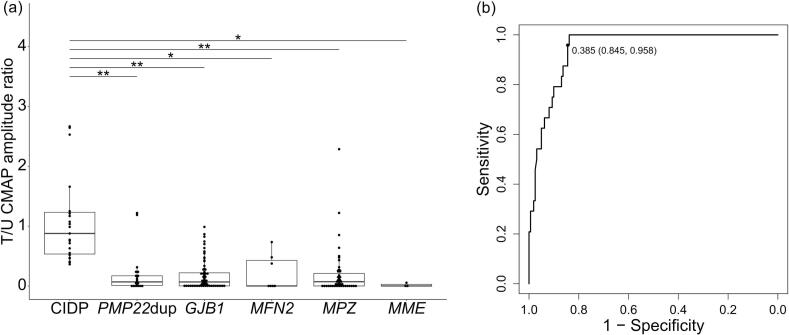 Figure 4
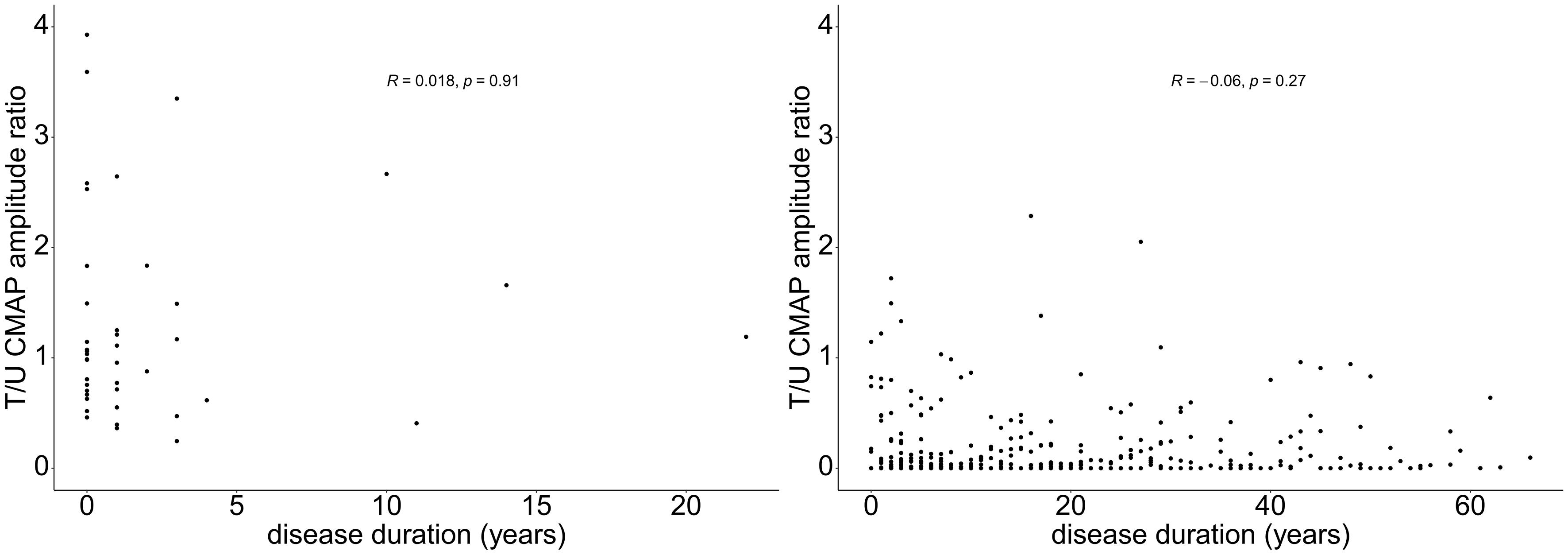 Figure 5
Peer Reviews
No public reviews on file for this paper yet. If you reviewed it on a platform where reviews are public (OpenReview, ICLR, NeurIPS, ICML), you can paste yours below so the community can read it here.
Videos
No videos yet. Explain this paper in a talk, walkthrough, or lecture? Add one.
Taxonomy
TopicsHereditary Neurological Disorders · Botulinum Toxin and Related Neurological Disorders · Peripheral Nerve Disorders