London Dispersion versus Intramolecular Hydrogen Bond in Bis‐Pyridines: How Accurate Is DFT for Competing Noncovalent Interactions in the Condensed Phase?
Adélaïde Savoy, Vladimir Gorbachev, Charlotte N. Stindt, Peter Chen

TL;DR
This study compares how well DFT calculations predict noncovalent interactions in protonated bis-pyridines across different phases.
Contribution
The paper introduces a systematic test system to evaluate DFT accuracy in predicting competing noncovalent interactions in condensed phases.
Findings
DFT calculations fail to accurately predict relative energies of conformers with competing noncovalent interactions.
1H NMR chemical shifts correlate with crystallographic metrics, providing a solution-phase structural readout.
Dispersion-corrected DFT shows systematic discrepancies in treating noncovalent interactions across phases.
Abstract
We report a systematic investigation of noncovalent interactions—particularly an intramolecular hydrogen bond and London Dispersion forces—in singly protonated bis‐pyridines, studied across solution and crystalline states. Building on our previous gas‐phase study, we combine variable‐temperature 1H NMR spectroscopy, single‐crystal X‐ray diffraction, and density functional theory (DFT) calculations. The measured 1H NMR chemical shifts of the acidic proton serve as a solution‐phase structural readout, which we correlate with an independent crystallographic metric. By systematically varying the linker (–CH2–, –O–, and –CH2CH2–) and the pendant substituents (H, methyl, tert‐butyl), we examine how increasingly bulky “dispersion energy donors” affect both the intramolecular hydrogen bond and the accessible conformational states. In reference systems, where a single noncovalent interaction…
Genes, proteins, chemicals, diseases, species, mutations and cell lines named across the full text — each resolved to its canonical identifier and authoritative record.
Click any figure to enlarge with its caption.
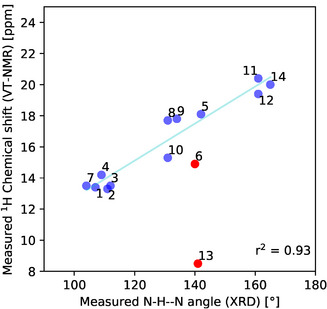 Figure 1
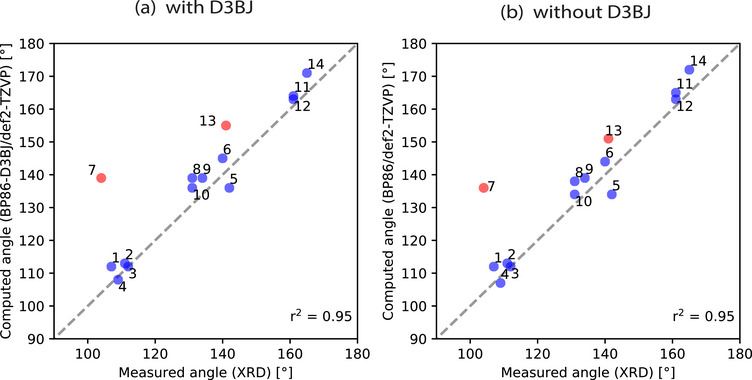 Figure 2
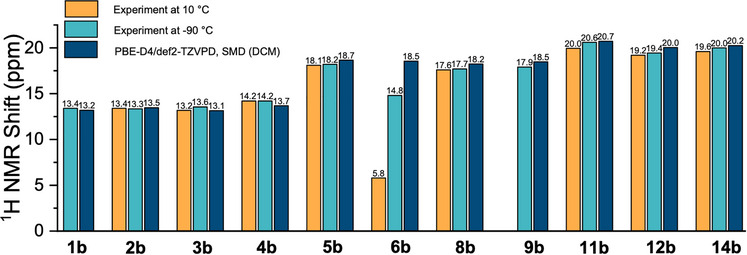 Figure 3
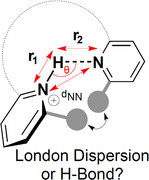 Figure 4
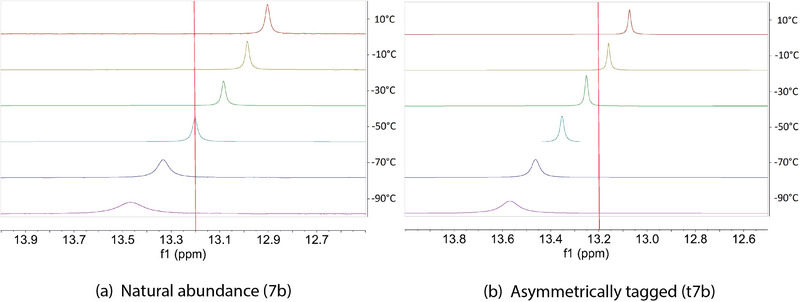 Figure 5
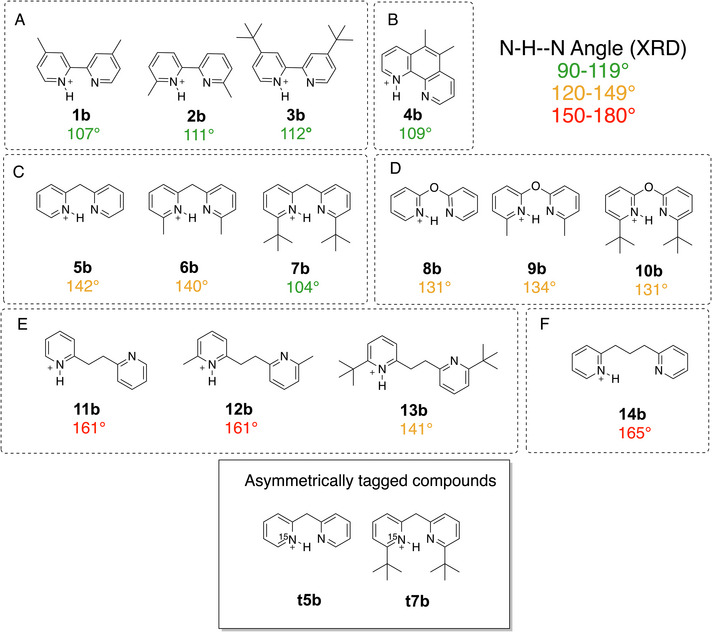 Figure 6
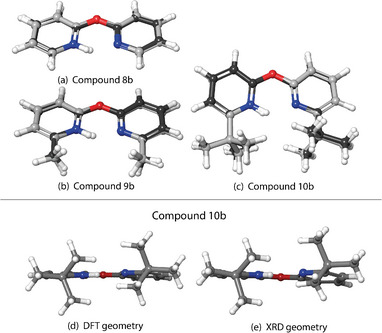 Figure 7
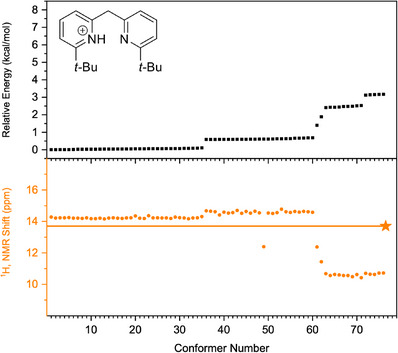 Figure 8
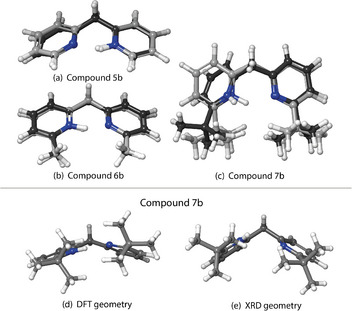 Figure 9
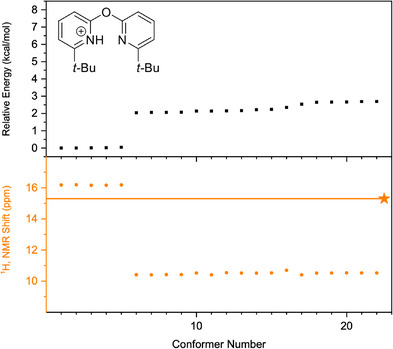 Figure 10
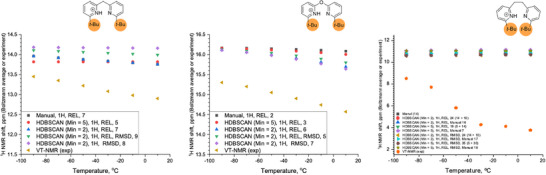 Figure 11
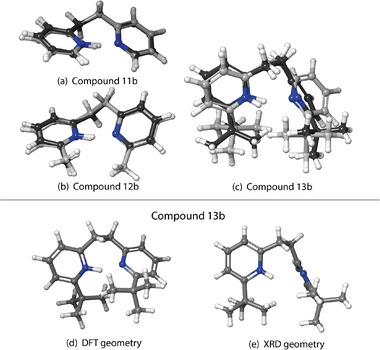 Figure 12
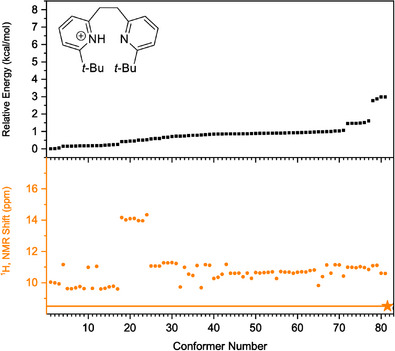 Figure 13
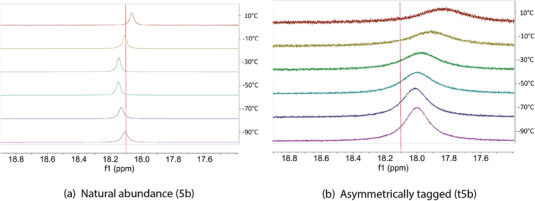 Figure 14
Peer Reviews
No public reviews on file for this paper yet. If you reviewed it on a platform where reviews are public (OpenReview, ICLR, NeurIPS, ICML), you can paste yours below so the community can read it here.
Videos
No videos yet. Explain this paper in a talk, walkthrough, or lecture? Add one.
Taxonomy
TopicsCrystallography and molecular interactions · Molecular spectroscopy and chirality · Advanced NMR Techniques and Applications