Substitution of CH3 by CH2F in 2‐Methylerythritol Cyclodiphosphate Triggers Potent Inhibition of IspG with Concomitant Fluoride Ion Expulsion
Clea Witjaksono, Vivien Herrscher, Hannah Jobelius, Nathan Noël, Fabien Massicot, Jean‐Luc Vasse, Jean‐Bernard Behr, Myriam Seemann

TL;DR
A fluorinated compound inhibits a key enzyme in a microbial pathway, supporting a proposed reaction mechanism involving a carbanionic intermediate.
Contribution
A fluoromethyl-substituted MEcPP analogue was synthesized and shown to potently inhibit IspG while releasing fluoride.
Findings
The fluoromethyl MEcPP analogue is a potent inhibitor of IspG.
Fluoride is released during the IspG-catalyzed reaction with the inhibitor.
The results support the involvement of a carbanionic intermediate in IspG's mechanism.
Abstract
IspG (also known as GcpE) is a key [4Fe‐4S] metalloenzyme that catalyzes the penultimate step of the methylerythritol phosphate (MEP) pathway, a well‐established target for the development of new antimicrobials. This oxygen‐sensitive enzyme mediates the reductive dehydroxylation of 2‐C‐methyl‐d‐erythritol 2,4‐cyclodiphosphate (MEcPP) to (E)‐4‐hydroxy‐3‐methylbut‐2‐en‐1‐yl diphosphate (HMBPP), requiring electron transfer proteins to deliver two electrons needed for catalysis. To probe the mechanism of IspG and access new mechanism‐based inhibitors, we synthesized a substrate analogue, monofluoromethyl‐d‐erythritol cyclodiphosphate, in which the natural methyl group of MEcPP is replaced by a CH2F group. This analogue proved to be a potent inhibitor of IspG. This study also demonstrates that electron capture is a prerequisite for inhibition and that the inhibitor leads to fluoride release…
Genes, proteins, chemicals, diseases, species, mutations and cell lines named across the full text — each resolved to its canonical identifier and authoritative record.
Click any figure to enlarge with its caption.
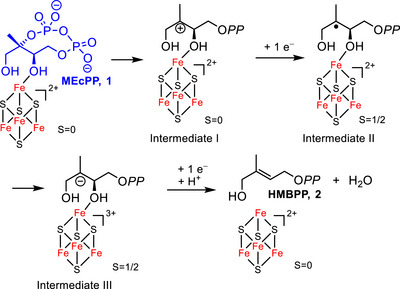 Figure 1
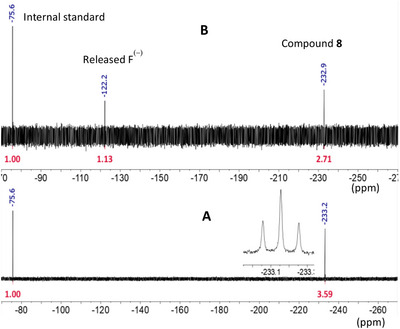 Figure 2
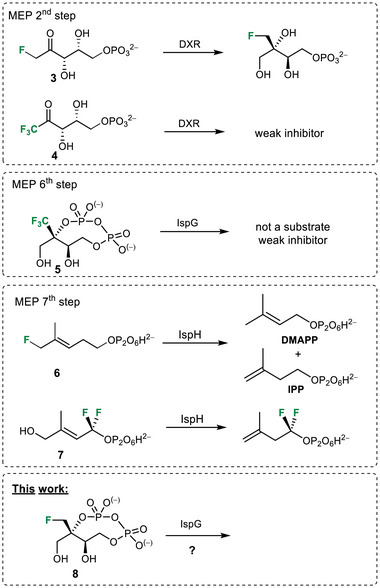 Figure 3
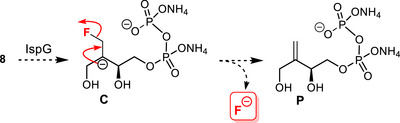 Figure 4
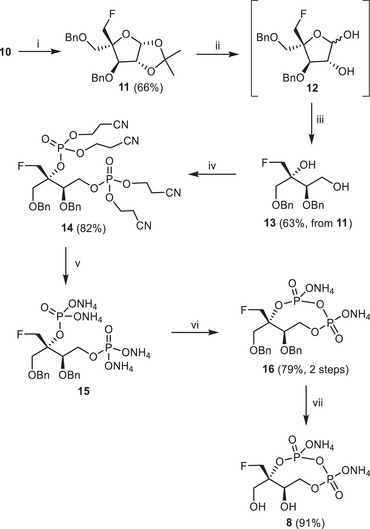 Figure 5
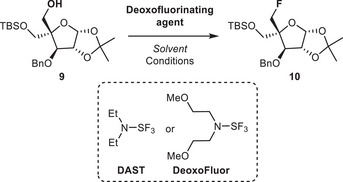 Figure 6
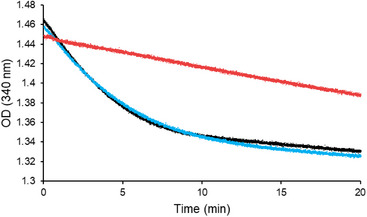 Figure 7
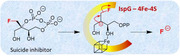 Figure 8
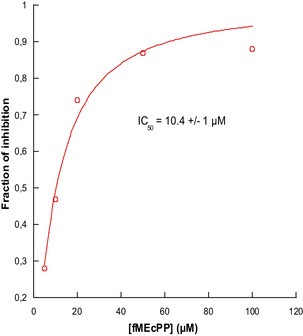 Figure 9
Peer Reviews
No public reviews on file for this paper yet. If you reviewed it on a platform where reviews are public (OpenReview, ICLR, NeurIPS, ICML), you can paste yours below so the community can read it here.
Videos
No videos yet. Explain this paper in a talk, walkthrough, or lecture? Add one.
Taxonomy
TopicsAntibiotic Resistance in Bacteria · Carbohydrate Chemistry and Synthesis · Enzyme Structure and Function