Comparative Efficacy of Ublitixumab Versus Natalizumab in the Treatment of Relapsing and Remitting Multiple Sclerosis
Sai V Chitturi, Jonnalagadda Amith Priyansu, Akhil Sadhu, Hemanthi Ramisetty, Manoj R Pallapothu, Deepiikha Kogantii

TL;DR
This review compares ublituximab and natalizumab for treating relapsing-remitting multiple sclerosis, focusing on their effectiveness and safety.
Contribution
The paper provides a comparative analysis of two monoclonal antibodies for RRMS, highlighting their unique therapeutic roles.
Findings
Ublitixumab and natalizumab have distinct mechanisms of action and safety profiles.
Both drugs reduce relapse frequency and slow disability progression in RRMS patients.
The review supports individualized treatment strategies based on patient-specific factors.
Abstract
Relapsing-remitting multiple sclerosis (RRMS) is a chronic autoimmune disorder characterized by immune-mediated demyelination and neurodegeneration, leading to progressive neurological impairment. Disease-modifying therapies (DMTs) play a crucial role in managing RRMS by reducing relapse frequency and slowing disability progression. Among these, monoclonal antibodies such as ublituximab and natalizumab have emerged as key therapeutic options with distinct mechanisms of action and safety profiles. This narrative review aims to compare the efficacy, safety, and clinical impact of ublituximab and natalizumab in the treatment of RRMS, providing insights into their role in individualized treatment strategies.
Genes, proteins, chemicals, diseases, species, mutations and cell lines named across the full text — each resolved to its canonical identifier and authoritative record.
Click any figure to enlarge with its caption.
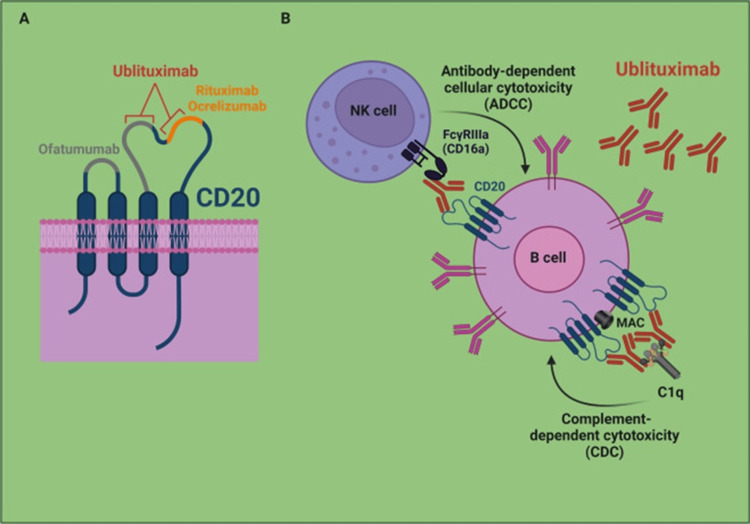 Figure 1
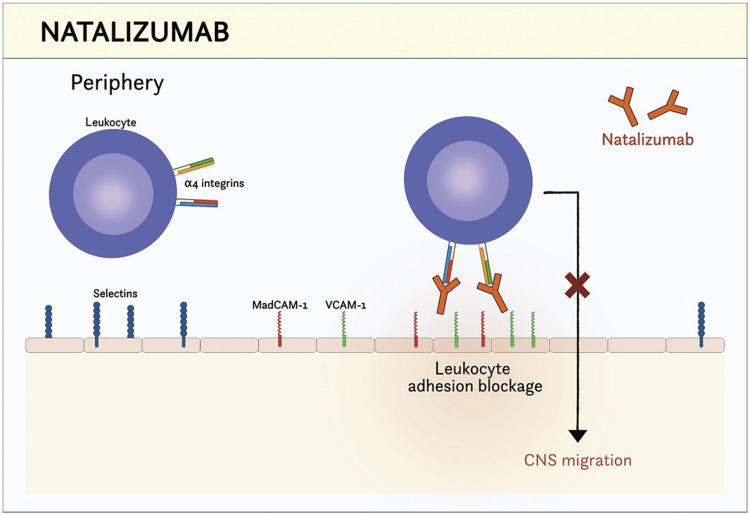 Figure 2
Peer Reviews
No public reviews on file for this paper yet. If you reviewed it on a platform where reviews are public (OpenReview, ICLR, NeurIPS, ICML), you can paste yours below so the community can read it here.
Videos
No videos yet. Explain this paper in a talk, walkthrough, or lecture? Add one.
Taxonomy
TopicsMultiple Sclerosis Research Studies · Polyomavirus and related diseases · Immunotherapy and Immune Responses